You’re in charge

Of your thoughts and feelings.

It’s easy to think that external circumstances, like other people, things, outcomes, and events, cause us to feel a certain way. 

The traffic

The weather.

What someone said to us.

The number on the scale.

The number in our bank account.

These are all facts, things that are circumstances. And they’re NEUTRAL, until we apply a thought to them. 

So what really causes us to feel a certain way is how we think about those external circumstances. And this is how we can get in our own way, or get out of our own way.

Do you know why circumstances don’t cause our feelings? Because two different people could experience the exact same circumstance, but depending on how each of them thinks about the circumstance, their thoughts will create their feelings. So it’s not the circumstance. It’s our thoughts.

For example, one person gets cut off while driving. She could immediately get angry and vengeful and try to cut that other person off because she’s thinking, “This person is a jerk! How dare he do that to me. I’ll show him!” And sometimes this anger can start a spiral of negative thoughts and emotions for the rest of the day. She got in her own way and ruined her day.

Another person who gets cut off while driving could feel some annoyance but then get over it easily because he’s thinking, “Yikes! I know how it feels to be in a rush like that. I’ve done that type of thing before without meaning to.” Some initial annoyance, but pretty quickly letting it go and not letting it ruin his day.

Same circumstance, but different thoughts, which create different feelings – and ultimately, different results. 

When we let other people have so much control over our feelings, we’re giving our power away to them. We’re saying, “How you’re behaving/what you’re saying/what’s happening ‘out there’ is determining how I feel, so I have no control over my feelings.”

But we DO have control. That control is in our thoughts. Our thoughts are where our power lies.

Most of the time, we make other people’s words and actions mean something about us and we think we have to protect ourselves from something, protect our egos. 

For example, when a colleague offers another way of doing something than what we suggested, we might get defensive because we might think, “She doesn’t respect my opinion.” Then we may feel angry and defensive because we made it mean something about ourselves – usually something related to “I’m not good enough.” Then we proceed to act in a certain way that deteriorates our relationship with that colleague. We got in our own way and affected our relationship with our colleague.

What if instead we thought, “She could be offering a more efficient way to do it. Let’s see if it can work”? That thought will create a totally different feeling. We didn’t make our colleague’s words/actions mean anything about ourselves. We didn’t take it personally or need to defend ourselves. This other thought might create the feeling of “curiosity” or “openness,” which leads us to collaborate with that colleague in a cooperative way. 

Two different outcomes because of two different thoughts – but the circumstance was the same. 

When we take responsibility for our feelings, we stop giving our power away to other people and situations. We stop getting in our own way. We are in charge of how we think and feel. 

Your turn: What are you making someone’s words or actions mean about yourself? What if their words or actions don’t have to mean anything about you? Are you open to becoming more aware of the thoughts you’re thinking and how they’re creating your feelings? What are the three most frequent emotions you feel during a typical day? What are the thoughts creating those emotions? 

Subscribe if you want to receive this content directly in your inbox.

Work with me: Want to see how self-care is transformative and can help you create the results you want in your life? I can show you how. I offer first-time seekers a complimentary 60-minute exploratory session. Sign up here.

What’s on your mind? It can be powerful to learn from each other and our common struggles when it comes to our practice of self-care–or just being a human being. If you have something you’re struggling with and would like some perspective, share it here. Your issue may be chosen and addressed in the next post–it’ll be totally anonymous.
Why are you doing that?

Our feelings fuel us.

Everything we do in our life is because we want to feel a certain way. Everything we want in our life is because of a feeling—the feeling that we think we’ll have when we get it or the feeling we think we’ll avoid in not getting it. This is really good to know. 

And if we know that our feelings are caused by our thoughts and that what we do in our life is in order to feel better, wouldn’t it be important to know what kind of thoughts we’re thinking? 

Circumstances are the facts that happen in our lives and which we usually don’t have control over. How we think about those circumstances creates our feelings. It’s not the circumstances that create our feelings. 

Our feelings are also important because they drive all of our actions. Feelings are the fuel for our actions. So when someone asks me, “Why am I not taking action?” It’s because of the way they feel. Or if they’re taking an action they don’t want to be taking, it’s because of the way they feel. 

So our feelings are driving our actions. And then our actions are always going to create the results we get—sometimes they’re results we want, and sometimes they’re results we don’t want in our life. 

Our actions create our results.

Our actions stem from our feelings. And our feelings come from our thoughts. 

So if we want different results, ultimately, we need to think different thoughts.

Sometimes the reason why we don’t take a certain action is to avoid a feeling we think will happen after taking that action. This can look like declining a big opportunity because we’re feeling doubt and thinking something along the lines of, “I might fail and I don’t want to feel the dejection of failure.” 

Other times, we feel a certain way and because we feel that way, we either take or don’t take action. This can look like feeling nervous because we’re thinking, “I don’t want to look stupid in front of everyone,” so we don’t offer our opinion in a meeting. Or we feel hurt because we’re thinking, “He should want to spend more time with me,” which causes us to disconnect from our partner, which is an action that doesn’t serve us or our relationships-–it’s actually the opposite of what we want here, which is connection.

When we have results in our lives that we don’t want, it’s good to be aware that it’s our actions that are creating them. And where do our actions come from? The way we’re feeling. And where does the way we’re feeling come from? The way we’re thinking about our circumstances. 

To create different results, we need to think different thoughts.

Your turn: Are you open to bringing more awareness to what feelings are fueling your actions? What are the feelings that might be fueling your actions? What actions are you taking when you experience those feelings? And what results are your actions creating for you? Do you like the results you’re getting?

Subscribe if you want to receive this content directly in your inbox.

Work with me: Want to see how self-care is transformative and can help create a more meaningful life in which you start committing to yourself and show up the way you want? I can show you how. I offer first-time seekers a complimentary 45-minute exploratory session. Sign up here.

What’s on your mind? It can be powerful to learn from each other and our common struggles when it comes to our practice of self-care–or just being a human being. If you have something you’re struggling with and would like some perspective, share it here. Your issue may be chosen and addressed in the next post–it’ll be totally anonymous.

Stop giving your power away

You’re in charge of how you feel.

Last week we talked about how to process and allow painful emotions. It’s easy to think that external circumstances like other people, things, outcomes, and events, cause us to feel a certain way. What really causes us to feel a certain way is how we think about those external circumstances. 

Do you know why circumstances don’t cause our feelings? Because two different people could experience the exact same circumstance, but depending on how each of them thinks about the circumstance, their thoughts will create their feelings. So it’s not the circumstance. It’s the thoughts.

For example, one person gets cut off while driving. She could immediately get angry and vengeful and try to cut that other person off because she’s thinking, “This person is a jerk! How dare he do that to me. I’ll show him!” And sometimes this anger can start a spiral of negative thoughts and emotions for the rest of the day.

Another person who gets cut off while driving could feel some annoyance but then get over it easily because he’s thinking, “Yikes! I know how it feels to be in a rush like that and I’ve done that type of thing before without meaning to.” Some initial annoyance, but pretty quickly letting it go and not letting it ruin his day.

Same circumstance, but different thoughts, which create different feelings–and ultimately, different results. 

When we let other people have so much control over our feelings, we’re giving our power away to them. We’re saying, “How you’re behaving/what you’re saying/what’s happening ‘out there’ is determining how I feel, so I have no control over my feelings.”

But we do have control. That control is in our thoughts. Our thoughts are where our power lies.

Most of the time, we make other people’s words and actions mean something about us and we think we have to protect ourselves from something, protect our egos. 

For example, when a colleague offers another way of doing something than what we suggested, we might get defensive because we might think, “He doesn’t respect my opinion.” Then we may feel angry and defensive because we made it mean something about ourselves–usually something related to “I’m not good enough.” Then we proceed to act in a certain way that deteriorates our relationship with that colleague. 

What if instead we thought, “He could be offering a more efficient way to do it. Let’s see if it can work”? That thought will create a totally different feeling. We didn’t make our colleague’s words/actions mean anything about ourselves. We didn’t take it personally or need to defend ourselves. This other thought might create the feeling of “curiosity” or “openness,” which leads us to collaborate with that colleague in a cooperative way. 

Two different outcomes because of two different thoughts–but the circumstances were the same.  Starting to see a pattern? 😉

When we take responsibility for our feelings, we stop giving our power away to other people and situations. We are in charge of how we think and feel. 

When we take responsibility for our feelings, we are in emotional adulthood instead of emotional childhood.

More about emotional adulthood and childhood next week!

Your turn: What are you making someone’s words or actions mean about yourself? What if their words or actions don’t have to mean anything about you? Are you open to becoming more aware of the thoughts you’re thinking and how they’re creating your feelings? What are the three most frequent emotions you feel during a typical day? What are the thoughts creating those emotions? 

I learned how to stop giving my power away through therapy and life coaching. And I’ve been doing the work to feel empowered and engage in my life in ways that DO work for me. It’s been so fulfilling to live differently by living INTENTIONALLY with awareness of what I’m creating in my life.

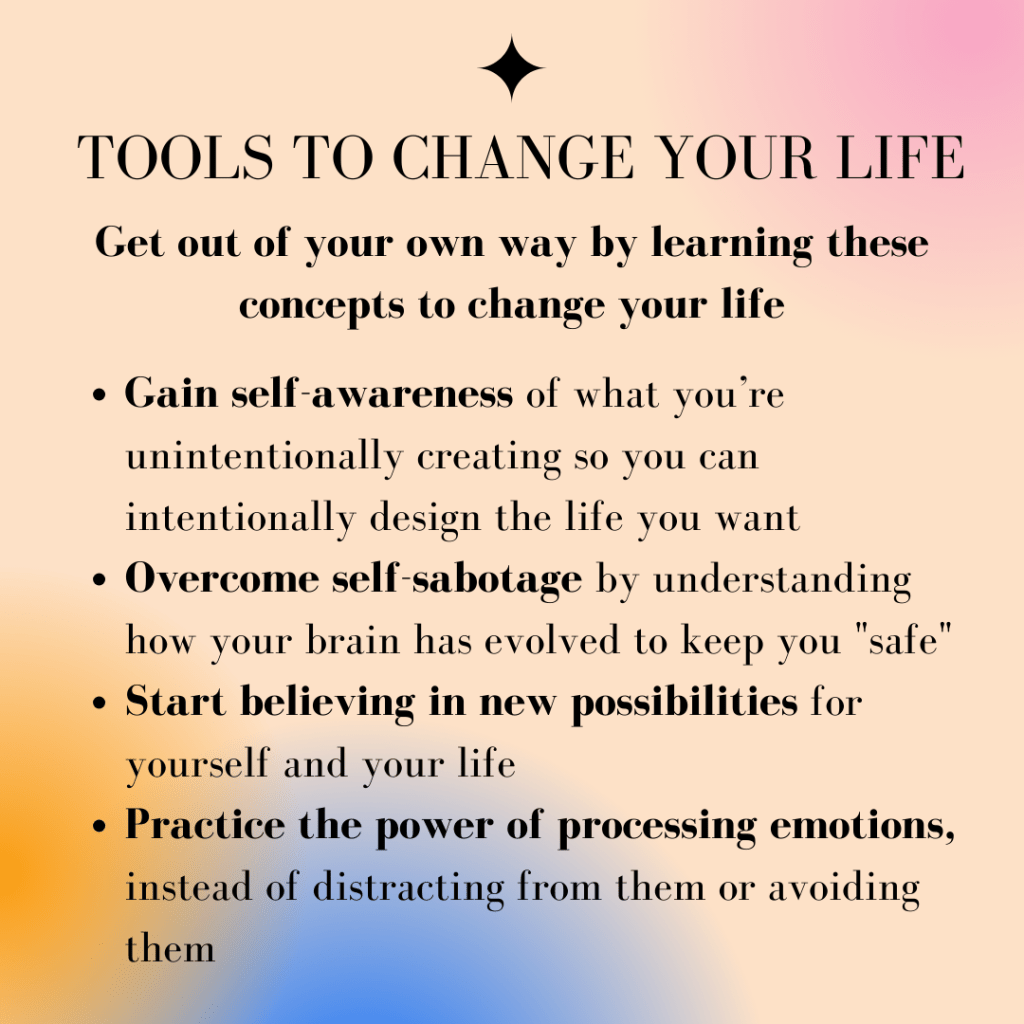
So I’ve created an introductory coaching series called “Tools to Change Your Life” to support others on their own path to stop giving their power away and take back control of their lives.

You can consider this program for yourself or for someone in your life who could benefit from a program like this!


Subscribe if you want to receive this content directly in your inbox.

Work with me: Want to see how self-care is transformative and can help you create the results you want in your life? I can show you how. Take six weeks. And, I offer first-time seekers a complimentary 60-minute exploratory session. Sign up here.

What’s on your mind? It can be powerful to learn from each other and our common struggles when it comes to our practice of self-care–or just being a human being. If you have something you’re struggling with and would like some perspective, share it here. Your issue may be chosen and addressed in the next post–it’ll be totally anonymous.