When you care for yourself

In all the ways.

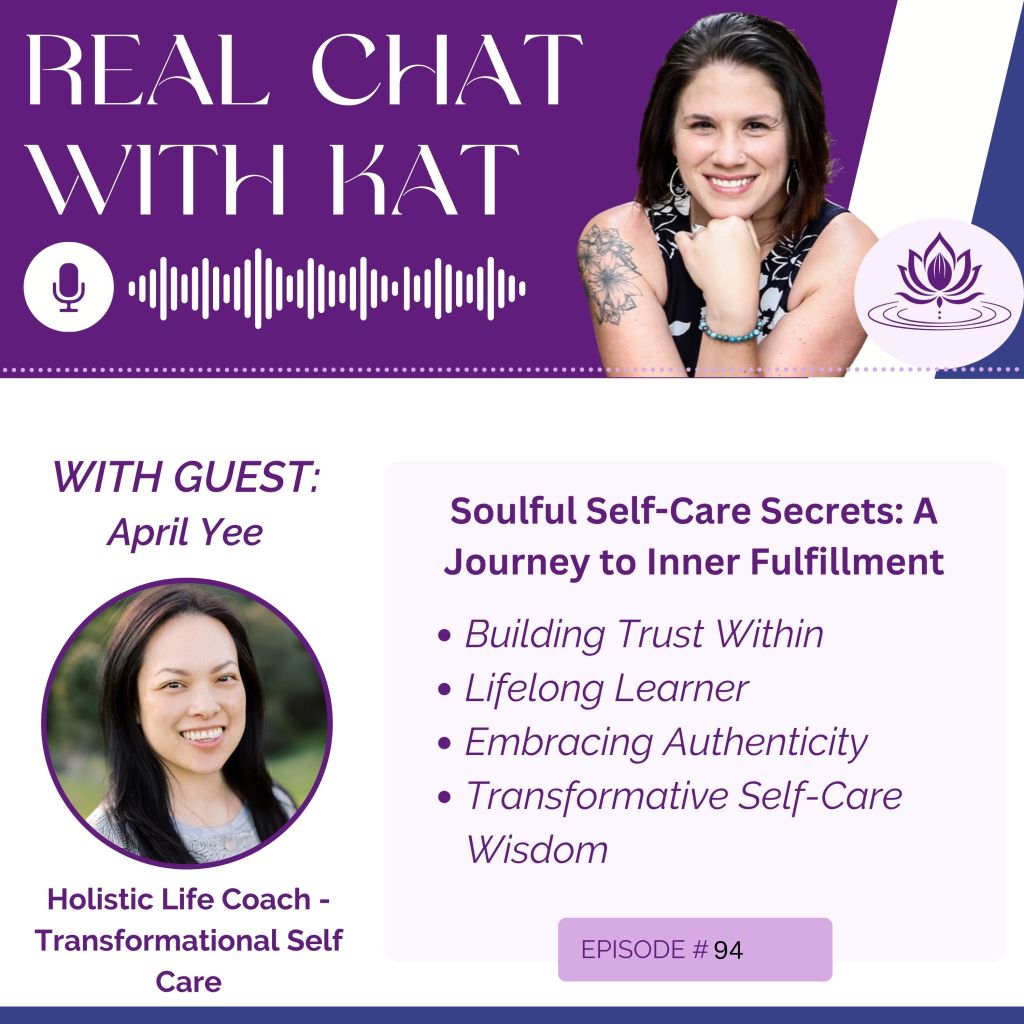
Before we dive into this week’s topic, I was recently a guest on a podcast and I’m sharing the episode here if you’d like to check it out!
Now, on to this week’s topic!

Self-care is holistic. The term self-care has gotten a lot of buzz in the past few years, and rightfully so. It’s important for us to know that it’s okay to care for ourselves, that it’s vital to care for ourselves.

But how much of that is marketing? We hear about getting a frothy, sugary drink as “self-care”; we know that a massage is some good self-care; we can think of hair appointments and nail appointments as self-care.

And these things can definitely be part of self-care. What else is part of self-care?

We can consider how we care for ourselves around:

  • – Creative expression
  • – Money and finances
  • – Time
  • – Career and work
  • – Nutrition and health
  • – Hydration
  • – Physical movement and flexibility
  • – Sexual expression
  • – Play and rest
  • – Mindful breathing
  • – Skincare and bodycare
  • – Mind and mental health care
  • – Sleep
  • – Relationships
  • – Connection with nature
  • – Self (e.g. worth, value, respect, esteem)

All of these aspects are part of who we are as whole people. Sometimes we can get more focused on a couple aspects over others – and at times, it’s necessary to do so. But when we stray away too long from any one of these aspects, we can feel misaligned with ourselves and our lives, which can affect how we show up for ourselves and for others. 

The good news is that we can get realigned by considering where we want to consciously focus more of our energy. 

Do we want to focus on drinking enough water each day? Do we want to focus on getting enough sleep each night? Do we want to focus on connecting with our relationships more? 

When we decide which 1-2 areas (at a time) we’d like to consciously put more of our energy towards, we can then ask ourselves, “How can I make sure I _______?” – drink enough water, get enough sleep, get in touch with what I’m thinking and feeling, be out in nature at least twice a week, connect with someone close to me today, eat healthy meals at least once a day, take deep breaths during the day.

And the brain, in its powerful way, will get to work on finding the answers and figuring it out so we can focus our energy on caring for ourselves in a holistic way.

(Note: It’s helpful to constrain at first to focus on 1-2 areas. If we try to focus on more than that at one time, we might end up feeling overwhelmed and not doing anything for ourselves in any of the areas. Once we get good with those 1-2 areas, we can move on to 1-2 others.)

Your turn: Are you feeling misaligned with how you want to show up and how you are showing up? Which 1-2 areas in your life can you holistically focus on right now to feel more aligned with how you want to show up in the world? What are you willing to do in order to allocate your energy where you want it to go?

Subscribe if you want to receive this content directly in your inbox.

Work with me: Want to see how self-care is transformative and can help you create the results you want in your life? I can show you how. I offer first-time seekers a complimentary 60-minute exploratory session. Sign up here.

What’s on your mind? It can be powerful to learn from each other and our common struggles when it comes to our practice of self-care–or just being a human being. If you have something you’re struggling with and would like some perspective, share it here. Your issue may be chosen and addressed in the next post–it’ll be totally anonymous.

Doing all the things?

Care for yourself instead.

Do we have space in our lives for self-care? Some of us may think that we don’t because there are “so many” other things that we “need to” do. Why are we doing so many of these other things and not caring for ourselves?

In the past I used to think I needed to DO all the things in order to prove my worth, because I used to think I wasn’t “good enough.” I wasn’t even conscious of this as a choice I was making-–I just thought it was how I was supposed to be living my life.

I’d do things from a sense of internal pressure—take classes to learn a certain skill, exercise only for weight loss, do activities where I could “meet new people,” be on nonprofit Boards for a sense of prestige, volunteer my time in other ways. I ended up DOING so much in order to feel like I was “good enough” that I ended up exhausting myself and feeling stressed out and overwhelmed. With no time to really care for myself in intentional ways. 

Only looking back, and through the self-awareness work I’ve done through therapy and coaching, I see that I was “doing” in order to prove myself as worthy and valuable. Because I thought I wasn’t good enough, I thought I could DO things to feel good enough. 

Now I know that worthiness comes from within, that I can choose to have the belief “I am already 100% worthy. I don’t need to DO anything to prove that.” And that belief is available to ALL of us. We get to choose to believe it (or not). 

So if we decide that we don’t have to DO things to prove ourselves, what might we let go of doing? How might letting go of some of those things create more space in our lives to prioritize and care for ourselves intentionally instead?

Your turn: What if you stopped doing all the things to prove your worthiness and value and started spending time checking-in with yourself? What’s good about you? (Think about who you ARE, not what you DO, to answer that question.) How can you enjoy being with yourself even more? How can you enjoy being YOU even more so that you feel deserving of the care you’d like to give yourself?

Subscribe if you want to receive this content directly in your inbox.

Work with me: Want to see how self-care is transformative and can help create a more meaningful life in which you start committing to yourself and show up the way you want? I can show you how. I offer first-time seekers a complimentary 60-minute exploratory session. Sign up here.

What’s on your mind? It can be powerful to learn from each other and our common struggles when it comes to our practice of self-care–or just being a human being. If you have something you’re struggling with and would like some perspective, share it here. Your issue may be chosen and addressed in the next post–it’ll be totally anonymous.

What does worrying do?

It’s exhausting.

For most of us, worrying seems necessary. But what is it that we’re doing when we worry?

When we’re worrying, we’re making up a story about what could happen–usually the worst-case scenario–and then thinking as if it’s already happened.

What do we create for ourselves when we do that? We use a lot of mental and psychic energy focusing our minds on something that might happen and that will unlikely happen. And it’s exhausting.

When we think we’re protecting ourselves from a possible outcome that hasn’t happened yet, we’re hurting ourselves ahead of time. We’re already feeling all the emotions and thinking all the thoughts we might feel if this outcome happened. So we’re going through it as if it’s already happened, when it hasn’t yet or maybe never will.

Worrying is just a bunch of thoughts that we’re thinking. And likely the same thoughts repeating over and over again.

So what are the facts? A fact may be that an event is coming up on June 14th where you’re speaking in front of people. A fact may be that your son is going to a party with his friends this weekend. A fact may be that you’re traveling to Florida on June 25th. A fact may be that someone you care about hasn’t called you back for two days. A fact may be that you just got a mammogram done today and you’re waiting for results. 

Everything else in your mind is just thoughts that you’re thinking about the facts.

We may think that worrying about something may “prepare” us for what could happen. But what if the worst-case scenario does happen? Will worrying about it make it any less devastating in the moment when it happens? No. Likely we will feel all the painful feelings that come up. 

Worrying about it in advance only drains your energy ahead of time and doesn’t necessarily “prepare” or “protect” you from worst-case scenarios.

Your turn: What’s the upside of worrying? Instead of worrying, is it possible to keep your thoughts focused on the facts? What could happen instead if you keep your thoughts neutral or focused on the best possible outcome instead of the worst case?

Subscribe if you want to receive this content directly in your inbox.

Work with me: Want to see how self-care is transformative and can help create a more meaningful life in which you start committing to yourself and show up the way you want? I can show you how. I offer first-time seekers a complimentary 60-minute exploratory session. Sign up here.

What’s on your mind? It can be powerful to learn from each other and our common struggles when it comes to our practice of self-care–or just being a human being. If you have something you’re struggling with and would like some perspective, share it here. Your issue may be chosen and addressed in the next post–it’ll be totally anonymous.

Is judging yourself working?

Try self-compassion instead.

How does our self-compassion motivate us differently than our self-judgment?

Most of us are used to judging or punishing ourselves into action. This might sound like: 

“I’m so fat, I need to workout extra hard today.” 

“I’m such a loser, I have to figure out how to make more money.” 

“My life sucks, I need to find a partner.” 

“I’m a mess, I have to get this right.”

Whatever it is, we think mean things about ourselves in order to “motivate” us to do what we think we need to do in order to feel better about ourselves. “If I stop beating myself up, if I accept myself the way I am, I’ll get complacent and lazy, and never change.” 

We think we need to beat ourselves up in order to take helpful actions. We might be in a rush to get “over there” because we think that’s when we’ll feel better about ourselves. Beating ourselves up may have gotten us results in the past, but at what cost to our relationship with ourselves?

When we have a self-judging narrative, everything we do can feel punishing:

  • Instead of seeing a healthy plate of food that will nourish our body, we see a restrictive, limited diet
  • Instead of doing a workout and celebrating what our body can do, we see it as a way to punish ourselves for “not eating right”
  • Instead of staying happy in a new relationship, we find ways to prove that we’re not worthy of happiness
  • Instead of celebrating our awareness of how we negatively talk to ourselves, we beat ourselves up for beating ourselves up!

Kindness, love, and respect for ourselves doesn’t start when we hit a certain goal of ours. 

In fact, when we do hit that goal without doing the work of self-compassion and acceptance, the reward will likely be temporary and we might still not like ourselves the way we thought we would when we finally get “over there” by hitting that goal. It’s because achieving goals doesn’t create our feelings. Our thoughts create our feelings. 

Kindness, love, and respect for ourselves can start right now, exactly as we are. 

Decide that that’s possible. 

When we have compassion and acceptance for ourselves exactly as we are at this time, we can start making the changes we want to see in our lives from a place of care, love, and patience. 

It’s about our relationship with ourselves. So that in the long-run, we are where we want to be with ourselves and in our lives, loving and accepting ourselves along the way. No matter what.

Your turn: Are you open to feeling accepting of yourself as you are? If not, what’s getting in the way? What are some of the self-judging thoughts you’re aware of? What are some self-compassionate thoughts you can have about yourself instead? What would happen today if you found some self-compassion for yourself in a situation where you usually beat yourself up?

Feeling challenged by finding more self-compassionate thoughts? Book an exploratory session here to build your self-compassion practice.

Subscribe if you want to receive this content directly in your inbox.

Work with me: Want to see how self-care is transformative and can help create a more meaningful life in which you start committing to yourself and show up the way you want? I can show you how. I offer first-time seekers a complimentary 60-minute exploratory session. Sign up here.

What’s on your mind? It can be powerful to learn from each other and our common struggles when it comes to our practice of self-care–or just being a human being. If you have something you’re struggling with and would like some perspective, share it here. Your issue may be chosen and addressed in the next post–it’ll be totally anonymous.

“I don’t deserve to ____”

Look at your Power Sentences.

How we think about ourselves and our lives contributes to how we take care of ourselves (or don’t take care of ourselves). 

We have sentences in our minds that run our life. Mostly without our awareness of them.

These are called Power Sentences.

They’re powerful because they affect the results we create in our lives, usually by providing more evidence that the thought (Power Sentence) is “true.” 

When we’ve practiced thinking a thought over and over, it becomes a belief. Beliefs “feel true” even though they are just thoughts that we’ve thought over and over.

And if our thoughts/beliefs create the results we get in our life, let’s start to become aware of these Power Sentences. 

Some examples of unintentional and unconscious Power Sentences are:

  • “I’m not good enough.”
  • “I can never get it right.”
  • “I don’t deserve to have what I want.”
  • “It’s always so hard for me.”
  • “Things don’t work out for me.”

What might these types of thoughts prove true in our lives? 

It’s possible for us to think and practice new thoughts and beliefs – new Power Sentences – ON PURPOSE. Ones that SERVE our lives more than the current unintentional, unconscious thoughts and beliefs.

We must find the sentence that is running our life so we can make sure it is conscious and intentional.

The goal is to uncover our main Power Sentence, and make sure it’s what we want it to be.

Here’s an exercise to consider for finding your Power Sentence(s):

  1. Who are you? What are you doing with your life? (Answer with one sentence only.)
  2. Are you doing it consciously? 
    • Is this who you want to be? 
    • Is this what you want to be doing with your life?
  1. When you look at your life as a result, you can see the SENTENCE CAUSING IT.
  2. What are the results you have vs. the results you want?
  3. Look at the effect of your sentences.

Here are some intentional, conscious Power Sentences to try on:

  • “I am always enough as I am.”
  • “I’m willing to figure out the things that are important to me.”
  • “I’m deserving of what I want in my life.”
  • “Everything happens FOR me to grow and learn.”
  • “I embrace all challenges.”
  • “I have value to contribute.”
  • “I am an extraordinary/amazing human being.”

What might these types of thoughts prove true in our lives?

Your turn: What are you discovering about your Power Sentences? What Power Sentences do you want to start practicing on purpose? What experiences do you want to create in your life to become even more of who you want to be?

Subscribe if you want to receive this content directly in your inbox.

Work with me: Want to see how self-care is transformative and can help create a more meaningful life in which you start committing to yourself and show up the way you want? I can show you how. I offer first-time seekers a complimentary 60-minute exploratory session. Sign up here.

What’s on your mind? It can be powerful to learn from each other and our common struggles when it comes to our practice of self-care–or just being a human being. If you have something you’re struggling with and would like some perspective, share it here. Your issue may be chosen and addressed in the next post–it’ll be totally anonymous.

When you trust yourself

Learn how.

There are different ways we learn how to trust (or not trust) ourselves. One of these ways is by doing (or not doing) what we say we’ll do–especially when it comes to ourselves. 

Most of the time, we do what we say we’ll do for other people. This is because we know the consequences of not following through: the other person will feel let down and disappointed and possibly change how they think about us, and then we’ll feel guilty for having disappointed them and think we need to make up for it somehow.

But what happens when we say we’ll do something for ourselves and then we don’t do it? Let’s say we put an hour on our calendar to do one of the following things: go to the gym, do a yoga class, take a walk, read for leisure, or cook a healthy meal. 

But we end up blowing ourselves off during that hour by using that time to keep working, scroll on social media, go out for drinks instead, or do something else besides what we had planned for ourselves. 

When we’re the ones not keeping our commitment to ourselves, we feel a double whammy–we’re the ones who are let down and disappointed AND we’re the ones feeling guilty about letting ourselves down. That feels doubly bad. And yet we might not even feel the need to make up for it.

Knowing this feeling, the next time we go to make a commitment to ourselves, we might avoid disappointing ourselves and feeling guilty about it ahead of time, so we might think, “Why bother? I’m not gonna do it anyway.” 

And then nothing moves forward with keeping commitments and building trust with ourselves. 

That’s how a defeating mindset begins when we think about making commitments to ourselves. We diminish our trust with ourselves when we don’t follow through on what we say we’re going to do for ourselves.

To build trust with ourselves, we can take small steps. “Today I’m going to get up from my desk at 2pm and drink a glass of water and walk around the office/house for five minutes.” 

And then at 2pm, we do what we say. We get up, drink a glass of water, and walk around for five minutes. 

When we do this, there’s a sense of empowerment, a sense of accomplishing something and fulfilling a promise to ourselves–no matter how small. “It feels good to do what I said I would!” Celebrate that and remember the feeling. 

This is how we start to strengthen the muscle of trusting ourselves more, knowing that we can have our own back. We can continue to make another small commitment to keep each day–it could be the same one!–until it’s just automatic for us to keep our word to ourselves. Until it feels uncomfortable when we don’t keep our word to ourselves. 

When we get even better at keeping commitments to ourselves, we build even more trust with ourselves. We start to know what it truly feels like to have our own back–no matter what. 

Your turn: You make decisions based on you and what you want for yourself; no one else can make these decisions for you. When you trust yourself to have your back no matter what the outcome is, there is no “wrong” decision. Just an opportunity to learn more about yourself and what you want or don’t want. What are you willing to do today to build even more trust with yourself? 

Subscribe if you want to receive this content directly in your inbox.

Work with me: Want to see how self-care is transformative and can help create a more meaningful life in which you start committing to yourself and show up the way you want? I can show you how. I offer first-time seekers a complimentary 60-minute exploratory session. Sign up here.

What’s on your mind? It can be powerful to learn from each other and our common struggles when it comes to our practice of self-care–or just being a human being. If you have something you’re struggling with and would like some perspective, share it here. Your issue may be chosen and addressed in the next post–it’ll be totally anonymous.

Life coaching for you

Curious?

What do you think about life coaching? Have you considered it for yourself? How can coaching help you?

Life coaching can add value to your life when you think you have a problem—and thinking about it takes up a lot of your time and mental energy. You’d likely rather do something else with that time and energy. 

Life coaching can help you make it a non-problem in your mind so you can focus on the things you want to think about and do instead. Things that move your life forward in the direction you want to go. Things you want to create for yourself. 

At the very least, it can provide a committed time for mental self-care. It’s making time rather than finding time to keep mentally healthy.

As it relates to self-care, we look at your life holistically to see where the gaps are. What is your relationship to self-care? What is your relationship to your Self?

Sometimes your thoughts and beliefs do not align with who you want to be and who you think you are, which is a big obstacle to making healthy choices for yourself.

When we coach together, we’ll look at your thoughts about self-care and strengthen your beliefs about yourself—that you are a person who deserves care, especially from yourself.

When your thoughts and beliefs start to align even more, that’s when you begin making healthier choices for yourself. You align with who you want to be and who you are becoming.

If that sounds good to you, I’d like to personally invite you to join Self-Care Sundays, my weekly drop-in coaching sessions, or to book an exploratory session to find out how coaching can work for you!

Subscribe if you want to receive this content directly in your inbox.

Work with me: Want to see how self-care is transformative and can help create a more meaningful life in which you start committing to yourself and show up the way you want? I can show you how. I offer first-time seekers a complimentary 45-minute exploratory session. Sign up here.

What’s on your mind? It can be powerful to learn from each other and our common struggles when it comes to our practice of self-care–or just being a human being. If you have something you’re struggling with and would like some perspective, share it here. Your issue may be chosen and addressed in the next post–it’ll be totally anonymous.

How you care for yourself

In all the ways.

Self-care is holistic. The term self-care has gotten a lot of buzz in the past few years, and rightfully so. It’s important for us to know that it’s okay to care for ourselves, that it’s vital to care for ourselves.

But how much of that is marketing? We hear about getting a frothy, sugary drink as “self-care”; we know that a massage is some good self-care; we can think of hair appointments and nail appointments as self-care.

And these things can definitely be part of self-care. What else is part of self-care?

We can consider how we care for ourselves around:

  • Creative expression
  • Money and finances
  • Time
  • Career and work
  • Nutrition and health
  • Hydration
  • Movement and flexibility
  • Sexual expression
  • Play and rest
  • Breathing
  • Mind and mental health
  • Sleep
  • Relationships
  • Connection with nature
  • Self (e.g. worth, value, respect, esteem)

All of these aspects are part of who we are as whole people. Sometimes we can get more focused on a couple aspects over others–and at times, it’s necessary to do so. But when we stray away too long from any one of these aspects, we can feel misaligned with ourselves and our lives, which can affect how we show up for ourselves and for others. 

The good news is that we can get realigned by considering where we want to consciously focus more of our energy. 

Do we want to focus on drinking enough water each day? Do we want to focus on getting enough sleep each night? Do we want to focus on connecting with our relationships more? 

When we decide which areas we’d like to consciously put more of our energy towards, we can then ask ourselves, “How can I make sure I _______?”  — drink enough water, get enough sleep, get in touch with what I’m thinking and feeling, be out in nature at least twice a week, connect with someone close to me today, eat healthy meals at least once a day, take deep breaths during the day.

And the brain, in its powerful way, will get to work on finding the answers and figuring it out so we can focus our energy on caring for ourselves in a holistic way.

Your turn: Are you feeling misaligned with how you want to show up and how you are showing up? What areas in your life can you holistically focus on to feel more aligned with how you want to show up in the world? What are you willing to do in order to allocate your energy where you want it to go?

Subscribe if you want to receive this content directly in your inbox.

Work with me: Want to see how self-care is transformative and can help create a more meaningful life in which you start committing to yourself and show up the way you want? I can show you how. I offer first-time seekers a complimentary 45-minute exploratory session. Sign up here.