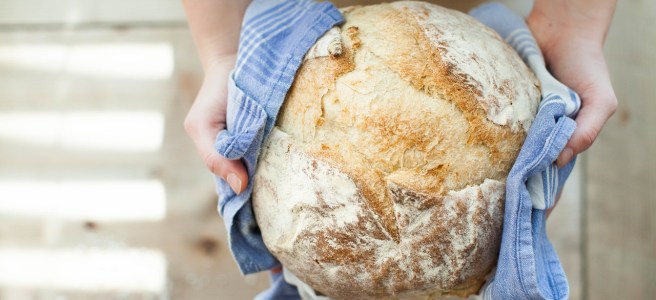
You deserve the whole loaf

With honey butter.

I used to convince myself that I was happy in relationships where I really wasn’t. I told myself that wanting more was asking too much. That the scraps I was given were enough—if I just tried harder, stayed complaisant, didn’t demand things.

I remember being with someone who didn’t want the same things I wanted, and instead of honoring my own truth, I contorted myself into someone I thought he would want. I told myself I was fine. That this was love.

But it wasn’t. It was me abandoning myself for the sake of keeping the relationship.

We do this in all kinds of ways—not just in romantic relationships.
We mistrust ourselves.
We minimize our needs.
We shrink our voices.
We edit our desires to stay connected, to stay approved of, to stay “safe.”

The thing is, the relationship that suffers most when we do this is the one we have with ourselves.

We stop listening to our gut.
We override our knowing.
We become strangers to our own needs and wholeness, chasing crumbs of validation while starving for the fullness of self-trust.

And over time, that internal erosion leaves us disconnected—not just from others, but from our true and full selves.

The turning point, for me, was realizing:
I don’t want crumbs.
I want the whole loaf.
And more than that—I deserve it.

Not because I proved myself worthy.
Not because someone else finally said I was.
But because I decided to stop abandoning myself and start trusting what I want, what I feel, and what is true for me.

Because staying in a relationship—whether romantic, professional, or even familial—shouldn’t come at the cost of losing you.

Your Turn:

  • Is there a place in your life where you’re settling for crumbs?
  • What might change if you trusted your desires instead of downplaying them?
  • What would self-loyalty look like in that area of your life?
  • See the poem I wrote here about deserving the whole loaf.

Subscribe if you want to receive this content directly in your inbox.

Work with me: Want to see how self-care is transformative and can help you create the results you want in your life? I can show you how. I offer first-time seekers a complimentary 45-minute exploratory session. Sign up here.

What’s on your mind? It can be powerful to learn from each other and our common struggles when it comes to our practice of self-care–or just being a human being. If you have something you’re struggling with and would like some perspective, share it here. Your issue may be chosen and addressed in the next post–it’ll be totally anonymous.

Your Power Sentences

What drives you?

In the past, what drove me were ideas of achievement, performance, and external appearances. Basically, opportunities for external validation – I rarely regarded what I thought about myself and instead depended on what others thought about me. 

So it’s not surprising when I found out in therapy that one of the reasons why this was true was because I had an underlying thought pattern: “I’m not good enough.” 

So of course I didn’t rely on my thoughts about myself because they were always some form of, “I’m not good enough” and “I need to prove that I’m good enough.” Hence, the need for external validation from others. 

How we think about ourselves and our lives contributes to how we take care of ourselves (or don’t take care of ourselves), what we believe is possible for ourselves, and how we show up for our lives. 

We have sentences in our minds that run our life. Usually without our awareness of them.

These are called Power Sentences.

They’re powerful because they affect the results we create in our lives, usually by providing more evidence that the thought (Power Sentence) is “true.” 

When we’ve practiced thinking a thought over and over, it becomes a belief. Beliefs “feel true” even though they’re just thoughts that we’ve thought over and over.

And if our thoughts/beliefs create the results we get in our life, let’s start to become aware of these Power Sentences. 

Some examples of unintentional and unconscious Power Sentences are:

  • “I’m not good enough.” 
  • “I can never get it right.”
  • “I don’t deserve to have what I want.”
  • “It’s always so hard for me.”
  • “Things don’t work out for me.”

What might these types of thoughts prove true in our lives? 

It’s possible for us to think and practice new thoughts and beliefs – new Power Sentences – ON PURPOSE

Ones that SERVE our lives more than the current unintentional, unconscious thoughts and beliefs.

We can find the sentence that is running our life so we can make sure it is conscious and intentional.

The goal is to uncover our main Power Sentence, and make sure it’s what we want it to be.

Here’s an exercise to consider for finding your Power Sentence(s):

  1. 1. Who are you? What are you doing with your life? (Answer with one sentence.)
  2. 2. Are you doing it consciously? 
  3. Is this who you want to be? 
  4. Is this what you want to be doing with your life?
  5. 3. When you look at your life as a result, you can see the SENTENCE CAUSING IT.
  6. 4. What are the results you have vs. the results you want?
  7. 5. Look at the effect of your sentences.

Here are some intentional, conscious Power Sentences to try on:

  • “I am enough as I am, no matter what.”
  • “I’m willing to figure out the things that are important to me.”
  • “I’m deserving of what I want in my life.”
  • “Everything happens FOR me to grow and learn.”
  • “I embrace all challenges.”
  • “I have value to contribute.”
  • “I am an extraordinary/amazing human being.”

What might these types of thoughts prove true in our lives?

Your turn: What are you discovering about your Power Sentences? What Power Sentences do you want to start practicing on purpose? What experiences do you want to create in your life to become even more of who you want to be?

Subscribe if you want to receive this content directly in your inbox.

Work with me: Want to see how self-care is transformative and can help you create the results you want in your life? I can show you how. I offer first-time seekers a complimentary 60-minute exploratory session. Sign up here.

What’s on your mind? It can be powerful to learn from each other and our common struggles when it comes to our practice of self-care–or just being a human being. If you have something you’re struggling with and would like some perspective, share it here. Your issue may be chosen and addressed in the next post–it’ll be totally anonymous.

Dream poetry

This morning I woke up from a dream at 6:30am and grasped at the strands of poetry before they faded away.

I knew it was 6:30am because I grabbed my phone to use the Notes app. In my dream, J had texted me two lines of words. He said he saw them somewhere and thought they were beautiful, so he wanted to share them with me. The lines were:

”In me it’s you

My spirit, touched by your gold”

I know my brain made it up, but I agree that those are beautiful words! So I wanted to share them here. The person in my dream who texted me has deeply impacted my life. And I love that my brain created this dream and these words, “sent by him.”

“Decide to” in 2024

Don’t just “want to.”

As we move into 2024, many of us are likely thinking about changes we want to make in our lives. Sometimes we have a long list of things we want to do or change. Sometimes we have just one, two, or three big things. 

No matter what you have in mind, ask yourself this: Am I wanting to make these changes or am I deciding to make these changes?

Wanting to make changes is more like being interested in making the changes. When we want something, we have a desire or wish for something. It seems like a good idea. It doesn’t require any action to want something or be interested in something. 

When we decide to do something, it requires us to follow through on a course of action. Deciding is saying, “OK, I’m going to do X” and that’s a pretty firm commitment. Commitment requires action.  

How do you know if you just “want to” vs. “deciding to”? If you have some ideas of changes you’d like to make, think about each thing and see how it lines up with the “want to” or the “decide to” thoughts below.  

“Want to” thoughts (you allow things to get in the way of your goal):

  • My boss gave me a tight deadline, so I can’t go to the gym today (goal is to exercise every day)
  • I’m too tired to meditate this morning (goal is to meditate every morning)
  • It’s too cold to go for a run today (goal is to run 4x a week)
  • I deserve to have this treat because my day was so stressful (goal is to eat less sugar)
  • I just finished a big project so I’m treating myself to a purchase (goal is to spend less)
  • I don’t feel like it today
  • This is too hard

“Decide to” thoughts (your goal is your priority):

  • I’m going to do this today no matter what
  • This is worth it even if it’s hard sometimes
  • I can do hard things
  • I’m choosing to make this a priority for me today
  • Even though it’s cold out, I’m still going to do it today
  • This is important to me so I’m going to stick with my plan

Your turn: What do you want to do or be better at in 2024? What new results do you want to create for yourself? Are you ready to decide what you’ll do to make changes in your life? What would happen if you don’t make the change(s) you say you want to make? What would happen and who would you become if you did make the changes you decide to make?

Best wishes to you for 2024!

Subscribe if you want to receive this content directly in your inbox.

Work with me: Want to see how self-care is transformative and can help you create the results you want in your life? I can show you how. I offer first-time seekers a complimentary 60-minute exploratory session. Sign up here.

What’s on your mind? It can be powerful to learn from each other and our common struggles when it comes to our practice of self-care–or just being a human being. If you have something you’re struggling with and would like some perspective, share it here. Your issue may be chosen and addressed in the next post–it’ll be totally anonymous.

I write because

Written on July 18, 2016

I write because no one else is me and so no one else knows how my experiences have affected me, though my feelings about these experiences are likely universal. I write because maybe the lessons I’ve learned will shed light onto other people’s lives.

I write because voices like mine will only be heard if they are put out there to be heard, not kept silent or held down. I write because I have ideas to share, experiences to share, stories to share. I write because from writing, I learn more about my life and myself and my thoughts and my actions and what I think about the people and the world around me.

I write because no one I know understands what it feels like to be knocked down in the prime of their lives, without having accomplished certain things worth accomplishing. Being knocked down without someone to stand behind you to hold you up, no children to represent you in your absence.