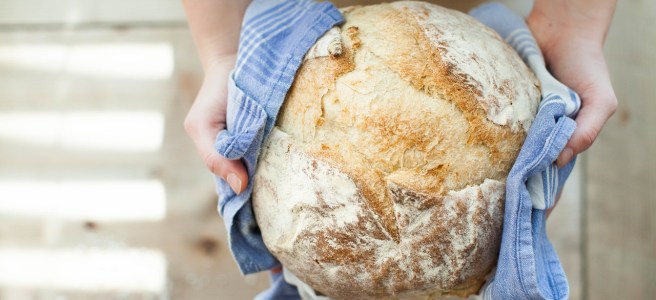
You deserve the whole loaf

With honey butter.

I used to convince myself that I was happy in relationships where I really wasn’t. I told myself that wanting more was asking too much. That the scraps I was given were enough—if I just tried harder, stayed complaisant, didn’t demand things.

I remember being with someone who didn’t want the same things I wanted, and instead of honoring my own truth, I contorted myself into someone I thought he would want. I told myself I was fine. That this was love.

But it wasn’t. It was me abandoning myself for the sake of keeping the relationship.

We do this in all kinds of ways—not just in romantic relationships.
We mistrust ourselves.
We minimize our needs.
We shrink our voices.
We edit our desires to stay connected, to stay approved of, to stay “safe.”

The thing is, the relationship that suffers most when we do this is the one we have with ourselves.

We stop listening to our gut.
We override our knowing.
We become strangers to our own needs and wholeness, chasing crumbs of validation while starving for the fullness of self-trust.

And over time, that internal erosion leaves us disconnected—not just from others, but from our true and full selves.

The turning point, for me, was realizing:
I don’t want crumbs.
I want the whole loaf.
And more than that—I deserve it.

Not because I proved myself worthy.
Not because someone else finally said I was.
But because I decided to stop abandoning myself and start trusting what I want, what I feel, and what is true for me.

Because staying in a relationship—whether romantic, professional, or even familial—shouldn’t come at the cost of losing you.

Your Turn:

  • Is there a place in your life where you’re settling for crumbs?
  • What might change if you trusted your desires instead of downplaying them?
  • What would self-loyalty look like in that area of your life?
  • See the poem I wrote here about deserving the whole loaf.

Subscribe if you want to receive this content directly in your inbox.

Work with me: Want to see how self-care is transformative and can help you create the results you want in your life? I can show you how. I offer first-time seekers a complimentary 45-minute exploratory session. Sign up here.

What’s on your mind? It can be powerful to learn from each other and our common struggles when it comes to our practice of self-care–or just being a human being. If you have something you’re struggling with and would like some perspective, share it here. Your issue may be chosen and addressed in the next post–it’ll be totally anonymous.

Rise Stronger

firebird

And so, I crept on the ground

Small and insignificant

Curled myself 

Into myself

For so long

Accepted crumbs off the loaf 

I didn’t know how to deserve

For so long

Until my body took the lead

Over my mind

Reflected the weakness within

That became the weakness without

Shutting down systems of organs

A blood poisoned betrayal

For so long

Intruding upon and invading 

A worn down heart gasps

Sustenance, sustenance, sustenance

Anesthesia flows through vessels

Soul floats above unconscious body

For so long

Eleven hours cracked open

Reparation of my heart 

Fueled revolution of my life

Broken down, built back up

Cradled, shaped and molded, slowly

For so long

Until, until I rise strong 

A firebird hatched, vulnerable and new

Learning to spread wings wide

Lifting up, up to the sky 

In creation and celebration 

Say goodbye to the life lived so small

Grieve and mourn what can no longer be

Praise and give gratitude for something more

That is me

Reflected back to me

I see my value now, self-worth that was

For so long

Pushed down inside, rise

Rise strong

And I feel you getting near

Asking me to know my value

My worth

Before you can know it too

And I do, I do

I revel now in my revelation

Believing that I deserve the whole loaf

Receive it even with honey butter   

How to enjoy being you

It’s a practice.

What does enjoying “being you” look like?

When we don’t like ourselves, it’s hard to enjoy being ourselves. But sometimes we don’t even realize we don’t like ourselves—until we notice how often we’re getting frustrated and upset with ourselves.

This might look like quickly overcommitting to things. Staying up late rethinking what we said.  Trying to be the perfect version of ourselves wherever we are.

This isn’t a flaw. It’s a signal. These are clues pointing us back to the part of us that’s still trying to earn belonging.

A client once shared this with me:

She had just finished a long workday when a friend texted asking for help on something she’d procrastinated on. My client’s instinct was to say No. She was exhausted.

But what came out was, “Of course! No problem.”
Then she stayed up past midnight trying to finish both her friend’s request and her own to-do list.

The next day she felt tired and irritated—and really, disappointed in herself.

We explored it together and underneath the resentment wasn’t just over-giving. It was the belief: If I say no, she might not like me.
And beneath that: I don’t feel like I’m enough as I am.

When we don’t like ourselves, it shows up in these quiet ways. But that doesn’t mean there’s something wrong with us. It just means we’ve learned to measure our worth by how others respond to us.

That’s why liking yourself is a practice. It’s not a personality trait, something you either have or don’t have.

It’s something you build—the same way you would a relationship. Because it’s your relationship with yourself.
We practice with presence, with care, with forgiveness. And maybe even a little humor.

We don’t have to wait until we’ve “fixed” ourselves to start liking ourselves.
We just have to be willing to have our own back. No matter what.

And like any practice, we get better by doing it.

Your Turn:

  • What’s one way you notice yourself hustling for approval?
  • What’s something you appreciate about who you are right now—without changing a thing?
  • How can you practice having your own back this week?

The most powerful kind of approval

Your own.

I used to run around trying to prove I was worthy.

I overworked myself at my job. I volunteered on weeknights and weekends. I said “yes” to everyone and everything.

I thought if I did enough, I’d finally feel valuable. But because I didn’t know how to approve of myself, I kept seeking that approval from others—and at my own expense.

What I didn’t know back then: You can seek your own approval. 

In fact, your own approval is the most important of all. Because only you get to decide whether you approve of yourself.

Even when we try to seek approval from others, we can’t control what people think of us. People will form opinions based on them—their experiences, conditioning, values, beliefs—not necessarily based on us.

Imagine being in a room with 10 people. You say or do something meaningful to you. Chances are, you’ll get 10 different interpretations. You didn’t change what you did—but each person filters it through their own lens.

If we’re chasing approval from all 10 people, we might get praise from a few… and judgment from a few others. It’s a losing game, and it pulls us away from who we really are.

Instead, we can learn to ask:
“How do I want to show up?”
“What feels aligned for me?”

When we act from our values—when we behave in ways we’re proud of—we can approve of ourselves, regardless of what anyone else thinks.

Now, I still do a lot of things. But I’m no longer doing them to prove my worth.

I do them because I want to.  Because I know I have value to contribute. Because I know I’m already worthy.

But most of us weren’t taught that we’re already worthy. I know I wasn’t.

What we’re often taught is that worth has to be earned—through performance, achievement, likability. That if we want to belong, we have to please. That if we want to be accepted, we have to keep the peace.

But real belonging never asks you to betray yourself.

When we build self-approval, we become more able to connect authentically—with people who see us clearly, and who love us as we are. We stop bending and breaking ourselves to be palatable. We start showing up as more of ourselves. And from that place, real belonging becomes possible.

Your turn:

Do you believe that you are already 100% worthy?

If not, could you try on the thought: “It’s possible that I’m already 100% worthy”?

What might change if you practiced believing that?

Where in your life are you tempted to hide or perform to feel like you belong?

What would it look like to bring more of your true self into those spaces?

Subscribe if you want to receive this content directly in your inbox.

Work with me: Want to see how self-care is transformative and can help you create the results you want in your life? I can show you how. I offer first-time seekers a complimentary 45-minute exploratory session. Sign up here.

What’s on your mind? It can be powerful to learn from each other and our common struggles when it comes to our practice of self-care–or just being a human being. If you have something you’re struggling with and would like some perspective, share it here. Your issue may be chosen and addressed in the next post–it’ll be totally anonymous.

How to feel worthy

Pay attention to YOU.

To feel worthy, you must first make your own instincts worthy of your attention and your effort.

pg. 223 (From The 5 Second Rule by Mel Robbins)

Many of us struggle or have struggled to feel worthy. We know that it’s important to feel worthy. We know that we should feel worthy. But how do we actually start to feel worthy? Where does worthiness come from? 

In my experience, feeling worthy is a process. It doesn’t happen overnight, though when it does happen, it seems to have happened overnight! But it’s really due to all the work we’ve done with ourselves over time.

The first step to feeling worthy is to become aware of the ways in which we don’t feel worthy. This can show up in different forms and in different areas of our lives. Maybe we feel worthy in some aspects of our lives, so getting accolades at work feels natural. Or being in a healthy partnership comes easy. Or being financially stable is just a “given.” 

But in the areas in which we don’t feel worthy, those are the areas where we struggle. 

  • We don’t feel we deserve great friendships, so we shy away from connection and wonder why we feel lonely.
  • We don’t feel worthy of the praise from our boss, so we don’t believe her kind words.
  • We don’t feel deserving of the gifts from our loved ones on our birthday, so we feel guilty receiving them.
  • We think the new apartment we moved into is “too good” for us and feel undeserving to live there.
  • We wait for the other shoe to drop when a new relationship starts, like “Wait until they really get to know me…” or we end up sabotaging it ourselves. 

Again, it can come up in various forms. 

To feel worthy, one thing we must do for ourselves is to pay attention to ourselves. For me, I was always disregarding myself, ignoring myself, abandoning myself.

I did this in order to please others, to have what I THOUGHT I wanted, even if it meant dishonoring my needs and what I REALLY wanted. I wasn’t paying attention to myself, my instincts, and what was true for me. I tried to convince myself to want what didn’t really align with me, I contorted myself to fit what someone else wanted. I lied to myself and lied to others – unintentionally – because I thought it was the “right” thing to do in order to seek approval. 

By paying attention to ourselves, we learn what is true for us and how truth FEELS for us. We then know when we’re lying to ourselves. When we lie to ourselves, that is a form of abandoning ourselves. When we pay attention to ourselves, we show ourselves that we are worthy of attention and effort. Especially from ourselves.

When we start paying attention to ourselves, our thoughts, feelings, and behaviors change. They become more aligned with our truth. We start to see that we have always been worthy. And what we are engaging in is the process to UNLEARN our feelings and beliefs of UNworthiness. 

I learned about some of my unhealthy beliefs about worthiness through therapy and life coaching. And I’ve been doing the work to UNLEARN all the ways I thought I wasn’t worthy before. Coming from a place of worthiness changes everything.

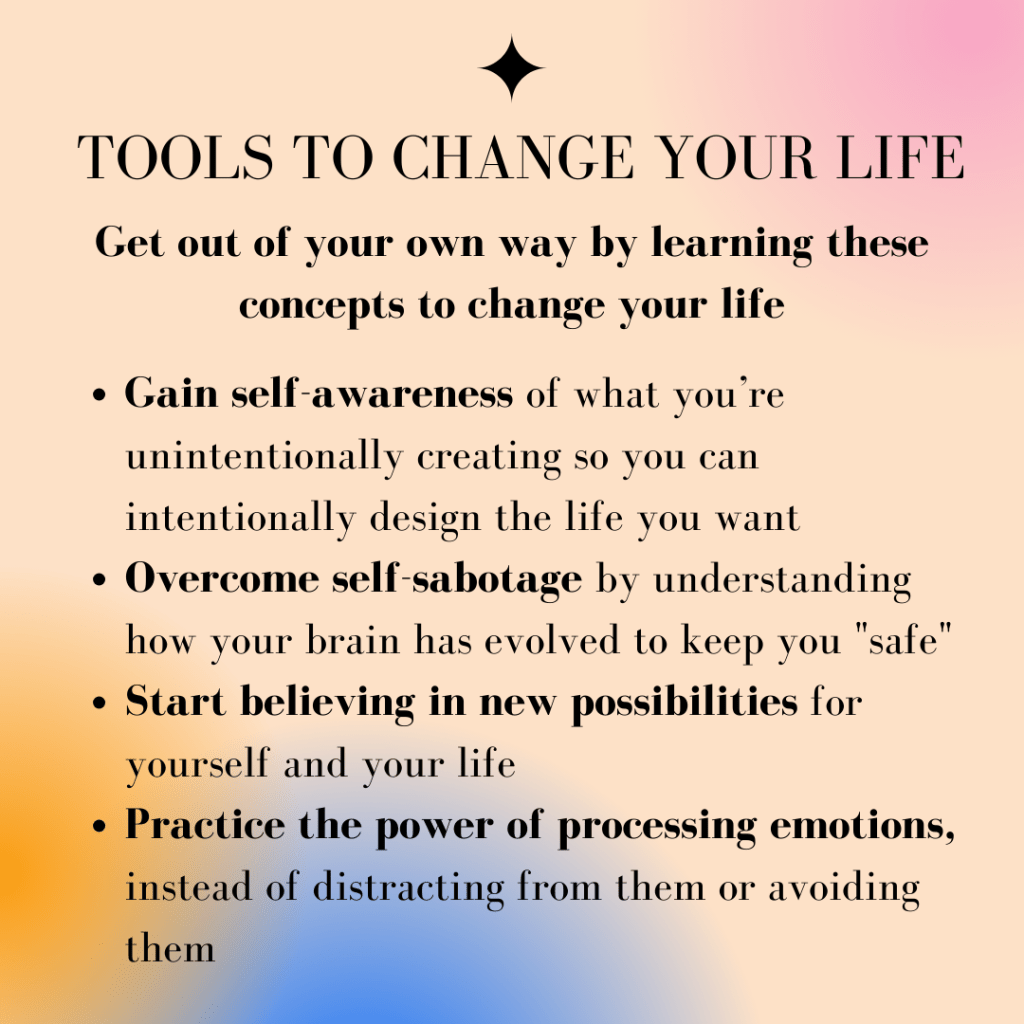
So I’ve created an introductory coaching series called “Tools to Change Your Life” to support others on their own path to UNlearning all the ways they believed they were unworthy before to seeing that they have ALWAYS been worthy.

You can consider this program for yourself or for someone in your life who could benefit from a program like this!


Subscribe if you want to receive this content directly in your inbox.

Work with me: Want to see how self-care is transformative and can help you create the results you want in your life? I can show you how. I offer first-time seekers a complimentary 45-minute exploratory session. Sign up here.

What’s on your mind? It can be powerful to learn from each other and our common struggles when it comes to our practice of self-care–or just being a human being. If you have something you’re struggling with and would like some perspective, share it here. Your issue may be chosen and addressed in the next post–it’ll be totally anonymous.

Do you seek your own approval?

It’s the best.

Most of us aren’t taught to believe that we’re already worthy. What we are taught is to believe that we have to perform, achieve, and accomplish in order to feel worthy and valuable. That we have to please everyone and get everyone to like us to feel worthy and valuable. 

We were not taught that our own self-approval, self-acceptance, and our thoughts about ourselves are more important than what other people think about us or even what we think other people think about us. 

Much of the time, we do things because of what we think other people will think about us. 

It’s exhausting, isn’t it?

We’ve been conditioned to do this. But we can’t control what other people think. Not if we do “good” things or if we do “bad” things. They will think whatever they want about us and that’s based on them and not us. 

Because everyone has their own interpretations based on their past and lived experiences, their identities, their conditioning, their beliefs and values, their current thoughts, and many other factors.

So if we can’t control what other people think about us, it’s true that we may lose their approval –  or gain it – independent of what we actually DO. 

But do you know whose approval we can always have? Our own. 

We build our self-approval through our thoughts about ourselves. Not through what we do for our work or job, what we do or don’t do for others, or what we do well or don’t do well.  

We build our self-approval through our relationship with ourselves. Our relationship with ourselves is built on what we think about ourselves. 

What kind of thoughts do we have about ourselves? What do we think when we look in the mirror? What do we think when we make a mistake? What do we think when something goes the way we wanted it to go? When it doesn’t go the way we want it to go? What do we make it all mean about ourselves? These are all thoughts about ourselves. 

Once we become aware of our current thoughts about ourselves, we can see whether they’re in alignment with how we want to feel about ourselves. Are we being kind and supportive to ourselves? What do we enjoy about ourselves? 

And this doesn’t mean we don’t accept feedback from others – in fact, having our own approval and having our own back helps to OPEN US UP to others’ feedback. Because we don’t take it personally. We don’t let it damage our self-esteem or destroy our self-worth. Because we’re not seeking our esteem or worth from outside ourselves. 

We can hear feedback and take it in and decide if we’d like to make adjustments based on what we hear. We can choose to adjust or we can choose not to. But it’s not in order to please others. It’s based on how WE want to show up in the world differently or not.

Your turn: What does it feel like to seek your own approval without worrying about the approval of others? What does it feel like to have your own back no matter what? How much time and energy might you save if you seek your own approval vs. seeking others’ approval? How would your decisions be different?

I talk more about this concept in my latest podcast episode, out today at 3:30pm Pacific! Episode 13: Unconditional Love & Lovability. You can check it out here: Apple Podcasts, Spotify, YouTube.

Subscribe if you want to receive this content directly in your inbox.

Work with me: Want to see how self-care is transformative and can help you create the results you want in your life? I can show you how. I offer first-time seekers a complimentary 45-minute exploratory session. Sign up here.

What’s on your mind? It can be powerful to learn from each other and our common struggles when it comes to our practice of self-care–or just being a human being. If you have something you’re struggling with and would like some perspective, share it here. Your issue may be chosen and addressed in the next post–it’ll be totally anonymous.

Doing all the things?

Care for yourself instead.

Do we have space in our lives for self-care? Some of us may think that we don’t because there are “so many” other things that we “need to” do. Why are we doing so many of these other things and not caring for ourselves?

In the past I used to think I needed to DO all the things in order to prove my worth, because I used to think I wasn’t “good enough.” I wasn’t even conscious of this as a choice I was making-–I just thought it was how I was supposed to be living my life.

I’d do things from a sense of internal pressure—take classes to learn a certain skill, exercise only for weight loss, do activities where I could “meet new people,” be on nonprofit Boards for a sense of prestige, volunteer my time in other ways. I ended up DOING so much in order to feel like I was “good enough” that I ended up exhausting myself and feeling stressed out and overwhelmed. With no time to really care for myself in intentional ways. 

Only looking back, and through the self-awareness work I’ve done through therapy and coaching, I see that I was “doing” in order to prove myself as worthy and valuable. Because I thought I wasn’t good enough, I thought I could DO things to feel good enough. 

Now I know that worthiness comes from within, that I can choose to have the belief “I am already 100% worthy. I don’t need to DO anything to prove that.” And that belief is available to ALL of us. We get to choose to believe it (or not). 

So if we decide that we don’t have to DO things to prove ourselves, what might we let go of doing? How might letting go of some of those things create more space in our lives to prioritize and care for ourselves intentionally instead?

Your turn: What if you stopped doing all the things to prove your worthiness and value and started spending time checking-in with yourself? What’s good about you? (Think about who you ARE, not what you DO, to answer that question.) How can you enjoy being with yourself even more? How can you enjoy being YOU even more so that you feel deserving of the care you’d like to give yourself?

Subscribe if you want to receive this content directly in your inbox.

Work with me: Want to see how self-care is transformative and can help create a more meaningful life in which you start committing to yourself and show up the way you want? I can show you how. I offer first-time seekers a complimentary 60-minute exploratory session. Sign up here.

What’s on your mind? It can be powerful to learn from each other and our common struggles when it comes to our practice of self-care–or just being a human being. If you have something you’re struggling with and would like some perspective, share it here. Your issue may be chosen and addressed in the next post–it’ll be totally anonymous.

Are you 100% worthy?

Believe it.

I used to run around trying to do all these things in order to prove that I was worthy. I used to overwork myself at my job. I used to volunteer on weeknights and on the weekends. I used to say “yes” to everyone and everything. 

I thought I had to do all these things in order to show that I had value.

Now, I still do a lot of things, but it’s no longer coming from a place of “I need to prove myself and my worthiness.” Now what I do comes from a place of wanting to contribute because I know I have value to add. 

Through my coaching school, The Life Coach School, I learned to believe that I am already 100% worthy. I always have been. I just didn’t know that this was something I could believe about myself. 

Most of us aren’t taught to believe that we’re already worthy. What we are taught is to believe that we have to perform, achieve, and accomplish in order to feel worthy and valuable. That we have to please everyone and get everyone to like us to feel worthy and valuable. 

We were not taught that our own self-approval, self-acceptance, and our thoughts about ourselves are more important than what other people think about us or even what we think other people think about us. 

Much of the time, we do things because of what we think other people will think about us. We’ve been conditioned to do this. But we can’t control what other people think. Not if we do “good” things or if we do “bad” things. They will think whatever they want about us and that’s based on them and not us.

We build our self-worth through our thoughts about ourselves. Not through what we do for our work or job, what we do or don’t do for others, or what we do well or don’t do well.  

We build our self-esteem through our relationship with ourselves. Our relationship with ourselves is built on what we think about ourselves. What kind of thoughts do we have about ourselves? What do we think when we look in the mirror? What do we think when we make a mistake? What do we think when something goes the way we wanted it to go? These are all thoughts we have about ourselves. 

Once we become aware of our current thoughts about ourselves, we can see whether they’re in alignment with how we want to feel about ourselves. If we wouldn’t let others talk to us in a certain way, why do we let ourselves do that?

Your turn: “I’m already 100% worthy.” Do you believe that? What about, “It’s possible that I’m already 100% worthy,” or “It’s possible that I can learn to believe that I’m already 100% worthy.” What would happen if you practiced one of these thoughts every day? What kind of thoughts do you think about yourself? Is there anything you’d like to change about that? If so, what?

Subscribe if you want to receive this content directly in your inbox.

Work with me: Want to see how self-care is transformative and can help create a more meaningful life in which you start committing to yourself and show up the way you want? I can show you how. I offer first-time seekers a complimentary 60-minute exploratory session. Sign up here.

What’s on your mind? It can be powerful to learn from each other and our common struggles when it comes to our practice of self-care–or just being a human being. If you have something you’re struggling with and would like some perspective, share it here. Your issue may be chosen and addressed in the next post–it’ll be totally anonymous.

When you try to do all the things

Be with you.

I’ve mentioned this before, that in the past I used to think I needed to DO all the things in order to prove my worth, because I used to think I wasn’t “good enough.” I wasn’t even conscious of this as a choice I was making–I just thought it was how I was supposed to do things. 

I’d do things from a sense of internal pressure–to take classes to learn a certain skill, to exercise only for weight loss, to do activities where I could meet new people, to be on nonprofit Boards, to volunteer my time in other ways. I ended up doing so much in order to feel like I was “good enough” that I ended up exhausting myself and feeling stressed out and overwhelmed.

Only looking back, and through the self-awareness work I’ve done through therapy and coaching, I see that I was “doing” in order to prove myself as worthy and valuable. Because I thought I wasn’t good enough, I thought there were things I could DO to feel good enough. 

Now I know that worthiness comes from within, that I can choose to have the belief “I am already 100% worthy.” And that belief is available to ALL of us. We get to choose to believe it (or not).

Sometimes we do things to “avoid” ourselves or “escape” ourselves. Maybe we’re not used to being with ourselves, or we don’t like being with our own thoughts, or maybe we might not like being with ourselves as our only company. 

If that’s the case, I want to offer that the most important work to feel “good enough” comes from learning how to like ourselves even more.

To do this, we need to know what we think about ourselves. Are we acknowledging ourselves for who we are and what we like about ourselves? Not what we DO, but who we ARE as people. Many times, when asked about ourselves, we talk about what we DO or the roles we have. But how often do we talk about what we like about ourselves? 

Some self-acknowledgements could be:

“I like myself for being generous” / “I am generous”

“I like myself for being kind” / “I am kind”

“I like myself for being understanding” / “I am understanding”

“I like myself for being intelligent” / “I am intelligent”

“I like myself for being ambitious” / “I am ambitious”

“I like myself for being amazing” / “I am amazing”

This is not to say that we’re doing this in order to feel “better than” other people–which for some of us, doing this type of work can feel uncomfortable because we’re not supposed to be “boastful.” 

No, this work is for us to acknowledge ourselves and who we are and what we like about ourselves. To feel “good enough” or valuable comes from within ourselves. When we slow down and spend time checking-in with ourselves, we get to know ourselves even more. We start to find out what’s true for us, about us.

And if we happen to see things in ourselves that we’d like to change or improve upon, we can always do so, but from a place of compassion and care for ourselves. Instead of from a place of not feeling good enough.

So now I do things because I want to, from a place of knowing that I have value to contribute–not in order to get a feeling of value from “out there.” 

Your turn: What if you stopped doing all the things to prove your worthiness and value and started spending time checking-in with yourself? What’s good about you? (Think about who you ARE, not what you DO, to answer that question.) How can you enjoy being with yourself even more? How can you enjoy being YOU even more?

Subscribe if you want to receive this content directly in your inbox.

Work with me: Want to see how self-care is transformative and can help create a more meaningful life in which you start committing to yourself and show up the way you want? I can show you how. I offer first-time seekers a complimentary 45-minute exploratory session. Sign up here.

What’s on your mind? It can be powerful to learn from each other and our common struggles when it comes to our practice of self-care–or just being a human being. If you have something you’re struggling with and would like some perspective, share it here. Your issue may be chosen and addressed in the next post–it’ll be totally anonymous.

You’re already 100% worthy

Believe it.

I used to run around trying to do all these things in order to prove that I was worthy. I used to overwork myself at my job. I used to volunteer on weeknights and on the weekends. I used to say “yes” to everyone and everything. 

I thought I had to DO all these things in order to show that I had value.

Now, I still do a lot of things, but it’s no longer coming from a place of “I need to prove myself and my worthiness.” Now what I do comes from a place of wanting to contribute because I know I have value to add. 

Through my coaching school, The Life Coach School, I learned to believe that I am already 100% worthy. I always have been. I just didn’t know that this was something I could believe about myself. 

Most of us aren’t taught to believe that we’re already worthy. What we are taught is to believe that we have to perform, achieve, and accomplish in order to feel worthy and valuable. That we have to please everyone and get everyone to like us to feel worthy and valuable. 

We were not taught that our own self-approval, self-acceptance, and our thoughts about ourselves are more important than what other people think about us or even what we think other people think about us. 

Much of the time, we do things because of what we think other people will think about us. We’ve been conditioned to do this. But we can’t control what other people think. Not if we do “good” things or if we do “bad” things. They will think whatever they want about us and that’s based on them and not us.

We build our self-worth through our thoughts about ourselves. Not through what we do for our work or job, what we do or don’t do for others, or what we do well or don’t do well.  

We build our self-esteem through our relationship with ourselves, which is what we think about ourselves. What kind of thoughts do we have about ourselves? What do we think when we look in the mirror? What do we think when we make a mistake? What do we think when something goes the way we wanted it to go? These are all thoughts we have about ourselves. 

Once we become aware of our current thoughts about ourselves, we can see whether they’re in alignment with how we want to feel about ourselves. If we wouldn’t let others talk to us in a certain way, why do we let ourselves do that?

Your turn: “I’m already 100% worthy.” Do you believe that? What about, “It’s possible that I’m already 100% worthy,” or “It’s possible that I can learn to believe that I’m already 100% worthy.” What would happen if you practiced one of these thoughts every day?

What kind of thoughts do you think about yourself? Is there anything you’d like to change about that? If so, what?

Subscribe if you want to receive this content directly in your inbox.

Work with me: Want to see how self-care is transformative and can help create a more meaningful life in which you start committing to yourself and show up the way you want? I can show you how. I offer first-time seekers a complimentary 45-minute exploratory session. Sign up here.