I did this to myself

What a packed schedule :/

Does it ever seem like your schedule is running you instead of the other way around? The other day, I found myself feeling overwhelmed—back-to-back meetings, no time to breathe, and frustration creeping in. And then I realized: I did this to myself.

In the past, I used to pack my schedule so tightly that I was constantly rushing, feeling anxious, and even getting irritated at people walking too slowly in front of me on the street. It wasn’t just about the logistics—it was the mental exhaustion of always being on and never feeling like I had enough time. I blamed my schedule, but in reality, I was the one choosing it.

Now, when I plan my schedule, I can ask myself some simple questions:

  1. Do I actually need to say yes to this?
  2. Am I giving myself enough space to transition between tasks?
  3. If I’m saying yes to this, what am I saying no to? (Rest, exercise, peace of mind?)

By checking in with myself first, I can make more intentional choices—whether that’s adding a buffer before a meeting, saying no to a last-minute reschedule, or planning recovery time after a packed day.

Another thing to consider is why we are saying yes to something. It might be out of obligation or to stave off a conflict with someone or to prevent ourselves from feeling guilty. Whatever the reason, do we like our reason? If so, that’s great. If not, we may want to reconsider or remember that we can choose something else, and like our reason for choosing that instead.

It’s not just about avoiding burnout; it’s about designing a schedule that supports us, rather than drains us. When we’re mindful of our choices, even a busy day feels more manageable—because we get to be in charge of it.

Your Turn:

  • How do you want to recover after an intense day or week?
  • Even if your schedule isn’t always within your control, how can you design it to work for you instead of against you?
  • What’s one small shift you can make this week to support yourself when you have a packed day?

Why you aren’t taking action

It’s about feelings.

Everything we do is because we want to feel a certain way. Every goal we chase, every decision we make—it’s all about the feeling we think we’ll get (or avoid).

Remember: Our feelings don’t come from our circumstances. They come from our thoughts about those circumstances.

And since our feelings drive our actions—and our actions create our results—our thoughts are shaping everything in our lives.

Do you want different results? Then you need to think different thoughts.

For example:

🚫 You decline a big opportunity, not because you can’t do it, but because you fear failure and want to avoid feeling dejected. The current thought might be, “I’m not sure I’m up to the task.” A different thought that creates a new feeling could be, “I’m willing to see what I’m made of.”

🤐 You don’t share your opinion in a meeting, not because it’s not valuable, but because you feel nervous, thinking, I don’t want to look stupid. A different thought could be, “It’s important for them to hear various perspectives.” And that creates a different feeling, like determination.

💔 You disconnect from your partner, not because you want distance, but because you feel hurt, thinking, They should want to spend more time with me. A different thought could be, “I want them to know how I really feel about this, even if it’s hard.”

See the pattern? Our thoughts fuel our feelings, our feelings drive our actions, and our actions create our results—sometimes, if we’re not careful, our thoughts can create the exact opposite of what we truly want.

So if you don’t like your results, start with your thoughts.

Your turn: What feelings are fueling your actions? What actions are those feelings driving? And are they creating the results you actually want?

Subscribe if you want to receive this content directly in your inbox.

Work with me: Want to see how self-care is transformative and can help you create the results you want in your life? I can show you how. I offer first-time seekers a complimentary 45-minute exploratory session. Sign up here.

What’s on your mind? It can be powerful to learn from each other and our common struggles when it comes to our practice of self-care–or just being a human being. If you have something you’re struggling with and would like some perspective, share it here. Your issue may be chosen and addressed in the next post–it’ll be totally anonymous.
When you go all-in

Bet on yourself.

“Leap and the net will appear.” – John Burroughs

This year, I’m deciding to go all-in with the goals I have. It sounds obvious—of course we need to be all-in to succeed. But how often do we quietly talk ourselves out of what we want?

“It probably won’t happen, so why try?”

“What if I give up before I get there?”

“What if I’m not cut out for this?”

These are just ways our brain tries to keep us “safe,” by convincing us NOT to take actions towards our goals. Because goals can be scary. The unknown feels risky. Disappointment, failure, and letting ourselves (or others) down feels scary. So, we hedge our bets. We put in half-effort as a built-in excuse for why we didn’t make it.

But half-effort isn’t going all-in.

Something shifts when we decide to go all-in, when we DO take actions—even if we ultimately don’t end up with our intended goal. 

Even if we don’t end up with our intended goal?!

Yes. Because by doing this, we are seeing what’s possible for ourselves, stretching ourselves past who we already are and becoming an expanded version of ourselves. 

I want to see who I can become through this process. I know that no matter what the outcome, I will grow from going through this process. 

And maybe that’s the whole point of having goals. Not only to achieve the goal, but to see who we can become by working towards the goal. In working towards the goal, we will be strengthening our belief in ourselves, we might be taking actions we’ve never taken before, and we might be feeling the discomfort of doing these new things, these hard things. 

Then it doesn’t matter so much if we actually achieve the goal or not. Because we still get to be the person we’ve become from the effort we’ve exerted. That part doesn’t go away. That growth becomes part of us. We can take this version of ourselves to the next thing, and the next.

And that version of us? That’s the real win.

Your turn: What do you want for yourself that you’re willing to go all-in on and bet on yourself to make happen? What would you need to think and believe? What would you need to feel? And what actions would you take (or not take) to get the result you want? Who will you become along the way?

Subscribe if you want to receive this content directly in your inbox.

Work with me: Want to see how self-care is transformative and can help you create the results you want in your life? I can show you how. I offer first-time seekers a complimentary 45-minute exploratory session. Sign up here.

What’s on your mind? It can be powerful to learn from each other and our common struggles when it comes to our practice of self-care–or just being a human being. If you have something you’re struggling with and would like some perspective, share it here. Your issue may be chosen and addressed in the next post–it’ll be totally anonymous.
None of your business?

What’s yours is yours.

Have you ever found yourself stressing about someone else’s choices? Maybe a friend is making decisions you don’t agree with, or you’re worried about the way your partner is handling a situation with a colleague. Or perhaps you’re caught up in something bigger—like the state of the economy or what the weather will be like next week.

It’s exhausting, isn’t it?

I learned a concept from Byron Katie that helped me untangle what often became a mental mess. She offers a powerful framework that explains there are three types of business:

  • God’s business: Things beyond human control, like the weather or natural disasters.
  • Their business: Other people’s thoughts, feelings, and actions/decisions.
  • My business: Your own thoughts, feelings, and actions/decisions—the one realm where you truly have power.

When we’re caught up in “God’s business” or “their business,” we disconnect from ourselves. We avoid looking at what’s really going on in our lives and miss the opportunity to make meaningful changes.

Why do we do this? It can be easier to fixate on what others are doing or what’s out of our control than to face our own fears, desires, or responsibilities. But when we do this, it’s a recipe for anxiety, frustration, and feeling stuck because we’re trying to control things that are not ours to control.

The good news is that we don’t have to stay there.

We can get back into our business by:

  • Pausing and reflecting: “Whose business am I in right now? Is this mine to control?”
  • Shifting our focus inward: Instead of ruminating on others, think about what you can do today to feel more empowered.

I love what Byron Katie has on her website:

Ask yourself: “Am I in their business? Did they ask me for my advice?” And more importantly, “Can I take the advice I am offering and apply it to my life?”

Staying in our own business can be one of the most freeing things we can do. When we stop trying to control what isn’t ours, we reclaim energy for what is—our goals, our relationships, and our peace of mind.

Your turn: Where in your life are you caught up in someone else’s business, and how is it affecting you? What’s one area of your business that you’ve been neglecting or avoiding? How might your life feel different if you focused only on what you can control?

Subscribe if you want to receive this content directly in your inbox.

Work with me: Want to see how self-care is transformative and can help you create the results you want in your life? I can show you how. I offer first-time seekers a complimentary 45-minute exploratory session. Sign up here.

What’s on your mind? It can be powerful to learn from each other and our common struggles when it comes to our practice of self-care–or just being a human being. If you have something you’re struggling with and would like some perspective, share it here. Your issue may be chosen and addressed in the next post–it’ll be totally anonymous.
Being angry is easier?

Anger vs. Grief.

Something that’s come up recently with my clients is the topic of grief and the feeling of anger that can be associated with grief. 

Have you noticed that anger can seem “easier” to feel than grief? When this happens, we’re actually distracting ourselves from feeling grief by feeling angry about the situation instead.

I’ve felt this in my own life, especially when going through the loss of a relationship. Rather than facing the sadness of losing someone I cared about, I’d find myself focusing on how they wronged me, how unfair the situation was, how it wasn’t supposed to be like this. Anger gave me something to focus on and a sense of control, like I could’ve done something to prevent the outcome, while grief felt overwhelming and out of control.

But here’s the thing: anger and grief are very connected. When we choose to feel anger, it’s often shielding us from the vulnerability of feeling grief. Anger can be like a protective layer over our sadness, pain, and loss. It can be an easier emotion to lean into, but when we stop there, we miss the deeper healing that comes from acknowledging and processing our grief.

Grief allows us to honor what was lost—whether it’s a person, a relationship, or an unmet hope. When we make space for grief, we open ourselves to healing. It doesn’t mean we’re excusing the hurt or pretending it didn’t matter; it means we’re courageous enough to feel it all. And also courageous enough to then do the work of finding acceptance and moving forward, no matter how long that might take. Feelings don’t have a timeframe–even though we may want them to. They will be there as long as they’ll be there, to allow us to experience what we need to learn and take away from it.

Your turn: When have you turned to anger instead of allowing yourself to grieve? What might happen if you allowed space for both emotions? And how can you show compassion to yourself during this process?

Subscribe if you want to receive this content directly in your inbox.

Work with me: Want to see how self-care is transformative and can help you create the results you want in your life? I can show you how. I offer first-time seekers a complimentary 45-minute exploratory session. Sign up here.

What’s on your mind? It can be powerful to learn from each other and our common struggles when it comes to our practice of self-care–or just being a human being. If you have something you’re struggling with and would like some perspective, share it here. Your issue may be chosen and addressed in the next post–it’ll be totally anonymous.

Regulating yourself

Self-care starts in your mind.

From my clients, I’ve surmised that many of us wonder why self-care feels so hard to engage in sometimes. We know WHAT to do—eat well, rest, move our body, take time for ourselves—but life seems to keep getting in the way.

When our nervous system is in “survival mode” (fight, flight, or freeze), it’s very challenging to prioritize ourselves. Chronic stress keeps our brain and body in overdrive, making even small acts of care feel overwhelming. When we feel stuck in a cycle of stress, overwhelm, or self-doubt, self-care feels hard to prioritize.

Our nervous system responds not just to external stressors but also to our thoughts. Fearful, negative, or chaotic thinking can keep us in “fight or flight” mode, making it hard to focus, relax, or care for ourselves.

The good news? We can calm our nervous system with our thoughts.

Here are two things to recognize and try:

Negative Thoughts Are Optional:

  • When we notice a stressful thought, we can ask, “What’s another way to think about this?”
  • Example: Instead of “I’m failing at self-care,” we can choose to think “I’m learning what works for me, one step at a time.”

Affirmations Change Our Perspective:

  • We can choose to think affirming phrases like “I am safe,” “I can handle this,” or “I can figure this out.”
  • Say them out loud, write them down, or repeat them in your mind throughout the day.

When we can consciously shift our thinking, we signal to our brain that we’re safe. This activates the parasympathetic nervous system, the part of our body responsible for rest, digestion, and recovery. 

A large part of self-care is knowing how to regulate our nervous system. And then, with a regulated nervous system, we are more ready to show up for ourselves so that self-care becomes something we WANT to do, not something we “should” do.

Your turn: How can you be more intentional with your thoughts today? In what other ways do you naturally calm your own nervous system? Are you open to seeing how a regulated nervous system supports you in living your life differently? I’d love to hear any insights you have.

I talk more about how to be intentional with your thoughts in my program Tools to Change Your Life. Check it out here!

Subscribe if you want to receive this content directly in your inbox.

Work with me: Want to see how self-care is transformative and can help you create the results you want in your life? I can show you how. I offer first-time seekers a complimentary 45-minute exploratory session. Sign up here.

What’s on your mind? It can be powerful to learn from each other and our common struggles when it comes to our practice of self-care–or just being a human being. If you have something you’re struggling with and would like some perspective, share it here. Your issue may be chosen and addressed in the next post–it’ll be totally anonymous.

“Decide to” in 2025

Don’t just “want to.”

As we move into 2025, many of us are likely thinking about changes we want to make in our lives. Sometimes we have a long list of things we want to do or change. Sometimes we have just one, two, or three big things. 

No matter what you have in mind, ask yourself this: Am I wanting to make these changes or am I deciding to make these changes?

Wanting to make changes is more like being interested in making the changes. When we want something, we have a desire or wish for something. It seems like a good idea. It doesn’t require any action to want something or be interested in something. 

When we decide to do something, it requires us to follow through on a course of action. Deciding is saying, “OK, I’m going to do X” and that’s a pretty firm commitment. Commitment requires action.  

How do you know if you just “want to” vs. “deciding to”? If you have some ideas of changes you’d like to make, think about each thing and see how it lines up with the “want to” or the “decide to” thoughts below.  

“Want to” thoughts (you allow things to get in the way of your goal):

  • My boss gave me a tight deadline, so I can’t go to the gym today (goal is to exercise every day)
  • I’m too tired to meditate this morning (goal is to meditate every morning)
  • It’s too cold to go for a run today (goal is to run 4x a week)
  • I deserve to have this treat because my day was so stressful (goal is to eat less sugar)
  • I just finished a big project so I’m treating myself to a purchase (goal is to spend less)
  • I don’t feel like it today
  • This is too hard

“Decide to” thoughts (your goal is your priority):

  • I’m going to do this today no matter what
  • This is worth it even if it’s hard sometimes
  • I can do hard things
  • I’m choosing to make this a priority for me today
  • Even though it’s cold out, I’m still going to do it today
  • This is important to me so I’m going to stick with my plan

Your turn: What do you want to do or be better at in 2025? What new results do you want to create for yourself? Are you ready to decide what you’ll do to make changes in your life? What would happen if you don’t make the change(s) you say you want to make? What would happen and who would you become if you did make the changes you decide to make?

Best wishes to you for 2025!

Subscribe if you want to receive this content directly in your inbox.

Work with me: Want to see how self-care is transformative and can help you create the results you want in your life? I can show you how. I offer first-time seekers a complimentary 45-minute exploratory session. Sign up here.

What’s on your mind? It can be powerful to learn from each other and our common struggles when it comes to our practice of self-care–or just being a human being. If you have something you’re struggling with and would like some perspective, share it here. Your issue may be chosen and addressed in the next post–it’ll be totally anonymous.

“Have to” vs. “want to”

Empowered semantics.

“I have to go over to my in-laws’ place for the holidays this year.”

“I have to pay my taxes.”

“I have to pick my kid up from school at 2pm.”

“I have to buy her a gift.”

How many of us say that we “have to” do something when in actuality, we probably WANT to do that thing.

Even if it might feel like a bit of an obligation, NOT doing it might cause more trouble than we want. So instead of thinking that we HAVE to do something, a change in semantics here actually helps us to feel more empowered about our choices. 

We can say that we WANT to do something.

Because when it comes down to it, we’re actually making empowered choices here. 

When we go over to our in-laws’ place for the holidays – even if we might feel less than happy to – we can say that we WANT to go. We are choosing to go in order to prevent whatever consequences would happen if we chose not to go.

When we pay our taxes – even if it’s not our favorite thing to do and feels like a hassle – we can say that we WANT to pay our taxes. Because by paying our taxes, we’re avoiding the consequences of choosing not to pay our taxes. 

“I want to pick my kid up from school at 2pm.”

“I want to buy her a gift.”

Sometimes a slight semantic change can create a big mindset change. And that mindset change can support us in feeling more empowered in our lives. We realize we’re making choices instead of having no agency and feeling obligated. Feeling obligated can feel disempowering. 

However, this is not to say that we need to always change our mindset from feeling obligated to feeling empowered. Having this option actually helps us recognize what we DO want to do and what we feel obligated to do. And when we aren’t able to use semantics to change our mindset, that’s when we move to boundaries. 

Your turn: Try it for yourself. When you find yourself saying or thinking “I have to…,” try changing it to “I want to…” and see where you stand. Does it help you feel more empowered in that situation? If it doesn’t, what kind of boundaries might you want to set instead? 

Subscribe if you want to receive this content directly in your inbox.

Work with me: Want to see how self-care is transformative and can help you create the results you want in your life? I can show you how. I offer first-time seekers a complimentary 45-minute exploratory session. Sign up here.

What’s on your mind? It can be powerful to learn from each other and our common struggles when it comes to our practice of self-care–or just being a human being. If you have something you’re struggling with and would like some perspective, share it here. Your issue may be chosen and addressed in the next post–it’ll be totally anonymous.

How to feel worthy

Pay attention to YOU.

To feel worthy, you must first make your own instincts worthy of your attention and your effort.

pg. 223 (From The 5 Second Rule by Mel Robbins)

Many of us struggle or have struggled to feel worthy. We know that it’s important to feel worthy. We know that we should feel worthy. But how do we actually start to feel worthy? Where does worthiness come from? 

In my experience, feeling worthy is a process. It doesn’t happen overnight, though when it does happen, it seems to have happened overnight! But it’s really due to all the work we’ve done with ourselves over time.

The first step to feeling worthy is to become aware of the ways in which we don’t feel worthy. This can show up in different forms and in different areas of our lives. Maybe we feel worthy in some aspects of our lives, so getting accolades at work feels natural. Or being in a healthy partnership comes easy. Or being financially stable is just a “given.” 

But in the areas in which we don’t feel worthy, those are the areas where we struggle. 

  • We don’t feel we deserve great friendships, so we shy away from connection and wonder why we feel lonely.
  • We don’t feel worthy of the praise from our boss, so we don’t believe her kind words.
  • We don’t feel deserving of the gifts from our loved ones on our birthday, so we feel guilty receiving them.
  • We think the new apartment we moved into is “too good” for us and feel undeserving to live there.
  • We wait for the other shoe to drop when a new relationship starts, like “Wait until they really get to know me…” or we end up sabotaging it ourselves. 

Again, it can come up in various forms. 

To feel worthy, one thing we must do for ourselves is to pay attention to ourselves. For me, I was always disregarding myself, ignoring myself, abandoning myself.

I did this in order to please others, to have what I THOUGHT I wanted, even if it meant dishonoring my needs and what I REALLY wanted. I wasn’t paying attention to myself, my instincts, and what was true for me. I tried to convince myself to want what didn’t really align with me, I contorted myself to fit what someone else wanted. I lied to myself and lied to others – unintentionally – because I thought it was the “right” thing to do in order to seek approval. 

By paying attention to ourselves, we learn what is true for us and how truth FEELS for us. We then know when we’re lying to ourselves. When we lie to ourselves, that is a form of abandoning ourselves. When we pay attention to ourselves, we show ourselves that we are worthy of attention and effort. Especially from ourselves.

When we start paying attention to ourselves, our thoughts, feelings, and behaviors change. They become more aligned with our truth. We start to see that we have always been worthy. And what we are engaging in is the process to UNLEARN our feelings and beliefs of UNworthiness. 

I learned about some of my unhealthy beliefs about worthiness through therapy and life coaching. And I’ve been doing the work to UNLEARN all the ways I thought I wasn’t worthy before. Coming from a place of worthiness changes everything.

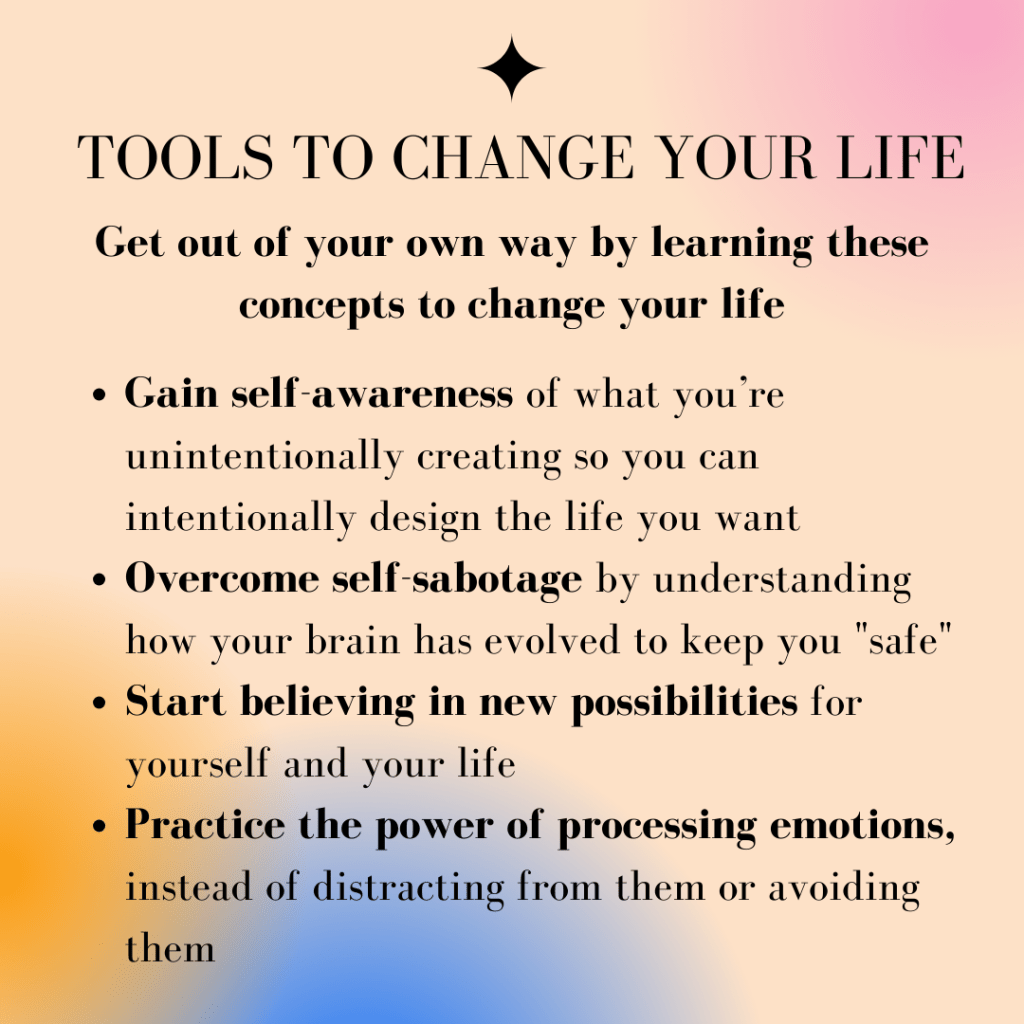
So I’ve created an introductory coaching series called “Tools to Change Your Life” to support others on their own path to UNlearning all the ways they believed they were unworthy before to seeing that they have ALWAYS been worthy.

You can consider this program for yourself or for someone in your life who could benefit from a program like this!


Subscribe if you want to receive this content directly in your inbox.

Work with me: Want to see how self-care is transformative and can help you create the results you want in your life? I can show you how. I offer first-time seekers a complimentary 45-minute exploratory session. Sign up here.

What’s on your mind? It can be powerful to learn from each other and our common struggles when it comes to our practice of self-care–or just being a human being. If you have something you’re struggling with and would like some perspective, share it here. Your issue may be chosen and addressed in the next post–it’ll be totally anonymous.

When you don’t feel “good enough”

One of the things many of my clients struggle with is not feeling “good enough.” 

When we don’t feel good enough, we do things to try to prove that we’re good enough. This is how it can show up in our lives:

  • Working without boundaries, i.e. overworking
  • Not asking for help when we need it – sometimes being unaware that we even need help
  • Thinking we need to be and look “perfect” all the time
  • Talking to ourselves in critical, judgmental ways if we aren’t “perfect” – usually without knowing it
  • Staying too long – in relationships, jobs, homes
  • Doing so much that we’re unable to take time for ourselves 
  • Grasping onto things that aren’t in our best interest in order to prove something to ourselves and/or others – lifestyle, relationship, job, etc. 

Those things are usually unhealthy behaviors. And sometimes we’re not aware that they’re unhealthy until it’s too late. And that’s OK. That’s how we learn what isn’t working for us. And it’s a path forward to learning what DOES work for us, in healthier ways.

It’s OK to find out what isn’t working in order to move towards what does work – it’s probably the most common way we learn things. Sometimes we learn from our past experiences, a line in a book we’re reading, a story about someone else’s experience, or just being sick and tired of being sick and tired. 

I learned about some of my unhealthy behaviors through therapy and life coaching. And I’ve been doing the work to become healthier and engage in my life in ways that DO work for me. It’s been so fulfilling to live differently by living INTENTIONALLY with awareness of what I’m creating in my life.

So I’ve created an introductory coaching series called “Tools to Change Your Life” to support others on their own path to becoming aware of what ISN’T working for them, so they can discover what DOES work for them.

You can consider this program for yourself or for someone in your life who could benefit from a program like this!


Subscribe if you want to receive this content directly in your inbox.

Work with me: Want to see how self-care is transformative and can help you create the results you want in your life? I can show you how. I offer first-time seekers a complimentary 45-minute exploratory session. Sign up here.

What’s on your mind? It can be powerful to learn from each other and our common struggles when it comes to our practice of self-care–or just being a human being. If you have something you’re struggling with and would like some perspective, share it here. Your issue may be chosen and addressed in the next post–it’ll be totally anonymous.