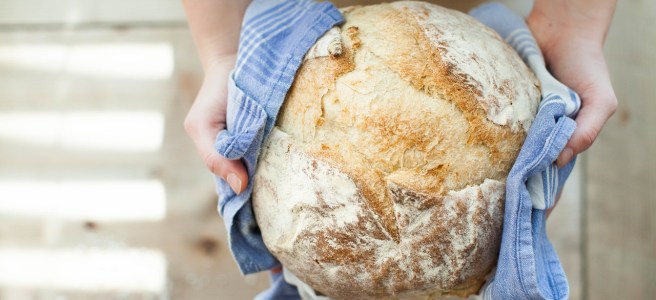
You deserve the whole loaf

With honey butter.

I used to convince myself that I was happy in relationships where I really wasn’t. I told myself that wanting more was asking too much. That the scraps I was given were enough—if I just tried harder, stayed complaisant, didn’t demand things.

I remember being with someone who didn’t want the same things I wanted, and instead of honoring my own truth, I contorted myself into someone I thought he would want. I told myself I was fine. That this was love.

But it wasn’t. It was me abandoning myself for the sake of keeping the relationship.

We do this in all kinds of ways—not just in romantic relationships.
We mistrust ourselves.
We minimize our needs.
We shrink our voices.
We edit our desires to stay connected, to stay approved of, to stay “safe.”

The thing is, the relationship that suffers most when we do this is the one we have with ourselves.

We stop listening to our gut.
We override our knowing.
We become strangers to our own needs and wholeness, chasing crumbs of validation while starving for the fullness of self-trust.

And over time, that internal erosion leaves us disconnected—not just from others, but from our true and full selves.

The turning point, for me, was realizing:
I don’t want crumbs.
I want the whole loaf.
And more than that—I deserve it.

Not because I proved myself worthy.
Not because someone else finally said I was.
But because I decided to stop abandoning myself and start trusting what I want, what I feel, and what is true for me.

Because staying in a relationship—whether romantic, professional, or even familial—shouldn’t come at the cost of losing you.

Your Turn:

  • Is there a place in your life where you’re settling for crumbs?
  • What might change if you trusted your desires instead of downplaying them?
  • What would self-loyalty look like in that area of your life?
  • See the poem I wrote here about deserving the whole loaf.

Subscribe if you want to receive this content directly in your inbox.

Work with me: Want to see how self-care is transformative and can help you create the results you want in your life? I can show you how. I offer first-time seekers a complimentary 45-minute exploratory session. Sign up here.

What’s on your mind? It can be powerful to learn from each other and our common struggles when it comes to our practice of self-care–or just being a human being. If you have something you’re struggling with and would like some perspective, share it here. Your issue may be chosen and addressed in the next post–it’ll be totally anonymous.
Talk about what hurts

To heal.

“We’ll never be okay if we don’t talk about what hurts.” – Ashley Ford (https://www.ashleycford.net/bio)

I heard this quote mentioned on a podcast I listened to and it resonated with me. So often, we talk about everything BUT what really hurts. 

We bottle up our emotions and wonder why we feel so much resentment, powerlessness, guilt, or shame. 

Sometimes we don’t even tell ourselves the truth about what really hurts us because it’s “easier” not to think about it. But then not thinking about it actually makes our lives harder in some ways because we disconnect from our truth – and from ourselves. We hide from ourselves or tell ourselves it’s not a big deal, that we need to get over it, that we’re “stronger” than this. 

I think what helps us feel stronger is when we tell the truth and actually talk about it instead of denying it to ourselves. Talking to trusted friends or family members might feel supportive. Or talking to a therapist, counselor, or coach might feel safer – someone more objective and who has tools to hear us and empower us to move forward.

For me, seeing a therapist regularly to talk about what hurts was one of the most empowering things I’ve done for myself. When I let myself be vulnerable and saw that someone else could hold space for that vulnerability, I allowed myself to then learn to hold space for myself in that way. I allowed myself to be more vulnerable with myself and then with others. I stopped hiding myself so much and this is what also allowed me to be more authentic and aligned with who I am. I started to feel okay with who I was. 

One revelatory truth for me during therapy was, “I am okay . . . I have always been okay . . . and I will always be okay.”

Your turn: What hurts have you been denying or hiding from yourself? How might talking about them help you? Who is someone that you can talk to?

Subscribe if you want to receive this content directly in your inbox.

Work with me: Want to see how self-care is transformative and can help you create the results you want in your life? I can show you how. I offer first-time seekers a complimentary 45-minute exploratory session. Sign up here.

What’s on your mind? It can be powerful to learn from each other and our common struggles when it comes to our practice of self-care–or just being a human being. If you have something you’re struggling with and would like some perspective, share it here. Your issue may be chosen and addressed in the next post–it’ll be totally anonymous.

Dropping your relationship manuals

Your power is with you. Part 2.

Last week we looked at the manuals we have for others and why we have them. 

We create manuals, or sets of instructions, for the people in our life about how they’re supposed to behave, so we can feel good. 

We then base how we feel about others on whether they follow our manuals or not. We also make it mean they care or don’t care about us based on our manuals for them. 

When we place the responsibility of feeling good on other people, we give all our power away to those people. 

In reality, each of us is responsible for meeting our own needs. When we’re in a relationship where we feel responsible for fulfilling someone else’s needs and they feel responsible for fulfilling ours, there’s constant manipulation and effort to control one another so that in the end, nobody wins. There’s only resentment, anger, frustration, exasperation, and a sense of defeat. 

We can’t control another person, and there’s nothing they could possibly do that would make us as happy as we want to be. All of the power to feel happy and good lies within us.

So dropping our relationship manuals is about deciding who we want to be and taking all of our power back so that we can show up in ways we like and feel good about ourselves. Then we get to decide how we want to be or act from that place, in any circumstance.

This doesn’t mean we stay in relationships that are harmful or not serving us well. We need to do what’s necessary to protect ourselves and take care of ourselves. Although boundaries and requests are appropriate, trying to control and manipulate other people never works. Instead, it can make us feel and even act like a wild person (!).

Instead, we can become familiar with and practice these things:

  1. Allow ourselves to feel all emotions. This means being willing to feel ALL the emotions, especially the emotions we’re trying to avoid by wanting someone to behave in a specific way.
  2. Decide who we want to be. When we’re trying to control someone else, we’re usually not being versions of ourselves that we’re proud of.
  3. Decide what we want the other person’s actions to mean. We don’t have to take it personally.

Here’s an example if I have the manual instruction: “My friend should always remember my birthday.” 

If my friend forgets my birthday, I can allow myself to feel sad and disappointed about that. Those are uncomfortable feelings, but I allow myself to feel those feelings anyway. 

Then I can decide who I want to be in the relationship. I can decide that I want to be an understanding friend and give my friend grace, even if he forgot my birthday. I can still want to be friends with him. 

Then I can decide what I want my friend’s action to mean. I can decide to not take it personally and not make it mean anything about me. My friend’s action is about him. Maybe his life is very full and he didn’t do it on purpose. I can decide that he’s still a good friend even if he forgot my birthday.

When we want someone to be DIFFERENT than they are, then we’re wanting a version of them that doesn’t exist. We want a version of them that we think is SUPPOSED TO exist. But that version only exists in our mind. And that’s what’s creating our problem – because who we’re looking at doesn’t match who we THINK they should be. 

What if we allow them to be who they ARE and just appreciate them for that? If we can’t do that, we might consider: Why am I choosing to be in a relationship with this person?

We get to decide what we do with our time, how we respond, and when we want to make changes in our life. We can think about those changes and what we want based on what we DO have control over. Our power stays with us.

Your turn: Do you recognize why you have manual instructions for other people? What feelings are you trying to avoid feeling by having these manual instructions? What would happen if you allowed yourself to be open to feeling all the emotions? How might your relationships be different if you stopped trying to get someone to behave in a specific way so that you can feel good? 

I talk more about manuals in my newest podcast episode, #12 “Your Manuals Are Getting in Your Way.” You can listen to it on Apple PodcastsSpotifyYouTube and wherever you listen to podcasts!

Subscribe if you want to receive this content directly in your inbox.

Work with me: Want to see how self-care is transformative and can help you create the results you want in your life? I can show you how. I offer first-time seekers a complimentary 45-minute exploratory session. Sign up here.

What’s on your mind? It can be powerful to learn from each other and our common struggles when it comes to our practice of self-care–or just being a human being. If you have something you’re struggling with and would like some perspective, share it here. Your issue may be chosen and addressed in the next post–it’ll be totally anonymous.

Do you have “manuals” for other people?

Yes, you likely do, Part 1.

When we have assumptions or expectations about what people are supposed to do, we have “manuals” for them. 

We want people to behave in ways that make us feel good and happy. We usually don’t tell the other people what’s in our manual for them. And we usually don’t even realize we have these manuals or see how they’re causing us pain. 

We think that the other people should just “know” what to do and how to treat us. It can seem justified to have expectations of other people, but it can be damaging to us when our emotional happiness is directly tied to them behaving a certain way.

Many of us have manuals that come from the belief that we would be happier if someone in our lives would change. This can be a big cause of suffering because we’re handing over the power of how we feel to someone else.

Other people’s behavior has no impact on us emotionally until we think about it, interpret it, and choose to make it mean something. 

No matter what people do, how they act, or what they say, we don’t have to give others the power to determine how we feel.

Some common manual instructions might look like this: 

• He should text me back within an hour after I text him.

• She should listen to me for as long as I listened to her.

• He should spend less time at work.

• She should remember my birthday.

• He should know what I like.

• She should invite me when she has a party.

• He shouldn’t watch so much football.

• She should write me a thank you note.

• He should buy me something special on my birthday.

• She should support me.

• He should be emotionally available.

• She should ask me to be a bridesmaid, godmother, etc.

• He should tell me he loves me.

If there’s a “should” in there, it’s likely a manual instruction. These are simple and brief examples, but most manuals are pages and pages long. They’re complicated, detailed, and intricate. 

Rather than sharing these expectations with the person they’re about, those of us with manuals generally think the other person should just inherently know. We then want to make it mean that when they do these certain things, we are really loved by this person. And if they don’t do what’s in our manuals, then what do we feel?

Does it make sense why manuals can create pain for us? So what are we supposed to do instead? More on this next week.

Your turn: If you’re open to the idea that you have manuals for other people, what are the instructions you have for them? Would you be open to sharing the instructions as requests for the other person? If not, are you willing to see how these instructions might be causing you pain? Can you become aware of when you’re experiencing met or unmet manual instructions for both yourself and for others?

I talk more about manuals in my newest podcast episode, “Your Manuals Are Getting in Your Way,” out today! You can listen to it on Apple PodcastsSpotifyYouTube and wherever you listen to podcasts!

Subscribe if you want to receive this content directly in your inbox.

Work with me: Want to see how self-care is transformative and can help you create the results you want in your life? I can show you how. I offer first-time seekers a complimentary 45-minute exploratory session. Sign up here.

What’s on your mind? It can be powerful to learn from each other and our common struggles when it comes to our practice of self-care–or just being a human being. If you have something you’re struggling with and would like some perspective, share it here. Your issue may be chosen and addressed in the next post–it’ll be totally anonymous.

Do for love

Count the ways.

A couple months ago, I finished reading a book that’s been on my to-read list for several years. The way this usually happens for me is that I’ll have a book on my to-read list for a few years and then within days or weeks, multiple people from different spheres of my life mention to me that they’re reading it. So I take that as a sign to bump it up on my list and read it ASAP! 

That’s what I did with this book, called You Can Heal Your Life by Louise Hay.

Louise shares her philosophies on life and ourselves, along with ailments that can happen to us related to our energetic engagement with life via our thoughts and beliefs – usually when they’re out of alignment with who we are. 

She also shares some writing, speaking, and visualization exercises to engage with and inquire more deeply into our beliefs about ourselves. I’d like to share one of the exercises I did because it was powerful and empowering, along with the instructions below so you can do it as well, if you’d like.

Take a piece of paper and finish writing this sentence in as many ways as you can, at least 10 times, with 20 times being even more beneficial: “I love myself, therefore I . . .”

I love myself, therefore I allow myself to go to bed when I feel tired.

I love myself, therefore I stay hydrated during the day.

I love myself, therefore I regularly do things that bring me joy.

I love myself, therefore I listen to my body.

I love myself, therefore I get a massage every three weeks.

I love myself, therefore I do what I say I’m going to do – my words and actions match.

I love myself, therefore I eat healthy, well-proportioned meals.

I love myself, therefore I move my body daily in ways that feel good to me.

I love myself, therefore I nurture relationships that are important to me.

I love myself, therefore I tell myself the truth about myself and my life.

I love myself, therefore I keep commitments to myself.

I love myself, therefore I trust myself.

I love myself, therefore I spend time with friends that love and support me.

I love myself, therefore I share myself openly with others.

I love myself, therefore I know when to let go of something that doesn’t serve me, even if it’s very hard to do.

I love myself, therefore I keep going even when it feels easier to give up.

I love myself, therefore I don’t conflate anyone’s words or actions towards me with my worthiness or value.

I love myself, therefore I allow myself to disappoint others before disappointing myself.

I love myself, therefore I choose to do (the right) hard things.

I love myself, therefore I no longer abandon myself through unhealthy choices.

I love myself, therefore I tell myself so (that I love myself) multiple times a day.

The start to a well-known poem comes to mind: “How do I love thee? Let me count the ways. . .” – Elizabeth Barrett Browning

Your turn: Are you open to trying this exercise for yourself? Take a piece of paper and finish writing this sentence in as many ways as you can, at least 10 times, with 20 times being even more beneficial: “I love myself, therefore I . . .”

Subscribe if you want to receive this content directly in your inbox.

Work with me: Want to see how self-care is transformative and can help you create the results you want in your life? I can show you how. I offer first-time seekers a complimentary 45-minute exploratory session. Sign up here.

What’s on your mind? It can be powerful to learn from each other and our common struggles when it comes to our practice of self-care–or just being a human being. If you have something you’re struggling with and would like some perspective, share it here. Your issue may be chosen and addressed in the next post–it’ll be totally anonymous.

Your Power Sentences

What drives you?

In the past, what drove me were ideas of achievement, performance, and external appearances. Basically, opportunities for external validation – I rarely regarded what I thought about myself and instead depended on what others thought about me. 

So it’s not surprising when I found out in therapy that one of the reasons why this was true was because I had an underlying thought pattern: “I’m not good enough.” 

So of course I didn’t rely on my thoughts about myself because they were always some form of, “I’m not good enough” and “I need to prove that I’m good enough.” Hence, the need for external validation from others. 

How we think about ourselves and our lives contributes to how we take care of ourselves (or don’t take care of ourselves), what we believe is possible for ourselves, and how we show up for our lives. 

We have sentences in our minds that run our life. Usually without our awareness of them.

These are called Power Sentences.

They’re powerful because they affect the results we create in our lives, usually by providing more evidence that the thought (Power Sentence) is “true.” 

When we’ve practiced thinking a thought over and over, it becomes a belief. Beliefs “feel true” even though they’re just thoughts that we’ve thought over and over.

And if our thoughts/beliefs create the results we get in our life, let’s start to become aware of these Power Sentences. 

Some examples of unintentional and unconscious Power Sentences are:

  • “I’m not good enough.” 
  • “I can never get it right.”
  • “I don’t deserve to have what I want.”
  • “It’s always so hard for me.”
  • “Things don’t work out for me.”

What might these types of thoughts prove true in our lives? 

It’s possible for us to think and practice new thoughts and beliefs – new Power Sentences – ON PURPOSE

Ones that SERVE our lives more than the current unintentional, unconscious thoughts and beliefs.

We can find the sentence that is running our life so we can make sure it is conscious and intentional.

The goal is to uncover our main Power Sentence, and make sure it’s what we want it to be.

Here’s an exercise to consider for finding your Power Sentence(s):

  1. 1. Who are you? What are you doing with your life? (Answer with one sentence.)
  2. 2. Are you doing it consciously? 
  3. Is this who you want to be? 
  4. Is this what you want to be doing with your life?
  5. 3. When you look at your life as a result, you can see the SENTENCE CAUSING IT.
  6. 4. What are the results you have vs. the results you want?
  7. 5. Look at the effect of your sentences.

Here are some intentional, conscious Power Sentences to try on:

  • “I am enough as I am, no matter what.”
  • “I’m willing to figure out the things that are important to me.”
  • “I’m deserving of what I want in my life.”
  • “Everything happens FOR me to grow and learn.”
  • “I embrace all challenges.”
  • “I have value to contribute.”
  • “I am an extraordinary/amazing human being.”

What might these types of thoughts prove true in our lives?

Your turn: What are you discovering about your Power Sentences? What Power Sentences do you want to start practicing on purpose? What experiences do you want to create in your life to become even more of who you want to be?

Subscribe if you want to receive this content directly in your inbox.

Work with me: Want to see how self-care is transformative and can help you create the results you want in your life? I can show you how. I offer first-time seekers a complimentary 60-minute exploratory session. Sign up here.

What’s on your mind? It can be powerful to learn from each other and our common struggles when it comes to our practice of self-care–or just being a human being. If you have something you’re struggling with and would like some perspective, share it here. Your issue may be chosen and addressed in the next post–it’ll be totally anonymous.

Small Luxuries: Lessons in Joy from Auntie Myrna

I think one of the ways people leave an impact on each other is by what they teach each other, directly or indirectly. 

For the past 7 years, I was a part-time home care provider for my elderly aunt, Myrna. I initially went over to her house three times a week to help with cooking, laundry, grocery shopping during the pandemic (and during her home hospice care), cleaning, including weekly things like vacuuming, dusting, cleaning the bathrooms, and miscellaneous things like removing spots from the carpet, vacuuming her car (including the trunk sometimes!), cleaning the induction stove, and wiping down the kitchen drawers and cabinets. 

During her 8-month home hospice care, I was there four days a week to support her. She passed away on May 2, 2024 with her daughter by her side.

During the 7 years of supporting her, I learned through observation three little things from her, which I’d like to share with you today. 

  1. 1. High standards of cleanliness
  2. 2. Not people-pleasing, but rather, telling the truth
  3. 3. Small luxuries 

High standards of cleanliness

When I lived by myself in NYC, it was the first time I lived on my own without housemates. I only cleaned when I knew I was having guests over. After supporting Auntie Myrna with her various cleaning requests, I started to incorporate some of her standards into my own life. Now that I have my own place again, I clean it every other Sunday by dusting, vacuuming, and cleaning the kitchen and bathroom areas. It’s not weekly, like she would have, but for me it’s enough – and more than I used to do. 

So now if people come over, my place is naturally clean, without me having to scramble to do a deep clean at the last minute. I’ve deemed this as a way to take care of myself, not just as another chore to do. I feel good navigating a clean space and I understand why that was important to Auntie Myrna too. There’s a sense of care, pride, self-respect, and well-being when your space is the way you want it to be. 

Not people-pleasing, but rather, telling the truth

I think as women, many of us feel challenged with telling the truth. Instead, we sugar coat things or people-please. In my life coaching practice, I call people-pleasing LYING. Because when we’re people-pleasing, we’re usually lying to ourselves and others about what we SAY we want to do. We might say “yes” to something or someone when we really want to say “no”. 

I noticed that Auntie Myrna had NO big qualms about telling the truth and not people-pleasing. And sometimes this could feel challenging, but she could also be relied upon for a straightforward. 

As an example, sometimes when I went over to her place, she’d greet me with, “You look pale today.” Initially, I would feel a twinge of criticism, but then I would think to myself, “DO I look pale today? I wonder why?” And then I’d check in with myself and how I was feeling, as it might have been a sign that I could be taking better care of myself that day. I know her intention was to show care and concern about my health through that observation, by not keeping it to herself but speaking it out loud, and I felt seen. I also noticed that with her friends and other relatives, she was similarly forthright. 

Small luxuries

Sometimes when I went over to her house, I’d see an empty milkshake cup or other empty treat container in the sink. I knew that day, Auntie Myrna had gone somewhere and treated herself to something sweet – and maybe a little decadent. She was lucky that she didn’t have to worry about her diet and what she ate those last few years. She let herself enjoy those types of treats, along with root beers, ginger beers, other fizzy drinks, a variety of fruit juices that she’d cycle through, and various ice cream flavors. She never went overboard – I think she knew “everything in moderation” but it was nice to see someone treating themselves to something. 

So often in my life coaching practice, women don’t know how to give to themselves because they’re always giving to and doing for others and they forget themselves. Or if they remember to give to themselves, it comes with a feeling of guilt, like they’re doing something wrong or undeserved. But when we’re doing something in joy, there IS no room for guilt. Auntie Myrna didn’t forget herself in this respect – she knew when to allow a small luxury for herself. And it’s always refreshing for me to see women of a certain generation doing this for themselves. I hope more women at any age would. 

One of the questions that I learned early on in my holistic life coaching certification program was to ask, “What brings me joy?” At first, and similar to other women that I’ve talked to, I didn’t know how to answer that question because I was too busy focusing on doing things for others, like many women are. Over time, I learned to answer that question for myself; the answers to that question became ways to show myself care. So seeing that Auntie Myrna also knew how to answer that question, “What brings me joy?” helped me reinforce that for myself. 

I can see that Auntie Myrna did certain things because they brought her joy, not necessarily to contribute to someone else, but purely for herself. And sometimes, that’s what we need most – something only for ourselves.

So thank you, Auntie Myrna, for these little lessons, and thank you for your life.

Subscribe if you want to receive this content directly in your inbox.

Work with me: Want to see how self-care is transformative and can help you create the results you want in your life? I can show you how. I offer first-time seekers a complimentary 60-minute exploratory session. Sign up here.

What’s on your mind? It can be powerful to learn from each other and our common struggles when it comes to our practice of self-care–or just being a human being. If you have something you’re struggling with and would like some perspective, share it here. Your issue may be chosen and addressed in the next post–it’ll be totally anonymous.

Need to be needed

By you.

How many of us have felt the “need to be needed” by other people? We might feel this need because we think it gives us meaning. We might think it gives us purpose. We might think it gives us value.

I think it can do all of those things. And we can also let needing to be needed get the best of us. 

When that happens, it looks like needing to feel indispensable so you don’t lose your job. Or needing to be needed in a relationship so the other person doesn’t leave you. Or needing to be needed so you feel like you matter. 

When we feel the “need to be needed” in these ways, it’s part of our evolutionary survival selves. We want to belong and not get outcast by the tribe. So we seek to control outcomes in order to feel safe or secure. We become the person who takes care of everything, who has all the answers, who knows where everything is, who takes care of everyone else. 

Or we become the person who makes the plans all the time, who always stays late after work to help someone who had to leave early, who puts out fires, who does all the things. In our efforts to feel needed, we put others before ourselves and our needs. And sometimes we feel resentful and unappreciated.

In small and intentional doses, being needed can be a normal part of being on a team or in partnership. However, if it becomes a pattern – or is even automatic and maybe not questioned – not only does this become exhausting, but we lose sight of taking care of ourselves because we’re too busy worrying about and taking care of others. And sometimes, this comes from an unconscious need to seek our value and worth outside of ourselves.

This is not to say that we stop being considerate or thoughtful of others, or withdraw our care or team effort from them, but rather, we can start thinking about what WE truly need and want. 

Just so we know it for ourselves. 

Because others might not always need us. Kids grow up, relationships end, friendships change, people get laid off. People change their minds. But you know who will always need you? YOU. 

Need to be needed by YOU. You need YOU to be there for you. You need YOU to support you. You need YOU to believe in you. You need YOU to take care of you. YOU will always be there for you, no matter what.

When we start intentionally being there for ourselves, we might find that we can be there for others with less resentment, less anger, less overwhelm and more presence, connection, compassion, and curiosity. 

Your turn: Do you have a need to be needed? What does needing to be needed by YOU feel like? In what ways do you need to be needed by you?

Subscribe if you want to receive this content directly in your inbox.

Work with me: Want to see how self-care is transformative and can help you create the results you want in your life? I can show you how. I offer first-time seekers a complimentary 60-minute exploratory session. Sign up here.

What’s on your mind? It can be powerful to learn from each other and our common struggles when it comes to our practice of self-care–or just being a human being. If you have something you’re struggling with and would like some perspective, share it here. Your issue may be chosen and addressed in the next post–it’ll be totally anonymous.

“I hate myself”

Stop it.

I’ve noticed that people tend to be more interested in other people’s self-loathing than in other people’s self-loving. I wonder why this is?

Is it because we’re so familiar with our self-loathing that we can relate more to hearing about other people’s self-loathing? 

Is it because we don’t know how to love ourselves, so we judge others who seem to know how to?

Is it because we’re uncomfortable with loving ourselves, so we feel repelled when we see other people loving themselves?

Maybe. I used to feel frustrated when people said, “Just love yourself!” That seemed so far away, so aspirational, something I didn’t even know how to take a step forward to start. 

What does “loving yourself” even mean? What does it look like? 

It’s so interesting that hating ourselves seems so much easier than loving ourselves. We pick up all these messages from our culture and society that tell us why we shouldn’t feel good about ourselves the way we are. We need to be more this, less that, smarter, richer, skinnier, stronger, better. 

We’re basically told NOT to love ourselves because we need to be “better than” we are before we can even consider loving ourselves. 

And that’s just not true. We CAN love ourselves exactly where we are. It starts with being kinder to ourselves.

One of the most powerful things that helped me start being kinder to myself is this:

  • – Stand in front of a mirror
  • – Look yourself in the eyes
  • – Say “thank you” out loud to yourself

Start with once a day for a week and see what happens. It might feel uncomfortable and even unnatural at first, but keep going. This is for YOU. 

You are saying “thank you” to yourself for being you, for doing all the hard things you’ve done, for showing up each day even when you don’t want to sometimes, for your body that supports your life, for your eyes that see the world, for your hands that do the work, for you who exists in the world. Exactly as you are. This YOU has done some impressive things. This YOU has learned some important lessons. Let’s celebrate this YOU by saying “thank you” in the mirror. 

Keep saying “thank you” to yourself in the mirror at least once a day until it feels comfortable, until you can smile at yourself when you say it, until you feel the gratitude you’re giving to yourself. 

When “thank you” starts to feel comfortable (maybe after a month or two, maybe more/less), move to “I love you.” THAT can certainly feel uncomfortable and unnatural at first. Keep going. Do it for a week and see what happens. 

This is for YOU. Keep saying “I love you” to yourself in the mirror at least once a day until it feels comfortable, until you can smile at yourself when you say it, until you feel the love you’re giving to yourself.

You might start to find that you can say “I love you” to yourself in more ways than one. You might start feeling LOVE for YOURSELF.

Your turn: Are you willing to try the above activity until “thank you” feels comfortable? What about moving to “I love you”? And remember, our thoughts are optional, they’re choices. We can choose to stop thinking self-hating thoughts and choose to start thinking self-loving thoughts. I’d love to know what impact this has on you if you’d like to share!

Also, if you already practice this exercise, it’s just a reminder of how far you’ve come, how much you’ve done to love yourself, and how powerful this exercise is!

Subscribe if you want to receive this content directly in your inbox.

Work with me: Want to see how self-care is transformative and can help you create the results you want in your life? I can show you how. I offer first-time seekers a complimentary 60-minute exploratory session. Sign up here.

What’s on your mind? It can be powerful to learn from each other and our common struggles when it comes to our practice of self-care–or just being a human being. If you have something you’re struggling with and would like some perspective, share it here. Your issue may be chosen and addressed in the next post–it’ll be totally anonymous.

When you think “I’m a bad person”

You’re 50/50.

The other day I felt guilty about doing something unhelpful for someone else. I could’ve helped out by making a task a little easier for someone I care about, but instead, I just sat there and let him do it all himself. I usually help out by moving the bedroom trash can closer to the door when he comes to gather the weekly trash to put outside. 

But this time, I was working on something and just sat at my desk and let him walk into the room, over my bags on the floor, to the trash can, and empty it. I just didn’t feel like getting up myself to help with it. And afterwards, I felt guilty because I thought, “I should’ve just done it and helped him. I’m such a bad person.” 

The truth is, just like our lives are 50/50, we are 50/50 people. We have various parts to us that make up our whole selves. We’re both good AND bad sometimes. We’re both helpful AND unhelpful sometimes. We’re both brave AND scared sometimes. We’re both strong AND weak sometimes. Maybe it’s more like 80/20 – and we get to acknowledge that the 20% is still part of us too. The 50/50 is a conglomeration of all those parts that act out in 50/50 ways.

I’ve been reading about our shadow sides in The Relationship Handbook. Our shadow sides are disowned parts of ourselves that we can actually learn and benefit from. “Our well-being depends on our being whole and having access to all of who we are.” 

I still cringe a little for not helping out when I think, “Why didn’t I just get up and do it?” I feel a need to make up for it. But the truth is, last week I took out and brought in the bins because he was traveling and wasn’t here to do it and I offered to. The truth is, every week if I’m in the bedroom, I get up and move my trash can closer to the door. This was ONE week when I didn’t do that and I’m beating myself up for it. Next week, I can choose differently. And this week, I can find another way to be helpful, if I want to, to make up for it if I still feel the need to.

We do this sometimes – or a lot – we let ONE thing dictate how we think about ourselves – usually in a bad way. 

It’s important to be aware of the times when we act out of alignment from who we want to be. We can use that information to make different choices in the future. And it’s also important to see how we might have been choosing to take care of ourselves by NOT doing something we might usually do.

We can beat ourselves up about it, if we want to. Or we can remember that we are 50/50 people and we can choose differently next time. Even though I didn’t move my trash can closer to the door this time, I’m still a good person, I’m still a helpful person. And maybe this time, I was choosing to take care of myself because I was working on something important and wanted to keep my momentum going. 

Your turn: Are you open to accepting yourself as a 50/50 person? In certain situations, can you see how you might be choosing to take care of YOU through your actions/inactions? What happens when you think, “I’m a bad person”? What happens when you think, “I’m choosing to take care of myself in this situation”?

Subscribe if you want to receive this content directly in your inbox.

Work with me: Want to see how self-care is transformative and can help you create the results you want in your life? I can show you how. I offer first-time seekers a complimentary 60-minute exploratory session. Sign up here.

What’s on your mind? It can be powerful to learn from each other and our common struggles when it comes to our practice of self-care–or just being a human being. If you have something you’re struggling with and would like some perspective, share it here. Your issue may be chosen and addressed in the next post–it’ll be totally anonymous.