The version of you that got you here

Thank you.

There comes a point in growth—especially the deep, inner kind—where you realize that the version of you who got you here… can’t take you any further.

It’s not because that version of you was wrong or broken.
It’s because that version of you was surviving.
And now, you’re ready to live, to thrive—not just survive.

Maybe that version of you said yes when you meant no. Stayed quiet to avoid conflict. Took care of others instead of yourself. Adapted to be liked. Shrunk to feel safe.

That version of you worked so hard to keep you connected. To make things work. To protect you.

And they did. That version of you got you through.

But now, there’s a new version of you wanting to emerge. One who tells the truth. One who makes space for themself. One who doesn’t apologize for what they want.

Letting go of the old you doesn’t mean rejecting that “you.” It means thanking that “you.”

Thank you for getting me this far.
Thank you for trying so hard to keep me safe.
I’ve got it from here.

Letting go can feel like grief. It can feel like fear.
But on the other side of it? Freedom. Alignment. Peace. Connection.

You are allowed to grow into someone who no longer needs to shrink, pretend, or prove.

You’re ready. You got this.

Your Turn:

  • What version of you are you outgrowing?
  • Can you thank that version of you for what they did to get you this far?
  • What might it look like to step into the next version of yourself—one who leads with truth, care, and trust in yourself?

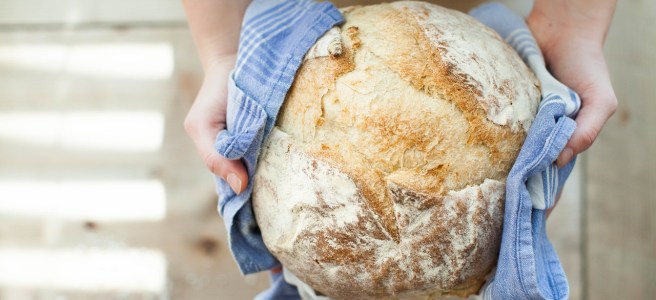
You deserve the whole loaf

With honey butter.

I used to convince myself that I was happy in relationships where I really wasn’t. I told myself that wanting more was asking too much. That the scraps I was given were enough—if I just tried harder, stayed complaisant, didn’t demand things.

I remember being with someone who didn’t want the same things I wanted, and instead of honoring my own truth, I contorted myself into someone I thought he would want. I told myself I was fine. That this was love.

But it wasn’t. It was me abandoning myself for the sake of keeping the relationship.

We do this in all kinds of ways—not just in romantic relationships.
We mistrust ourselves.
We minimize our needs.
We shrink our voices.
We edit our desires to stay connected, to stay approved of, to stay “safe.”

The thing is, the relationship that suffers most when we do this is the one we have with ourselves.

We stop listening to our gut.
We override our knowing.
We become strangers to our own needs and wholeness, chasing crumbs of validation while starving for the fullness of self-trust.

And over time, that internal erosion leaves us disconnected—not just from others, but from our true and full selves.

The turning point, for me, was realizing:
I don’t want crumbs.
I want the whole loaf.
And more than that—I deserve it.

Not because I proved myself worthy.
Not because someone else finally said I was.
But because I decided to stop abandoning myself and start trusting what I want, what I feel, and what is true for me.

Because staying in a relationship—whether romantic, professional, or even familial—shouldn’t come at the cost of losing you.

Your Turn:

  • Is there a place in your life where you’re settling for crumbs?
  • What might change if you trusted your desires instead of downplaying them?
  • What would self-loyalty look like in that area of your life?
  • See the poem I wrote here about deserving the whole loaf.

Subscribe if you want to receive this content directly in your inbox.

Work with me: Want to see how self-care is transformative and can help you create the results you want in your life? I can show you how. I offer first-time seekers a complimentary 45-minute exploratory session. Sign up here.

What’s on your mind? It can be powerful to learn from each other and our common struggles when it comes to our practice of self-care–or just being a human being. If you have something you’re struggling with and would like some perspective, share it here. Your issue may be chosen and addressed in the next post–it’ll be totally anonymous.
How to enjoy being you

It’s a practice.

What does enjoying “being you” look like?

When we don’t like ourselves, it’s hard to enjoy being ourselves. But sometimes we don’t even realize we don’t like ourselves—until we notice how often we’re getting frustrated and upset with ourselves.

This might look like quickly overcommitting to things. Staying up late rethinking what we said.  Trying to be the perfect version of ourselves wherever we are.

This isn’t a flaw. It’s a signal. These are clues pointing us back to the part of us that’s still trying to earn belonging.

A client once shared this with me:

She had just finished a long workday when a friend texted asking for help on something she’d procrastinated on. My client’s instinct was to say No. She was exhausted.

But what came out was, “Of course! No problem.”
Then she stayed up past midnight trying to finish both her friend’s request and her own to-do list.

The next day she felt tired and irritated—and really, disappointed in herself.

We explored it together and underneath the resentment wasn’t just over-giving. It was the belief: If I say no, she might not like me.
And beneath that: I don’t feel like I’m enough as I am.

When we don’t like ourselves, it shows up in these quiet ways. But that doesn’t mean there’s something wrong with us. It just means we’ve learned to measure our worth by how others respond to us.

That’s why liking yourself is a practice. It’s not a personality trait, something you either have or don’t have.

It’s something you build—the same way you would a relationship. Because it’s your relationship with yourself.
We practice with presence, with care, with forgiveness. And maybe even a little humor.

We don’t have to wait until we’ve “fixed” ourselves to start liking ourselves.
We just have to be willing to have our own back. No matter what.

And like any practice, we get better by doing it.

Your Turn:

  • What’s one way you notice yourself hustling for approval?
  • What’s something you appreciate about who you are right now—without changing a thing?
  • How can you practice having your own back this week?

The most powerful kind of approval

Your own.

I used to run around trying to prove I was worthy.

I overworked myself at my job. I volunteered on weeknights and weekends. I said “yes” to everyone and everything.

I thought if I did enough, I’d finally feel valuable. But because I didn’t know how to approve of myself, I kept seeking that approval from others—and at my own expense.

What I didn’t know back then: You can seek your own approval. 

In fact, your own approval is the most important of all. Because only you get to decide whether you approve of yourself.

Even when we try to seek approval from others, we can’t control what people think of us. People will form opinions based on them—their experiences, conditioning, values, beliefs—not necessarily based on us.

Imagine being in a room with 10 people. You say or do something meaningful to you. Chances are, you’ll get 10 different interpretations. You didn’t change what you did—but each person filters it through their own lens.

If we’re chasing approval from all 10 people, we might get praise from a few… and judgment from a few others. It’s a losing game, and it pulls us away from who we really are.

Instead, we can learn to ask:
“How do I want to show up?”
“What feels aligned for me?”

When we act from our values—when we behave in ways we’re proud of—we can approve of ourselves, regardless of what anyone else thinks.

Now, I still do a lot of things. But I’m no longer doing them to prove my worth.

I do them because I want to.  Because I know I have value to contribute. Because I know I’m already worthy.

But most of us weren’t taught that we’re already worthy. I know I wasn’t.

What we’re often taught is that worth has to be earned—through performance, achievement, likability. That if we want to belong, we have to please. That if we want to be accepted, we have to keep the peace.

But real belonging never asks you to betray yourself.

When we build self-approval, we become more able to connect authentically—with people who see us clearly, and who love us as we are. We stop bending and breaking ourselves to be palatable. We start showing up as more of ourselves. And from that place, real belonging becomes possible.

Your turn:

Do you believe that you are already 100% worthy?

If not, could you try on the thought: “It’s possible that I’m already 100% worthy”?

What might change if you practiced believing that?

Where in your life are you tempted to hide or perform to feel like you belong?

What would it look like to bring more of your true self into those spaces?

Subscribe if you want to receive this content directly in your inbox.

Work with me: Want to see how self-care is transformative and can help you create the results you want in your life? I can show you how. I offer first-time seekers a complimentary 45-minute exploratory session. Sign up here.

What’s on your mind? It can be powerful to learn from each other and our common struggles when it comes to our practice of self-care–or just being a human being. If you have something you’re struggling with and would like some perspective, share it here. Your issue may be chosen and addressed in the next post–it’ll be totally anonymous.
Where does authenticity live?

Not with people-pleasing.

We’re all familiar with the concept of people-pleasing, but we don’t often think about why we do it.

At its core, people-pleasing is a way of behaving that’s driven by external pressure—seeking approval, avoiding conflict, or trying to control how others perceive us. It’s rooted in extrinsic motivation: we do things not because they’re aligned with our own desires, but because we hope to gain something from others or avoid their disapproval.

The irony is that when we act from this place of external motivation, we end up feeling disconnected from ourselves. We’re performing for others, but losing touch with our own authenticity.

I recently started reading the book Why We Do What We Do, by Edward Deci. He explains that real motivation—the kind that leads to fulfillment and long-lasting change—comes from within. Intrinsic motivation is about doing something because it’s meaningful to us, because it aligns with our true self. It’s not about how others see us or what they expect of us.

When we act from intrinsic motivation, we feel more free, more willing, and more committed to our choices. We’re not just going along with what others want or expect; we’re consciously choosing what feels right for us.

When we think about it this way, people-pleasing can become a kind of dishonesty—not just with others, but with ourselves. We’re not being true to who we are. We’re not acting autonomously; we’re letting the desire for approval dictate our actions.

So how do we shift from people-pleasing to authenticity? We start by noticing when we’re acting from a place of fear or obligation rather than genuine desire. We can ask ourselves:

  • Am I doing this because it’s truly important to me, or because I’m worried about what others will think?
  • Does this choice feel aligned with my values, or am I just trying to avoid conflict or rejection?
  • If I were motivated by my own joy and integrity, how might I act differently?

To become more connected to our own self-approval, we have to practice choosing ourselves on purpose—prioritizing our own well-being, setting boundaries, and letting others think what they will. The more we act from a place of intrinsic motivation, the more we step into our authentic selves.

Your Turn:
What would it look like to prioritize your own self-approval today? How can you shift from doing what you think you “should” do to doing what you genuinely want to do?

Subscribe if you want to receive this content directly in your inbox.

Work with me: Want to see how self-care is transformative and can help you create the results you want in your life? I can show you how. I offer first-time seekers a complimentary 45-minute exploratory session. Sign up here.

What’s on your mind? It can be powerful to learn from each other and our common struggles when it comes to our practice of self-care–or just being a human being. If you have something you’re struggling with and would like some perspective, share it here. Your issue may be chosen and addressed in the next post–it’ll be totally anonymous.

Where does the past live?

In our mind, only.

The first time I heard that forgiveness is “giving up the hope that the past could have been any different,” it resonated with me deeply. Something just made sense about that. 

Oprah Winfrey expands on this by saying in the book What Happened to You?, “Forgiveness is giving up the hope that the past could have been any different, but we cannot move forward if we’re still holding onto the pain of that past and wishing it was something else.”

How often do we replay painful moments in our minds, wishing they had gone differently? We hold onto the past as if clinging to it will somehow change it. But the past isn’t something that exists outside of us—it only lives in our minds, in the thoughts we continue to revisit, in the stories we tell ourselves about the past.

It’s not the past itself that creates our pain. It’s the way we THINK about it.

Every time we recall a painful memory, we relive it in the present. Our body might tense up. Our emotions associated with that story rise. The hurt resurfaces as if it’s happening all over again. But it isn’t. The only thing happening is that we’re thinking about what happened. And those thoughts and the painful story are creating our suffering.

This isn’t about denying what happened. It’s about recognizing that right now, in this moment, we have a choice. We can keep carrying the weight of an unchangeable past and the story we have about it, or we can release it. We can stop arguing with what was and begin giving ourselves the care, love, and peace we want now. This is an option that’s available to us.

Forgiveness isn’t about excusing what happened. It’s about freeing ourselves from the pain of our stories about the past.

Your turn:
What painful story have you been holding onto? How does thinking about it make you feel? What if you chose to loosen your grip—just a little? What might open up for you if you allowed yourself to move forward or tell the story of the past in a different way?

Subscribe if you want to receive this content directly in your inbox.

Work with me: Want to see how self-care is transformative and can help you create the results you want in your life? I can show you how. I offer first-time seekers a complimentary 45-minute exploratory session. Sign up here.

What’s on your mind? It can be powerful to learn from each other and our common struggles when it comes to our practice of self-care–or just being a human being. If you have something you’re struggling with and would like some perspective, share it here. Your issue may be chosen and addressed in the next post–it’ll be totally anonymous.

Your body is not your servant.

It’s your partner.

How many of us really know how to connect with and listen to our body’s signals and messages?

Most of us didn’t learn how to do this. In fact, we were often taught the opposite:
—to push through when we’re tired,
—to ignore pain in favor of productivity,
—to treat our bodies more like machines than living partners in our lives.

We learn to override, dismiss, and silence the messages our body sends us—until, sometimes, it’s too late.

For me, it took emergency open-heart surgery to understand just how disconnected I had become from my body. My recovery became the beginning of a deeper relationship with it—one built on listening, respect, and care. I realized that not knowing how to honor my body is part of what brought me to that crisis point in the first place.

I used to feel guilty for resting when I didn’t feel well, like I was being “lazy” or “irresponsible.” But guilt while resting only adds stress, not healing. I was resisting what my body needed—and calling it productivity.

Resting while feeling guilty isn’t actually rest. It’s conflict. One part of us says, “Slow down.” Another part says, “Keep going.” And while we lie there physically still, our minds race, criticizing us for not doing more. No wonder we don’t feel restored.

Sometimes, it’s not just discomfort with resting—it’s discomfort with being alone with ourselves. The thoughts we’ve avoided by staying busy suddenly bubble up when we slow down.

But what if we met that moment with compassion instead of criticism?
What if we said to ourselves: “I am choosing to rest and care for myself. This matters. There is nothing more important in this moment.”

This applies beyond rest too—it applies to what we eat, how we move, how we hydrate, how we breathe, and how we speak to ourselves. Every choice is an opportunity to treat our body as a friend rather than a servant.

I began asking myself simple but powerful questions:
At what cost?
What do I need right now to care for myself?

Sometimes the answer was water, or a slower pace, or canceling plans after a long day. Sometimes it was simply pausing to breathe and remember that I’m not a machine.

The truth is: when we ignore our bodies, we disregard ourselves.
Caring for your body is not indulgence—it’s responsibility. It’s a form of self-respect. It’s a daily act of honoring your life.

We so often long for love, care, and appreciation from others. But are we offering those things to ourselves?

In the past, I thought that pushing past my body’s needs was being responsible—getting things done, being strong, earning rest. But now I know: true responsibility includes caring for the vessel that carries us through this life.

When we start treating our body like a partner—not a problem to manage, or a machine to control—we begin to experience a whole new relationship with ourselves. A more respectful one. A more loving one. A more sustainable and healthy one.


Your turn:
– What might change if you treated your body as a partner, not a servant?
– What can you do today to connect more with your body’s wisdom?
– Are you willing to pause and ask: “At what cost?” and “What do I need to care for myself in this moment?”

What happens when you start listening?

Subscribe if you want to receive this content directly in your inbox.

Work with me: Want to see how self-care is transformative and can help you create the results you want in your life? I can show you how. I offer first-time seekers a complimentary 45-minute exploratory session. Sign up here.

What’s on your mind? It can be powerful to learn from each other and our common struggles when it comes to our practice of self-care–or just being a human being. If you have something you’re struggling with and would like some perspective, share it here. Your issue may be chosen and addressed in the next post–it’ll be totally anonymous.

No more people-pleasing

Now what?

When we begin the work of letting go of people-pleasing, it can feel like everything is shifting.

For so long, acceptance and connection may have looked like being agreeable, accommodating, pleasant, helpful, easy to get along with. We may have shaped ourselves around what others needed or expected. We became the supportive friend, the reliable colleague, the one who didn’t rock the boat.

And underneath all of that was the quiet hope: If I can be who they want me to be, then I’ll be accepted. Then I’ll belong. Then I’ll be loved.

But people-pleasing is not the same as genuine acceptance or connection. It’s performance masquerading as intimacy. It’s self-abandonment in the name of belonging. And at some point, we realize that the cost is too high.

We realize that we’ve been offering curated versions of ourselves in exchange for “acceptance” or “connection.” But “acceptance” by others of curated versions of ourselves – is that really the acceptance or true connection we want?  

So what do acceptance and connection look like now, in this next phase, post-people-pleasing?

It looks like showing up as your full self, not just the “palatable” parts.
It looks like being honest about your needs, your limits, your preferences.
It looks like saying “no” without over-explaining or justifying.
It looks like letting go of the idea that you have to manage other people’s emotions in order to feel safe in relationship.

And yes—this might feel strange and uncomfortable at first. We might worry that we’re being selfish, or “too much,” or not “nice enough.” That’s normal. We’re unlearning patterns that were reinforced for a long time.

But as we keep choosing honesty over false harmony, self-respect over self-sacrifice, we’ll notice something: our relationships begin to shift. Some will fall away. Some will deepen. And new ones will emerge—ones rooted in mutual authenticity, not some performance.

True connection doesn’t require us to stay small. It invites us to expand. It welcomes all of who we are.

Your turn:

  • In what ways have you curated yourself to maintain acceptance or connection?
  • What does authentic acceptance and connection feel like to you now?
  • What are you willing to let go of in order to experience more aligned relationships?

Subscribe if you want to receive this content directly in your inbox.

Work with me: Want to see how self-care is transformative and can help you create the results you want in your life? I can show you how. I offer first-time seekers a complimentary 45-minute exploratory session. Sign up here.

What’s on your mind? It can be powerful to learn from each other and our common struggles when it comes to our practice of self-care–or just being a human being. If you have something you’re struggling with and would like some perspective, share it here. Your issue may be chosen and addressed in the next post–it’ll be totally anonymous.

Self-Care: All or Nothing?

Drop that thinking.

One of the biggest obstacles to self-care isn’t time, energy, or motivation—it’s all-or-nothing thinking.

All-or-nothing thinking traps us in extremes:
🔹 If I can’t work out for an hour, why bother at all?
🔹 If I don’t stick to my diet perfectly, I might as well quit.
🔹 If I don’t have 30 minutes to meditate, it’s not worth it.

This mindset keeps us stuck. It convinces us that if we can’t do everything, we might as well do nothing.

But what if we did something—no matter how small?

Take Sara. She planned to work out for an hour, but had to stay late at work. Instead of squeezing in a shorter workout, she skipped the gym entirely. That one missed session threw off her momentum, and she didn’t go back for over a week.

Or Kevin, who believes meditation only counts if he does it for 30 minutes. So when he only has 10 minutes, he skips it altogether. Days go by without practicing at all.

Or Charlie, who is either 100% on her diet or completely off. After eating two unexpected cookies, she tells herself she’s failed—so she ditches her plan for two weeks.

These patterns don’t get us closer to our goals. They hold us back.

What if we dropped the all-or-nothing thinking?

What if Sara saw that a 20-minute workout was still valuable?
What if Kevin realized 10 minutes of meditation is better than none?
What if Charlie reminded herself, “Two cookies don’t erase all my progress”?

The truth is, progress isn’t about perfection—it’s about consistency.

Showing up for yourself—even for 5 minutes—matters.
✅ 10 pushups and 10 squats, twice a day.
✅ A 5-minute walk in the morning and another in the evening.
✅ 5 minutes on the bike in the morning and 5 minutes of stretching at night.

It may not seem like much at first, but these small moments build trust in yourself. They build momentum. And before you know it, you might feel inspired to find more time—because you’re already in motion.

And if one day, all you have is 2 minutes? Do something. Keep showing up.

Let’s stop making self-care an all-or-nothing game. Let’s make it realistic, sustainable, and part of our lives exactly as they are right now.

Your Turn:

  • Where in your life might you be engaging in all-or-nothing thinking?
  • Do your self-care goals fit your real schedule and energy levels?
  • How can you adjust your approach so you actually follow through?

💡 Dig Deeper: What changes might you need to make in your life to better support your self-care practices? (Hint: making those changes IS self-care.)

Subscribe if you want to receive this content directly in your inbox.

Work with me: Want to see how self-care is transformative and can help you create the results you want in your life? I can show you how. I offer first-time seekers a complimentary 45-minute exploratory session. Sign up here.

What’s on your mind? It can be powerful to learn from each other and our common struggles when it comes to our practice of self-care–or just being a human being. If you have something you’re struggling with and would like some perspective, share it here. Your issue may be chosen and addressed in the next post–it’ll be totally anonymous.

Choose discomfort?

Your new currency.

Why is it so hard to make changes in our lives, even when we know they will benefit us?

Because change requires discomfort—and our brains are wired to avoid it.

We make changes because we recognize that our current habits, routines, or mindsets aren’t fully aligned with who we want to become. It’s not that who we are right now is “wrong” or “not good enough.” It’s simply that we know we’re capable of more. We know we can grow.

Making changes is an act of self-care. We choose to eat healthier, deepen relationships, find more fulfilling work, or be more present in our lives—not because we’re trying to “fix” ourselves, but because we care about the person we are becoming.

At first, change feels exciting. We’re motivated, thinking, I can do this. This feels good.

But then … it gets hard.

The discomfort sets in. We feel resistance. Our brain urges us to return to what’s easy, comfortable, and familiar—even if that old comfort is exactly why we wanted to change in the first place.

We think:
🔹 I don’t feel like it today.
🔹 I’ll just scroll for a few more minutes.

🔹 It won’t make a difference anyway.
🔹 I miss him so much—maybe I’ll just text him.

These urges pull us back to comfort. But if we keep answering them, we’ll never pass through the hard part.

So let it be hard—and keep going anyway.

Discomfort is the price we pay for growth. The more we allow it, the closer we get to real transformation. When we stick to the plan, sit with the discomfort, and honor our commitment to ourselves, something shifts.

What once felt impossible becomes second nature. The habit becomes part of who we are. The future version of you is waiting. Are you willing to pay the price of some discomfort in the short term to get there?

Your Turn:

  • Are you ready to stop flaking on yourself?
  • What would happen if you let it be hard or uncomfortable—and kept going anyway?
  • How would your life be different if the thing you’re struggling with now simply became part of who you are?

Subscribe if you want to receive this content directly in your inbox.

Work with me: Want to see how self-care is transformative and can help you create the results you want in your life? I can show you how. I offer first-time seekers a complimentary 45-minute exploratory session. Sign up here.

What’s on your mind? It can be powerful to learn from each other and our common struggles when it comes to our practice of self-care–or just being a human being. If you have something you’re struggling with and would like some perspective, share it here. Your issue may be chosen and addressed in the next post–it’ll be totally anonymous.