Your body is not your servant.

It’s your partner.

How many of us really know how to connect with and listen to our body’s signals and messages?

Most of us didn’t learn how to do this. In fact, we were often taught the opposite:
—to push through when we’re tired,
—to ignore pain in favor of productivity,
—to treat our bodies more like machines than living partners in our lives.

We learn to override, dismiss, and silence the messages our body sends us—until, sometimes, it’s too late.

For me, it took emergency open-heart surgery to understand just how disconnected I had become from my body. My recovery became the beginning of a deeper relationship with it—one built on listening, respect, and care. I realized that not knowing how to honor my body is part of what brought me to that crisis point in the first place.

I used to feel guilty for resting when I didn’t feel well, like I was being “lazy” or “irresponsible.” But guilt while resting only adds stress, not healing. I was resisting what my body needed—and calling it productivity.

Resting while feeling guilty isn’t actually rest. It’s conflict. One part of us says, “Slow down.” Another part says, “Keep going.” And while we lie there physically still, our minds race, criticizing us for not doing more. No wonder we don’t feel restored.

Sometimes, it’s not just discomfort with resting—it’s discomfort with being alone with ourselves. The thoughts we’ve avoided by staying busy suddenly bubble up when we slow down.

But what if we met that moment with compassion instead of criticism?
What if we said to ourselves: “I am choosing to rest and care for myself. This matters. There is nothing more important in this moment.”

This applies beyond rest too—it applies to what we eat, how we move, how we hydrate, how we breathe, and how we speak to ourselves. Every choice is an opportunity to treat our body as a friend rather than a servant.

I began asking myself simple but powerful questions:
At what cost?
What do I need right now to care for myself?

Sometimes the answer was water, or a slower pace, or canceling plans after a long day. Sometimes it was simply pausing to breathe and remember that I’m not a machine.

The truth is: when we ignore our bodies, we disregard ourselves.
Caring for your body is not indulgence—it’s responsibility. It’s a form of self-respect. It’s a daily act of honoring your life.

We so often long for love, care, and appreciation from others. But are we offering those things to ourselves?

In the past, I thought that pushing past my body’s needs was being responsible—getting things done, being strong, earning rest. But now I know: true responsibility includes caring for the vessel that carries us through this life.

When we start treating our body like a partner—not a problem to manage, or a machine to control—we begin to experience a whole new relationship with ourselves. A more respectful one. A more loving one. A more sustainable and healthy one.


Your turn:
– What might change if you treated your body as a partner, not a servant?
– What can you do today to connect more with your body’s wisdom?
– Are you willing to pause and ask: “At what cost?” and “What do I need to care for myself in this moment?”

What happens when you start listening?

Subscribe if you want to receive this content directly in your inbox.

Work with me: Want to see how self-care is transformative and can help you create the results you want in your life? I can show you how. I offer first-time seekers a complimentary 45-minute exploratory session. Sign up here.

What’s on your mind? It can be powerful to learn from each other and our common struggles when it comes to our practice of self-care–or just being a human being. If you have something you’re struggling with and would like some perspective, share it here. Your issue may be chosen and addressed in the next post–it’ll be totally anonymous.

Self-Care: All or Nothing?

Drop that thinking.

One of the biggest obstacles to self-care isn’t time, energy, or motivation—it’s all-or-nothing thinking.

All-or-nothing thinking traps us in extremes:
🔹 If I can’t work out for an hour, why bother at all?
🔹 If I don’t stick to my diet perfectly, I might as well quit.
🔹 If I don’t have 30 minutes to meditate, it’s not worth it.

This mindset keeps us stuck. It convinces us that if we can’t do everything, we might as well do nothing.

But what if we did something—no matter how small?

Take Sara. She planned to work out for an hour, but had to stay late at work. Instead of squeezing in a shorter workout, she skipped the gym entirely. That one missed session threw off her momentum, and she didn’t go back for over a week.

Or Kevin, who believes meditation only counts if he does it for 30 minutes. So when he only has 10 minutes, he skips it altogether. Days go by without practicing at all.

Or Charlie, who is either 100% on her diet or completely off. After eating two unexpected cookies, she tells herself she’s failed—so she ditches her plan for two weeks.

These patterns don’t get us closer to our goals. They hold us back.

What if we dropped the all-or-nothing thinking?

What if Sara saw that a 20-minute workout was still valuable?
What if Kevin realized 10 minutes of meditation is better than none?
What if Charlie reminded herself, “Two cookies don’t erase all my progress”?

The truth is, progress isn’t about perfection—it’s about consistency.

Showing up for yourself—even for 5 minutes—matters.
✅ 10 pushups and 10 squats, twice a day.
✅ A 5-minute walk in the morning and another in the evening.
✅ 5 minutes on the bike in the morning and 5 minutes of stretching at night.

It may not seem like much at first, but these small moments build trust in yourself. They build momentum. And before you know it, you might feel inspired to find more time—because you’re already in motion.

And if one day, all you have is 2 minutes? Do something. Keep showing up.

Let’s stop making self-care an all-or-nothing game. Let’s make it realistic, sustainable, and part of our lives exactly as they are right now.

Your Turn:

  • Where in your life might you be engaging in all-or-nothing thinking?
  • Do your self-care goals fit your real schedule and energy levels?
  • How can you adjust your approach so you actually follow through?

💡 Dig Deeper: What changes might you need to make in your life to better support your self-care practices? (Hint: making those changes IS self-care.)

Subscribe if you want to receive this content directly in your inbox.

Work with me: Want to see how self-care is transformative and can help you create the results you want in your life? I can show you how. I offer first-time seekers a complimentary 45-minute exploratory session. Sign up here.

What’s on your mind? It can be powerful to learn from each other and our common struggles when it comes to our practice of self-care–or just being a human being. If you have something you’re struggling with and would like some perspective, share it here. Your issue may be chosen and addressed in the next post–it’ll be totally anonymous.

Is it a problem?

It doesn’t have to be.

Our brains are wired to spot danger—it’s how we’ve survived for thousands of years. But sometimes, that instinct works too well. We turn neutral situations into problems, even when no real threat exists.

Something only becomes a problem when we decide it is.

And once we do? We start overanalyzing, “fixing,” and stressing—making it feel even more like a problem.

Take trouble sleeping. Is it actually a problem? Not until we tell ourselves it is. We lie there thinking:
🛑 Ugh, I have to wake up early.
🛑 If I don’t fall asleep soon, tomorrow will be ruined.
🛑 Why does this always happen to me?

That frustration creates tension, making sleep even harder. But what if we thought:
💭 I’ll fall asleep when I do. My body will get what it needs.

Less stress. Less pressure. More ease.

We can ask this same question in so many areas of life:

  • What if feeling sad about this outcome isn’t a problem?
  • What if waking up in the middle of the night isn’t a problem?
  • What if what that person said isn’t a problem?
  • What if the number on the scale isn’t a problem?
  • What if missing him isn’t a problem?
  • What if her anxiety isn’t a problem?

This isn’t to say that nothing should be a problem. This is to remind us that HOW we are thinking about something can make it seem like a problem. WE are creating the problem with our THINKING. 

We can remember that all of our thoughts are choices. And we can choose our thoughts on purpose. 

When we stop labeling things as “problems,” we create space for acceptance. And paradoxically, that’s what makes real change possible.

Because if the number on the scale isn’t a problem, maybe we’d actually make healthier choices from a place of self-care instead of self-criticism.
If waking up at night isn’t a problem, maybe we’d relax enough to fall back asleep.
If missing him isn’t a problem, we’d allow the feeling without letting it hold us back.

So, what if it’s not a problem? What if there’s nothing to fix?

Your turn: What have you been making a problem? What if it’s not? What would you think instead? What would you do instead?

Subscribe if you want to receive this content directly in your inbox.

Work with me: Want to see how self-care is transformative and can help you create the results you want in your life? I can show you how. I offer first-time seekers a complimentary 45-minute exploratory session. Sign up here.

What’s on your mind? It can be powerful to learn from each other and our common struggles when it comes to our practice of self-care–or just being a human being. If you have something you’re struggling with and would like some perspective, share it here. Your issue may be chosen and addressed in the next post–it’ll be totally anonymous.

Regulating yourself

Self-care starts in your mind.

From my clients, I’ve surmised that many of us wonder why self-care feels so hard to engage in sometimes. We know WHAT to do—eat well, rest, move our body, take time for ourselves—but life seems to keep getting in the way.

When our nervous system is in “survival mode” (fight, flight, or freeze), it’s very challenging to prioritize ourselves. Chronic stress keeps our brain and body in overdrive, making even small acts of care feel overwhelming. When we feel stuck in a cycle of stress, overwhelm, or self-doubt, self-care feels hard to prioritize.

Our nervous system responds not just to external stressors but also to our thoughts. Fearful, negative, or chaotic thinking can keep us in “fight or flight” mode, making it hard to focus, relax, or care for ourselves.

The good news? We can calm our nervous system with our thoughts.

Here are two things to recognize and try:

Negative Thoughts Are Optional:

  • When we notice a stressful thought, we can ask, “What’s another way to think about this?”
  • Example: Instead of “I’m failing at self-care,” we can choose to think “I’m learning what works for me, one step at a time.”

Affirmations Change Our Perspective:

  • We can choose to think affirming phrases like “I am safe,” “I can handle this,” or “I can figure this out.”
  • Say them out loud, write them down, or repeat them in your mind throughout the day.

When we can consciously shift our thinking, we signal to our brain that we’re safe. This activates the parasympathetic nervous system, the part of our body responsible for rest, digestion, and recovery. 

A large part of self-care is knowing how to regulate our nervous system. And then, with a regulated nervous system, we are more ready to show up for ourselves so that self-care becomes something we WANT to do, not something we “should” do.

Your turn: How can you be more intentional with your thoughts today? In what other ways do you naturally calm your own nervous system? Are you open to seeing how a regulated nervous system supports you in living your life differently? I’d love to hear any insights you have.

I talk more about how to be intentional with your thoughts in my program Tools to Change Your Life. Check it out here!

Subscribe if you want to receive this content directly in your inbox.

Work with me: Want to see how self-care is transformative and can help you create the results you want in your life? I can show you how. I offer first-time seekers a complimentary 45-minute exploratory session. Sign up here.

What’s on your mind? It can be powerful to learn from each other and our common struggles when it comes to our practice of self-care–or just being a human being. If you have something you’re struggling with and would like some perspective, share it here. Your issue may be chosen and addressed in the next post–it’ll be totally anonymous.

Equal air time

For the best-case.

As we get ready for the holidays and potentially spending extended time with family members, I’d like to remind us all about the importance of equal air time.

Have you noticed that you think about worst-case scenarios more than you think about best-case scenarios?

This is partly due to our brains being wired to think this way, in order to survive. We want to be prepared for the worst. But why don’t we ever want to be prepared for the best?

Again, this is partly due to how our brains work – sometimes, we don’t want to be disappointed, so we avoid thinking about the best-case scenario to “protect” ourselves in case it doesn’t happen. OR, we think we’ll know how to handle the best-case scenario with ease, so we don’t worry about it much. 

But we DON’T think we’ll be able to handle the worst-case scenario, so we dwell on it, worry about it, ruminate about it – to no end sometimes.

Worrying pretends to be necessary. We think that if we worry enough, we’ll be prepared enough. 

I want to offer that with any-case scenarios, we won’t know what will happen or how we’ll feel and act until we’re there.

What we CAN spend more time doing is giving the best-case scenario EQUAL AIR TIME. 

Equal air time just means that if we’re going to think about what’s wrong, what’s bad, what’s lacking, what’s missing, what could go wrong, etc. then we choose on purpose to also think about what’s right, what’s good, what’s enough, what’s here right now, and what’s going right.

It may not be the best-case scenario, but it’s a better-case scenario when we can see what’s right about something instead of what’s wrong about something – especially when thinking about what’s wrong about something isn’t serving us. We can help ourselves experience more appreciation and gratitude in that space of thinking about what’s right about something. 

And there’s less room for the story about “what’s wrong” to take up space when we’re focused on the story about “what’s right.” There’s always a 50/50 component to life – positive/negative. What we choose to focus on intentionally is up to us.

Your turn: If you find yourself thinking about “what’s wrong” often, are you willing to give equal air time to “what’s right”? What would be different for you if you started giving equal air time to “what could go right” versus “what could go wrong”? 

Check out my introductory coaching program: Tools to Change Your Life


Subscribe if you want to receive this content directly in your inbox.

Work with me: Want to see how self-care is transformative and can help you create the results you want in your life? I can show you how. I offer first-time seekers a complimentary 60-minute exploratory session. Sign up here.

What’s on your mind? It can be powerful to learn from each other and our common struggles when it comes to our practice of self-care–or just being a human being. If you have something you’re struggling with and would like some perspective, share it here. Your issue may be chosen and addressed in the next post–it’ll be totally anonymous.

Managing negative self-talk

Practices to try.

When I was first embarking on my self-care journey and figuring out what self-care meant and looked like for me, I had some help along the way.

I received ideas from my therapist, the books I read, workshops I attended, and my holistic life coaching program. I created the 3 Pillars of Transformative Self-Care. One of the three pillars is how we speak to and about ourselves. 

Many of us have a habit of negative self-talk that we might not even be aware of. Some of us are aware of it, but don’t know what to do about it. Today, I’m sharing three helpful practices around how we speak to and about ourselves, in case they’re helpful to you, where you’re at.

If you have any specific area you’re working on in your life and would like a relevant practice for that, please let me know here and I’ll share the requests and responses/practices in future emails. 

Practice #1

I used to race through my days and not pause to check-in with myself. I didn’t even know that checking-in with myself was an option, or something that could be helpful to me. But checking-in with ourselves is a powerful reminder that we matter, that what we’re feeling and needing is important.

To check-in with yourself, you can ask, “What am I feeling? When I feel this way, what do I need? What is the kindest thing I can do for myself in this moment?”  

Practice #2

Most of us are very busy seeking approval from outside of ourselves so we try to do all the things – and we exhaust ourselves or think we don’t have time for self-care because we’re so “busy” all the time. We forget – or don’t even recognize – that our own approval of ourselves matters the most. Because we can’t control what other people think about us, no matter how much we DO, or the circumstances that grant us approval. WE are the only guarantee of approval when we seek it. So why not practice accepting our own approval?

We can do this by practicing the affirmation or mantra, “I approve of myself.” Repeat multiple times daily.

Practice #3

I’ve shared this practice before, but it’s worth repeating because of its power. This is mirror work. 

  • – Stand in front of a mirror.
  • – Look yourself in the eyes.
  • – Say “thank you” to yourself.
  • – What do you feel when you do that? Is it easy? Hard? Comforting? Uncomfortable? Cringey? Why? 
  • – Practice at least twice a day until you feel comfortable saying “thank you” to yourself – where you accept your own thanks, smile, and feel good while doing it.

This practice helps us appreciate ourselves and to value what we see in the mirror when we stand in front of it.

All of these practices can support us in caring for ourselves more by helping us connect to ourselves and remember that we matter, that we are valuable, that we are worthy of self-care.

Your turn: Pick one practice to engage with this week. Next week, choose another one. Make one up for yourself, if that feels good to you. These are ways you can quiet the negative self-talk and strengthen the compassionate, supportive self-talk, so that you can start caring for yourself even more. 

Subscribe if you want to receive this content directly in your inbox.

Work with me: Want to see how self-care is transformative and can help you create the results you want in your life? I can show you how. I offer first-time seekers a complimentary 60-minute exploratory session. Sign up here.

What’s on your mind? It can be powerful to learn from each other and our common struggles when it comes to our practice of self-care–or just being a human being. If you have something you’re struggling with and would like some perspective, share it here. Your issue may be chosen and addressed in the next post–it’ll be totally anonymous.

Is it selfish?

You get to decide.

Over the weekend, I attended the Kidpower International 35 year anniversary conference in Healdsburg, California. I’ve been part of Kidpower since 2002 and for this conference, people in the Kidpower community gathered from many places around the world, including Argentina, Ecuador, Guatemala, Mexico, New Zealand, Nepal, Vietnam, Pakistan, Montreal, Germany, Sweden, Russia, and Iran, and from various places within the U.S. We gathered together to learn, connect, and celebrate. I felt a strong sense of community and shared values.

At the conference, I made a presentation about Transformative Self-Care and received a question that I want to write about today: “What is the difference between self-care and being selfish?” 

This is an important question – and it might also contribute to being an obstacle for some of us to engage in our own self-care practice. If we see self-care as selfish and we don’t want to view ourselves as “selfish,” then the cognitive dissonance will get in the way. 

One conference participant shared a new concept: self-fullness vs. selfishness. I appreciated that idea! It’s like being mindful about ourselves by being self-full of what we need to for ourselves.

A question came to me that felt very powerful as well: 

Is it selfish to take care of ourselves if doing so helps us continue contributing to and taking care of others? 

When put that way, I don’t see the selfishness. I see someone who is prioritizing themselves so that they can continue to actively contribute to others and to the world. 

When we are depleted and worn down, contributing to others can feel like a burden. But when we are taken care of and filled up by our own efforts to care for ourselves, contributing to others can feel more joyful and desirable. 

Your turn: You get to decide – is it selfish to take care of yourself so that you can continue taking care of others and contributing in ways that feel good to you? 

Subscribe if you want to receive this content directly in your inbox.

Work with me: Want to see how self-care is transformative and can help you create the results you want in your life? I can show you how. I offer first-time seekers a complimentary 60-minute exploratory session. Sign up here.

What’s on your mind? It can be powerful to learn from each other and our common struggles when it comes to our practice of self-care–or just being a human being. If you have something you’re struggling with and would like some perspective, share it here. Your issue may be chosen and addressed in the next post–it’ll be totally anonymous.

When you care for yourself

In all the ways.

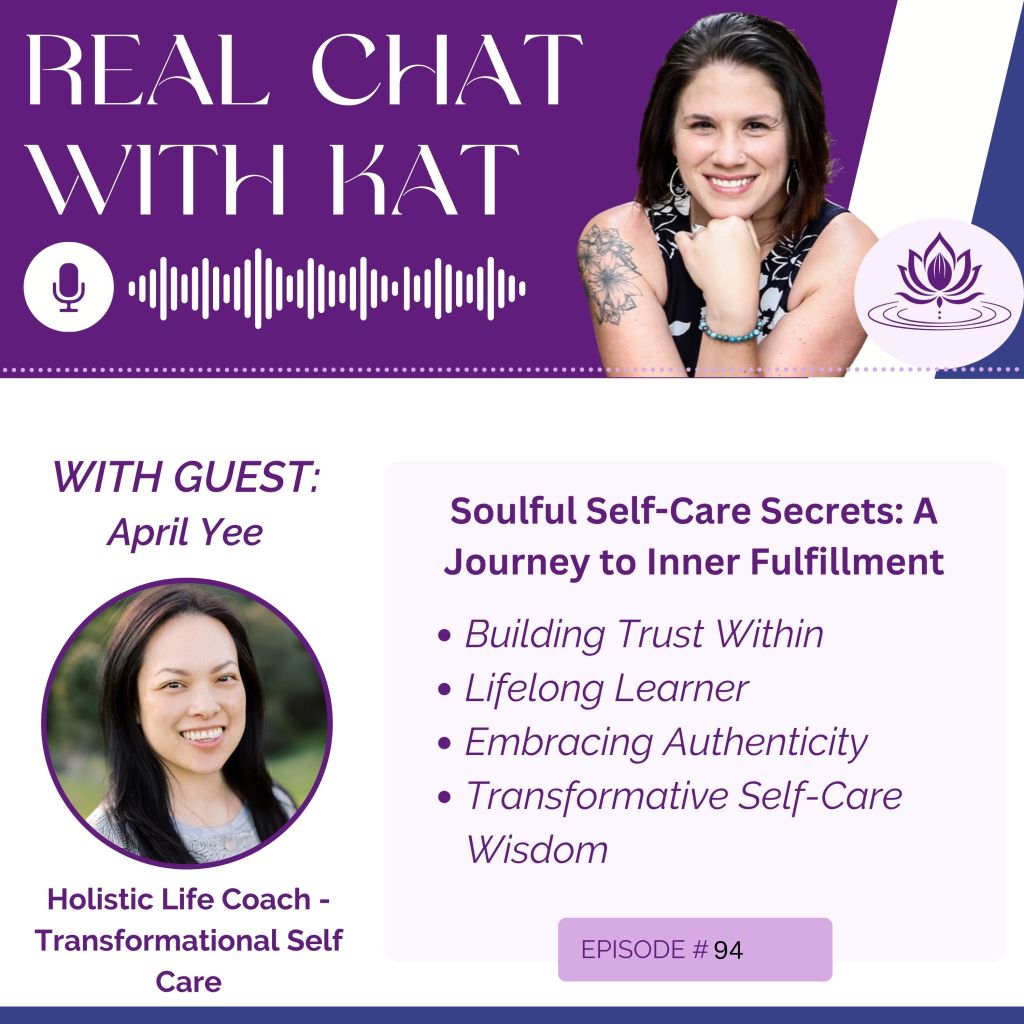
Before we dive into this week’s topic, I was recently a guest on a podcast and I’m sharing the episode here if you’d like to check it out!

Now, on to this week’s topic!

Self-care is holistic. The term self-care has gotten a lot of buzz in the past few years, and rightfully so. It’s important for us to know that it’s okay to care for ourselves, that it’s vital to care for ourselves.

But how much of that is marketing? We hear about getting a frothy, sugary drink as “self-care”; we know that a massage is some good self-care; we can think of hair appointments and nail appointments as self-care.

And these things can definitely be part of self-care. What else is part of self-care?

We can consider how we care for ourselves around:

  • – Creative expression
  • – Money and finances
  • – Time
  • – Career and work
  • – Nutrition and health
  • – Hydration
  • – Physical movement and flexibility
  • – Sexual expression
  • – Play and rest
  • – Mindful breathing
  • – Skincare and bodycare
  • – Mind and mental health care
  • – Sleep
  • – Relationships
  • – Connection with nature
  • – Self (e.g. worth, value, respect, esteem)

All of these aspects are part of who we are as whole people. Sometimes we can get more focused on a couple aspects over others – and at times, it’s necessary to do so. But when we stray away too long from any one of these aspects, we can feel misaligned with ourselves and our lives, which can affect how we show up for ourselves and for others. 

The good news is that we can get realigned by considering where we want to consciously focus more of our energy. 

Do we want to focus on drinking enough water each day? Do we want to focus on getting enough sleep each night? Do we want to focus on connecting with our relationships more? 

When we decide which 1-2 areas (at a time) we’d like to consciously put more of our energy towards, we can then ask ourselves, “How can I make sure I _______?” – drink enough water, get enough sleep, get in touch with what I’m thinking and feeling, be out in nature at least twice a week, connect with someone close to me today, eat healthy meals at least once a day, take deep breaths during the day.

And the brain, in its powerful way, will get to work on finding the answers and figuring it out so we can focus our energy on caring for ourselves in a holistic way.

(Note: It’s helpful to constrain at first to focus on 1-2 areas. If we try to focus on more than that at one time, we might end up feeling overwhelmed and not doing anything for ourselves in any of the areas. Once we get good with those 1-2 areas, we can move on to 1-2 others.)

Your turn: Are you feeling misaligned with how you want to show up and how you are showing up? Which 1-2 areas in your life can you holistically focus on right now to feel more aligned with how you want to show up in the world? What are you willing to do in order to allocate your energy where you want it to go?

Subscribe if you want to receive this content directly in your inbox.

Work with me: Want to see how self-care is transformative and can help you create the results you want in your life? I can show you how. I offer first-time seekers a complimentary 60-minute exploratory session. Sign up here.

What’s on your mind? It can be powerful to learn from each other and our common struggles when it comes to our practice of self-care–or just being a human being. If you have something you’re struggling with and would like some perspective, share it here. Your issue may be chosen and addressed in the next post–it’ll be totally anonymous.

Take massive action in 2024

Create vs. Consume

Last week we talked about “deciding to” vs. “wanting to.” This week we’ll talk a little more about what we can DO when we decide to make changes in our lives.

We take two types of actions when it comes to our goals: passive action and massive action. 

Passive action is when we’re learning, gaining, and organizing knowledge about our goal. We’re consuming information about it. 

Massive action is when we actually DO something with what we’ve learned. We apply it in our lives in an active, creative way that moves us towards our goal.

Here are some examples:

Goal: Exercise 4 days/week

Passive action = Research gyms to join, learn about what exercises to do, make a plan for exercising by working different muscle groups each day, buy new workout clothes, watch social media videos of people showing you their workouts

Massive action = wake up an hour earlier 4 days a week, put on the workout clothes, drive to the gym, DO the exercises each of the 4 days as planned even when you think it’s too hard

Goal: Eat less sugar

Passive action = research low-sugar items, learn about how sugar affects your body, make a plan for how much sugar you want to eat each day, make a list of things that are OK for you to eat, watch social media videos about how to eat less sugar 

Massive action = remove extraneous sugary items from your home/office, stick to the plan that you made, decrease your desire for sugar, eat only the items on your OK list, eat only the amount of sugar on your plan, allow the urge to eat more sugar and don’t react to the urge (don’t eat more sugar) even when you think it’s too hard

Goal: Save more money

Passive action = decide how much to save every month, review your expenses and see where you can decrease spending, read a book about budgeting and reducing expenses, participate in a workshop about debt, make a plan for saving and decreasing expenses, watch social media videos about saving money

Massive action = set up automatic savings every month, allow the urge to spend money when you see something you “want” but don’t necessarily “need,” stick to your savings plan even when you think it’s too hard

Goal: Meditate 3 days/week for 20 minutes

Passive action = read about meditation methods, listen to talks by meditation teachers, choose a practice you want to explore, find a meditation group/class, purchase a meditation app/program, watch social media videos about people talking about meditation

Massive action = make a space in your home for meditation, show up to the group/class, sit and practice for 20 minutes even when your mind wanders and you think it’s too hard

Goal: Be kinder to yourself

Passive action = read books about self-love and self-compassion, make a list of ways to be kinder to yourself, heart and save social media posts about self-love and self-compassion, watch social media videos showing people talking about self-love

Massive action = look in the mirror and tell yourself “thank you” every morning for a month; when that feels comfortable, look in the mirror and tell yourself “I love you” every morning; when you feel overwhelmed, ask yourself, “What is the kindest thing I can do for myself right now?” and honor the answer; do some of those things on the list you made every week or every month

The point is to DO the actions that are part of our goal. While we do need to do some amount of passive action by consuming information, we can read, watch, and learn about our goal all we want, but if we’re not DOING the actions that will lead towards our goal, we’re just consuming and not creating. We’re staying where we are. Let’s not get stuck.

Even making a plan is passive – it’s not until we carry out the steps on the plan that we’re creating and taking massive action. Let’s create more than we consume. 

This is not to say that we don’t also take care of ourselves while moving towards our goals. A lot of us want to stop when it begins to feel hard because we think it should be easy. Let it be hard. And keep going. We can be kind and take care of ourselves when we need to, but there’s a difference between giving ourselves some grace and self-sabotaging or giving up.

Your turn: Are you able to tell the difference between the passive and massive actions you’ve been taking in your life? How can you become more aware of the amount you’re consuming vs. what you’re creating? What massive action(s) will you decide to commit to?

Subscribe if you want to receive this content directly in your inbox.

Work with me: Want to see how self-care is transformative and can help you create the results you want in your life? I can show you how. I offer first-time seekers a complimentary 60-minute exploratory session. Sign up here.

What’s on your mind? It can be powerful to learn from each other and our common struggles when it comes to our practice of self-care–or just being a human being. If you have something you’re struggling with and would like some perspective, share it here. Your issue may be chosen and addressed in the next post–it’ll be totally anonymous.

Boundaries for Thanksgiving

*Free* video training.

Happy Thanksgiving to all who are celebrating! I know the holidays can be rough for some folks, so if you’re feeling the holiday feels, allow yourself to be with those feelings. It’s all part of being human.

To keep it short and sweet today, I’m happy to share this video I created for you about setting and maintaining healthy boundaries. I’ve been talking about boundaries for the past couple weeks and emails can only capture so much.

This video goes into what gets in the way of setting boundaries and how to become aware of those things, along with some helpful language to stay connected while setting boundaries. It’s about 17 minutes long. Feel free to watch at your convenience.

(My video tile is a little cut off on the screen, but it’s sufficient—what’s important is that you can hear my voice as you follow along!)

I’d love to know what you think afterwards, if you’d like to share. Just reply to this email or use the link to the anonymous form below in the “What’s on your mind?” section.And if you know others who might benefit from what I shared about boundaries in this video, please pass it along to them!

Your turn: After watching the video, what boundary setting practice(s) will you explore to incorporate into your life? What is something covered in the video that you’d like to learn more about? What is one thing around boundaries you’re committed to doing for yourself?

Subscribe if you want to receive this content directly in your inbox.

Work with me: Want to see how self-care is transformative and can help create a more meaningful life in which you start committing to yourself and show up the way you want? I can show you how. I offer first-time seekers a complimentary 45-minute exploratory session. Sign up here.

What’s on your mind? It can be powerful to learn from each other and our common struggles when it comes to our practice of self-care–or just being a human being. If you have something you’re struggling with and would like some perspective, share it here. Your issue may be chosen and addressed in the next post–it’ll be totally anonymous.