Rise Stronger

firebird

And so, I crept on the ground

Small and insignificant

Curled myself 

Into myself

For so long

Accepted crumbs off the loaf 

I didn’t know how to deserve

For so long

Until my body took the lead

Over my mind

Reflected the weakness within

That became the weakness without

Shutting down systems of organs

A blood poisoned betrayal

For so long

Intruding upon and invading 

A worn down heart gasps

Sustenance, sustenance, sustenance

Anesthesia flows through vessels

Soul floats above unconscious body

For so long

Eleven hours cracked open

Reparation of my heart 

Fueled revolution of my life

Broken down, built back up

Cradled, shaped and molded, slowly

For so long

Until, until I rise strong 

A firebird hatched, vulnerable and new

Learning to spread wings wide

Lifting up, up to the sky 

In creation and celebration 

Say goodbye to the life lived so small

Grieve and mourn what can no longer be

Praise and give gratitude for something more

That is me

Reflected back to me

I see my value now, self-worth that was

For so long

Pushed down inside, rise

Rise strong

And I feel you getting near

Asking me to know my value

My worth

Before you can know it too

And I do, I do

I revel now in my revelation

Believing that I deserve the whole loaf

Receive it even with honey butter   

Where does the past live?

In our mind, only.

The first time I heard that forgiveness is “giving up the hope that the past could have been any different,” it resonated with me deeply. Something just made sense about that. 

Oprah Winfrey expands on this by saying in the book What Happened to You?, “Forgiveness is giving up the hope that the past could have been any different, but we cannot move forward if we’re still holding onto the pain of that past and wishing it was something else.”

How often do we replay painful moments in our minds, wishing they had gone differently? We hold onto the past as if clinging to it will somehow change it. But the past isn’t something that exists outside of us—it only lives in our minds, in the thoughts we continue to revisit, in the stories we tell ourselves about the past.

It’s not the past itself that creates our pain. It’s the way we THINK about it.

Every time we recall a painful memory, we relive it in the present. Our body might tense up. Our emotions associated with that story rise. The hurt resurfaces as if it’s happening all over again. But it isn’t. The only thing happening is that we’re thinking about what happened. And those thoughts and the painful story are creating our suffering.

This isn’t about denying what happened. It’s about recognizing that right now, in this moment, we have a choice. We can keep carrying the weight of an unchangeable past and the story we have about it, or we can release it. We can stop arguing with what was and begin giving ourselves the care, love, and peace we want now. This is an option that’s available to us.

Forgiveness isn’t about excusing what happened. It’s about freeing ourselves from the pain of our stories about the past.

Your turn:
What painful story have you been holding onto? How does thinking about it make you feel? What if you chose to loosen your grip—just a little? What might open up for you if you allowed yourself to move forward or tell the story of the past in a different way?

Subscribe if you want to receive this content directly in your inbox.

Work with me: Want to see how self-care is transformative and can help you create the results you want in your life? I can show you how. I offer first-time seekers a complimentary 45-minute exploratory session. Sign up here.

What’s on your mind? It can be powerful to learn from each other and our common struggles when it comes to our practice of self-care–or just being a human being. If you have something you’re struggling with and would like some perspective, share it here. Your issue may be chosen and addressed in the next post–it’ll be totally anonymous.

Being angry is easier?

Anger vs. Grief.

Something that’s come up recently with my clients is the topic of grief and the feeling of anger that can be associated with grief. 

Have you noticed that anger can seem “easier” to feel than grief? When this happens, we’re actually distracting ourselves from feeling grief by feeling angry about the situation instead.

I’ve felt this in my own life, especially when going through the loss of a relationship. Rather than facing the sadness of losing someone I cared about, I’d find myself focusing on how they wronged me, how unfair the situation was, how it wasn’t supposed to be like this. Anger gave me something to focus on and a sense of control, like I could’ve done something to prevent the outcome, while grief felt overwhelming and out of control.

But here’s the thing: anger and grief are very connected. When we choose to feel anger, it’s often shielding us from the vulnerability of feeling grief. Anger can be like a protective layer over our sadness, pain, and loss. It can be an easier emotion to lean into, but when we stop there, we miss the deeper healing that comes from acknowledging and processing our grief.

Grief allows us to honor what was lost—whether it’s a person, a relationship, or an unmet hope. When we make space for grief, we open ourselves to healing. It doesn’t mean we’re excusing the hurt or pretending it didn’t matter; it means we’re courageous enough to feel it all. And also courageous enough to then do the work of finding acceptance and moving forward, no matter how long that might take. Feelings don’t have a timeframe–even though we may want them to. They will be there as long as they’ll be there, to allow us to experience what we need to learn and take away from it.

Your turn: When have you turned to anger instead of allowing yourself to grieve? What might happen if you allowed space for both emotions? And how can you show compassion to yourself during this process?

Subscribe if you want to receive this content directly in your inbox.

Work with me: Want to see how self-care is transformative and can help you create the results you want in your life? I can show you how. I offer first-time seekers a complimentary 45-minute exploratory session. Sign up here.

What’s on your mind? It can be powerful to learn from each other and our common struggles when it comes to our practice of self-care–or just being a human being. If you have something you’re struggling with and would like some perspective, share it here. Your issue may be chosen and addressed in the next post–it’ll be totally anonymous.

How to feel worthy

Pay attention to YOU.

To feel worthy, you must first make your own instincts worthy of your attention and your effort.

pg. 223 (From The 5 Second Rule by Mel Robbins)

Many of us struggle or have struggled to feel worthy. We know that it’s important to feel worthy. We know that we should feel worthy. But how do we actually start to feel worthy? Where does worthiness come from? 

In my experience, feeling worthy is a process. It doesn’t happen overnight, though when it does happen, it seems to have happened overnight! But it’s really due to all the work we’ve done with ourselves over time.

The first step to feeling worthy is to become aware of the ways in which we don’t feel worthy. This can show up in different forms and in different areas of our lives. Maybe we feel worthy in some aspects of our lives, so getting accolades at work feels natural. Or being in a healthy partnership comes easy. Or being financially stable is just a “given.” 

But in the areas in which we don’t feel worthy, those are the areas where we struggle. 

  • We don’t feel we deserve great friendships, so we shy away from connection and wonder why we feel lonely.
  • We don’t feel worthy of the praise from our boss, so we don’t believe her kind words.
  • We don’t feel deserving of the gifts from our loved ones on our birthday, so we feel guilty receiving them.
  • We think the new apartment we moved into is “too good” for us and feel undeserving to live there.
  • We wait for the other shoe to drop when a new relationship starts, like “Wait until they really get to know me…” or we end up sabotaging it ourselves. 

Again, it can come up in various forms. 

To feel worthy, one thing we must do for ourselves is to pay attention to ourselves. For me, I was always disregarding myself, ignoring myself, abandoning myself.

I did this in order to please others, to have what I THOUGHT I wanted, even if it meant dishonoring my needs and what I REALLY wanted. I wasn’t paying attention to myself, my instincts, and what was true for me. I tried to convince myself to want what didn’t really align with me, I contorted myself to fit what someone else wanted. I lied to myself and lied to others – unintentionally – because I thought it was the “right” thing to do in order to seek approval. 

By paying attention to ourselves, we learn what is true for us and how truth FEELS for us. We then know when we’re lying to ourselves. When we lie to ourselves, that is a form of abandoning ourselves. When we pay attention to ourselves, we show ourselves that we are worthy of attention and effort. Especially from ourselves.

When we start paying attention to ourselves, our thoughts, feelings, and behaviors change. They become more aligned with our truth. We start to see that we have always been worthy. And what we are engaging in is the process to UNLEARN our feelings and beliefs of UNworthiness. 

I learned about some of my unhealthy beliefs about worthiness through therapy and life coaching. And I’ve been doing the work to UNLEARN all the ways I thought I wasn’t worthy before. Coming from a place of worthiness changes everything.

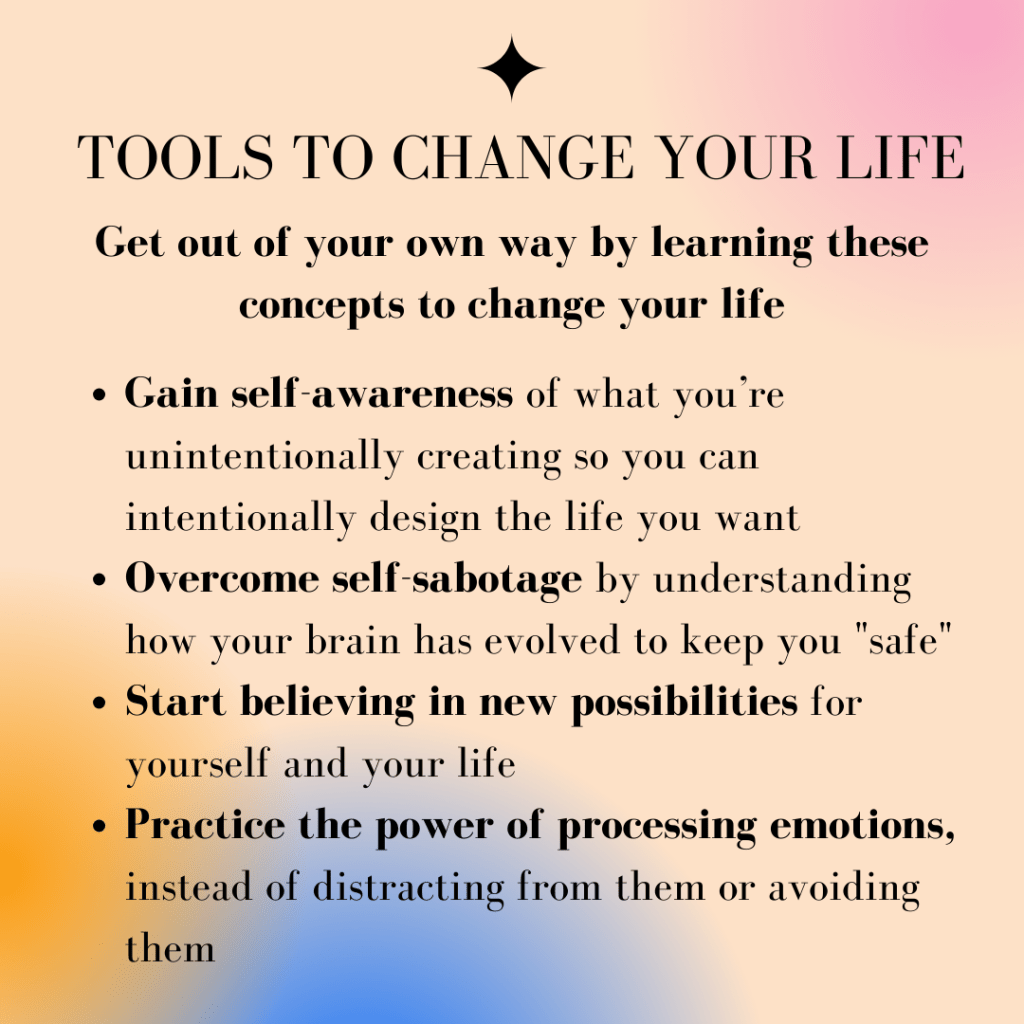
So I’ve created an introductory coaching series called “Tools to Change Your Life” to support others on their own path to UNlearning all the ways they believed they were unworthy before to seeing that they have ALWAYS been worthy.

You can consider this program for yourself or for someone in your life who could benefit from a program like this!


Subscribe if you want to receive this content directly in your inbox.

Work with me: Want to see how self-care is transformative and can help you create the results you want in your life? I can show you how. I offer first-time seekers a complimentary 45-minute exploratory session. Sign up here.

What’s on your mind? It can be powerful to learn from each other and our common struggles when it comes to our practice of self-care–or just being a human being. If you have something you’re struggling with and would like some perspective, share it here. Your issue may be chosen and addressed in the next post–it’ll be totally anonymous.

Talk about what hurts

To heal.

“We’ll never be okay if we don’t talk about what hurts.” – Ashley Ford (https://www.ashleycford.net/bio)

I heard this quote mentioned on a podcast I listened to and it resonated with me. So often, we talk about everything BUT what really hurts. 

We bottle up our emotions and wonder why we feel so much resentment, powerlessness, guilt, or shame. 

Sometimes we don’t even tell ourselves the truth about what really hurts us because it’s “easier” not to think about it. But then not thinking about it actually makes our lives harder in some ways because we disconnect from our truth – and from ourselves. We hide from ourselves or tell ourselves it’s not a big deal, that we need to get over it, that we’re “stronger” than this. 

I think what helps us feel stronger is when we tell the truth and actually talk about it instead of denying it to ourselves. Talking to trusted friends or family members might feel supportive. Or talking to a therapist, counselor, or coach might feel safer – someone more objective and who has tools to hear us and empower us to move forward.

For me, seeing a therapist regularly to talk about what hurts was one of the most empowering things I’ve done for myself. When I let myself be vulnerable and saw that someone else could hold space for that vulnerability, I allowed myself to then learn to hold space for myself in that way. I allowed myself to be more vulnerable with myself and then with others. I stopped hiding myself so much and this is what also allowed me to be more authentic and aligned with who I am. I started to feel okay with who I was. 

One revelatory truth for me during therapy was, “I am okay . . . I have always been okay . . . and I will always be okay.”

Your turn: What hurts have you been denying or hiding from yourself? How might talking about them help you? Who is someone that you can talk to?

Subscribe if you want to receive this content directly in your inbox.

Work with me: Want to see how self-care is transformative and can help you create the results you want in your life? I can show you how. I offer first-time seekers a complimentary 45-minute exploratory session. Sign up here.

What’s on your mind? It can be powerful to learn from each other and our common struggles when it comes to our practice of self-care–or just being a human being. If you have something you’re struggling with and would like some perspective, share it here. Your issue may be chosen and addressed in the next post–it’ll be totally anonymous.

In a hurry to change?

What are you resisting?

Sometimes we feel a sense of urgency to make a change in our lives. We think by making the change, we’ll feel better and we want to feel better NOW. This is what happens when we think our circumstances create our feelings. 

There’s nothing wrong with changing our circumstances if we can easily do that. But we usually bring our emotional state into the new circumstances as well, if we don’t spend time managing our mindset first.

For example, a client of mine recently started dating again after being off the dating apps for over 10 months. The last time she was on them, she met someone she really liked. It was long-distance, however, and the other person ended things after two months because long-distance was too hard. They didn’t have a “want match” in that aspect. And that breakup was very hard for her because she enjoyed the other person so much. 

During one of our coaching sessions together, she realized she felt a sense of urgency to meet and start dating someone new because of two things: 1) she had a belief, “If it doesn’t happen quickly, it will never happen,” and 2) she was trying to escape the feeling of hurt and sadness she still felt about the relationship ending, even after time had passed – she wasn’t over that person yet. 

In her effort to escape (resist) the feelings of hurt and sadness, she wanted to change her circumstance by meeting someone new so she would no longer feel hurt and sad. Along with recognizing that, it was also important for her to see the limiting belief she held.

So this is what we did. We pulled out the limiting belief, “If it doesn’t happen quickly, it will never happen” and looked at why that wasn’t true. Since she is being more intentional with who and what she wants, maybe it’s happening FOR her that it’s taking some time before she meets someone she really likes. In the past, things had happened somewhat quickly where she met someone she really liked, but ultimately, the relationship didn’t end up being what she wanted – the “want matches” weren’t there. 

I asked, “So how might taking ‘longer’ this time be happening FOR you?” She came up with:

  • – “I get to clarify even more who I want to be with and who I want to BE in the relationship.”
  • – “Even when it feels hard – discouraging, disappointing, rejecting – I remind myself why this is important to me and I keep showing up for myself instead of wanting to give up.”
  • – “I get to show myself love and compassion through this, which strengthens my relationship with myself.”

There are probably even more things she could find. 

The other thing we pulled out was the resistance to her feelings. When she became aware that she was resisting and trying to escape those feelings of hurt and sadness, she began to allow them to be there. 

She noticed that by allowing those feelings, the sense of urgency decreased. Because now there was less to resist or escape. She could be accepting of where she is emotionally and see that the feelings could be there and not overwhelm her. She could have compassion for herself about why she feels hurt and sad. 

She now feels more comfortable with taking her time during this process of dating and meeting people, being intentional and patient. She recognizes that even in this, she is learning and growing.

Your turn: Where in your life do you feel a sense of urgency? Can you recognize if you have a limiting belief in that area? What is the belief? Can you recognize if you’re resisting emotions in that area? What are the emotions? If you find that you feel a sense of urgency, what does having compassion for yourself look like? How might this “taking longer” or “taking too long” be happening FOR you?

Subscribe if you want to receive this content directly in your inbox.

Work with me: Want to see how self-care is transformative and can help you create the results you want in your life? I can show you how. I offer first-time seekers a complimentary 60-minute exploratory session. Sign up here.

What’s on your mind? It can be powerful to learn from each other and our common struggles when it comes to our practice of self-care–or just being a human being. If you have something you’re struggling with and would like some perspective, share it here. Your issue may be chosen and addressed in the next post–it’ll be totally anonymous.

The Path to Healing: A Long Road to Shortcuts

First published on The Green Slate

I’ve realized more and more that when it comes to healing physical and emotional pain, there are no shortcuts…at first.

When you’re right at the beginning and you’ve fallen in pretty deep, into the pain, you’re looking for the shortcut. You want the pain to be gone yesterday. And you do certain things to bandage the pain, to stave it off, and it might be better for a little while. But then the pain is back, and you realize you’ve fallen even further into it.

Now you need even more of a bandage here, but you’re in so much pain that you know the bandage method won’t work anymore. So you allow yourself to stay here feeling stuck in your pain and maybe end up turning to self-pity. “Why did this happen to me? What did I do to deserve this?”

“Why did this happen to me? What did I do to deserve this?”

You are seeing through eyes veiled by pain. This line of thinking shifts you from the powerful human being you are and the life that you want to live, to a place of suffering, and instead generates anger, frustration, fear, sadness, and more pain. You get to a point where you begin to live in this space, feeling like you will never leave this place of pity, pain, sorrow, and even deep loss.

Sugar (of Dear Sugar) is right when she says, “Let yourself be gutted. Let it open you. Start here.” Because by the time you are in a place to choose to truly heal, you will have been gutted, likely by your own actions.

You’ve asked why? a thousand times, you’ve spent days in bed because you just couldn’t do anything else, you’ve spent time forgetting to eat because the pangs of hunger are easier to deal with than your real pain, you’ve spent too much time crying, you’ve allowed yourself to disconnect from your true self, to get lost, you’ve considered doing things to help yourself heal, but you didn’t have the courage at the time to really go for it. You were allowing yourself to suffer. You weren’t ready yet. No shortcut exists for this part of the process. All your actions–or lack of, all your thoughts, and all your pain up to this point were a necessary part of it. You just go through it and it takes as long as it needs to take.

Then you arrive. You arrive at the minute, hour, day, thought, when you say, “I’m done. I’m f*cking done with this.” And you mean it. Because you will be so tired of everything unhealthy that you’ve been doing, thinking, feeling. Something inside you has chosen to surrender and accept, instead of resist. Maybe before, when you were looking for the shortcuts and you proclaimed halfheartedly that you were done, you resisted truly choosing to be done. So the pain wore on. But not this time. Not when you truly mean it in your soul, your mind, and your body. That’s when you’re ready to heal.

Everything happens as and when it needs to happen.

Everything happens as and when it needs to happen. This is where you can find the shortcuts, at this point. This is where you find the people who have the tools to help you heal and potentially shorten your path. You might finally decide to call that therapist. You might have a serendipitous lead to a different type of healing modality that works 10 times better than the treatment you were using before. You might see a friend who you haven’t seen for years and she will see your physical/emotional pain and suggest that you see her “guy/girl” and that will shift your healing path.

Because you shifted your frequency by really choosing to be done and really being ready to heal, your healers will be revealed to you, and your body and mind will be fully receptive. These are the people who can guide you out of that darkness that you thought you’d never leave.

It does take time, the right help, working with love and gratitude, but you will be healed. You will leave that deep, dark place. And when you do, you’ll look back at yourself in that place and remember that version of you that had been there. You might wonder at the fact that that was you, that you were even there at all. “How did I ever get there? I remember that darkness, that pain that felt like it would never leave… I allowed myself to be led there, to be lost. But I have a knowing now. I know I will never have to go back there and suffer like that.”

And you won’t. Now your body is stronger, your mind and heart calmer and freer. You’ve reconnected with your powerful self and gained back the vision of the life you want to live. Because you took a long road to a shortcut, but it was the right path to true healing.

Hello from The Healing Modalities!

The path to healing emotional and physical pain can sometimes be long. Much longer than you’d hope or expect. But in these things, we must be patient and know that the healing is happening. The body, in its divineness, has its own healing mechanisms and knows exactly what to do. However, since ancient times, people in the world have used methods to aid the body’s healing process.

I’ve had my share of healing journeys and understand the pain that can be involved. If it’s something of a physical nature, I like being told that there are natural ways to heal, instead of just being told to cover the pain using any assortment of pain killers. Yes, that is a bandage approach, but it doesn’t address the true cause of the pain in order to remedy it more effectively. Of course, alternative healing modalities will not help you to replace a valve in your heart, but they can help in your healing afterwards. I appreciate practitioners who spend time understanding me, my lifestyle, and my approach to life in order to recommend a healthy healing path and plan. Your full participation and dedication is necessary to achieve your goal.

If the pain is of an emotional nature, this is sometimes even harder to heal than physical pain. It takes a lot of personal work and perseverance. It takes looking inside yourself and seeing some things you might not like seeing in order to clear out those things in a healthy way. It takes re-evaluating how you feel about yourself and if you are giving yourself the respect and care that you’d like others to give to you. Sometimes because of things that may have happened to us when we were very young, we don’t know how to do this. Or sometimes because we are so focused on the way something is “supposed to be,” we lose sight of what IS and may miss chances to heal along the way.

When healing, resistance can play a major role in the process and it is hard to even be aware that resistance is there within you sometimes. But acceptance and surrender also play roles in healing, and they are what we must work towards. Acceptance and surrender are usually hard to come by and take a lot of personal work, but once they are there within you, the resistance melts away and you are in a place to truly be ready to heal.

Here, I’d like to share with you some alternative healing modalities and stories. Eventually I will make recommendations to specific practitioners, but that will come later.