Need to be needed

By you.

How many of us have felt the “need to be needed” by other people? We might feel this need because we think it gives us meaning. We might think it gives us purpose. We might think it gives us value.

I think it can do all of those things. And we can also let needing to be needed get the best of us. 

When that happens, it looks like needing to feel indispensable so you don’t lose your job. Or needing to be needed in a relationship so the other person doesn’t leave you. Or needing to be needed so you feel like you matter. 

When we feel the “need to be needed” in these ways, it’s part of our evolutionary survival selves. We want to belong and not get outcast by the tribe. So we seek to control outcomes in order to feel safe or secure. We become the person who takes care of everything, who has all the answers, who knows where everything is, who takes care of everyone else. 

Or we become the person who makes the plans all the time, who always stays late after work to help someone who had to leave early, who puts out fires, who does all the things. In our efforts to feel needed, we put others before ourselves and our needs. And sometimes we feel resentful and unappreciated.

In small and intentional doses, being needed can be a normal part of being on a team or in partnership. However, if it becomes a pattern – or is even automatic and maybe not questioned – not only does this become exhausting, but we lose sight of taking care of ourselves because we’re too busy worrying about and taking care of others. And sometimes, this comes from an unconscious need to seek our value and worth outside of ourselves.

This is not to say that we stop being considerate or thoughtful of others, or withdraw our care or team effort from them, but rather, we can start thinking about what WE truly need and want. 

Just so we know it for ourselves. 

Because others might not always need us. Kids grow up, relationships end, friendships change, people get laid off. People change their minds. But you know who will always need you? YOU. 

Need to be needed by YOU. You need YOU to be there for you. You need YOU to support you. You need YOU to believe in you. You need YOU to take care of you. YOU will always be there for you, no matter what.

When we start intentionally being there for ourselves, we might find that we can be there for others with less resentment, less anger, less overwhelm and more presence, connection, compassion, and curiosity. 

Your turn: Do you have a need to be needed? What does needing to be needed by YOU feel like? In what ways do you need to be needed by you?

Subscribe if you want to receive this content directly in your inbox.

Work with me: Want to see how self-care is transformative and can help you create the results you want in your life? I can show you how. I offer first-time seekers a complimentary 60-minute exploratory session. Sign up here.

What’s on your mind? It can be powerful to learn from each other and our common struggles when it comes to our practice of self-care–or just being a human being. If you have something you’re struggling with and would like some perspective, share it here. Your issue may be chosen and addressed in the next post–it’ll be totally anonymous.
“I hate myself”

Stop it.

I’ve noticed that people tend to be more interested in other people’s self-loathing than in other people’s self-loving. I wonder why this is?

Is it because we’re so familiar with our self-loathing that we can relate more to hearing about other people’s self-loathing? 

Is it because we don’t know how to love ourselves, so we judge others who seem to know how to?

Is it because we’re uncomfortable with loving ourselves, so we feel repelled when we see other people loving themselves?

Maybe. I used to feel frustrated when people said, “Just love yourself!” That seemed so far away, so aspirational, something I didn’t even know how to take a step forward to start. 

What does “loving yourself” even mean? What does it look like? 

It’s so interesting that hating ourselves seems so much easier than loving ourselves. We pick up all these messages from our culture and society that tell us why we shouldn’t feel good about ourselves the way we are. We need to be more this, less that, smarter, richer, skinnier, stronger, better. 

We’re basically told NOT to love ourselves because we need to be “better than” we are before we can even consider loving ourselves. 

And that’s just not true. We CAN love ourselves exactly where we are. It starts with being kinder to ourselves.

One of the most powerful things that helped me start being kinder to myself is this:

  • – Stand in front of a mirror
  • – Look yourself in the eyes
  • – Say “thank you” out loud to yourself

Start with once a day for a week and see what happens. It might feel uncomfortable and even unnatural at first, but keep going. This is for YOU. 

You are saying “thank you” to yourself for being you, for doing all the hard things you’ve done, for showing up each day even when you don’t want to sometimes, for your body that supports your life, for your eyes that see the world, for your hands that do the work, for you who exists in the world. Exactly as you are. This YOU has done some impressive things. This YOU has learned some important lessons. Let’s celebrate this YOU by saying “thank you” in the mirror. 

Keep saying “thank you” to yourself in the mirror at least once a day until it feels comfortable, until you can smile at yourself when you say it, until you feel the gratitude you’re giving to yourself. 

When “thank you” starts to feel comfortable (maybe after a month or two, maybe more/less), move to “I love you.” THAT can certainly feel uncomfortable and unnatural at first. Keep going. Do it for a week and see what happens. 

This is for YOU. Keep saying “I love you” to yourself in the mirror at least once a day until it feels comfortable, until you can smile at yourself when you say it, until you feel the love you’re giving to yourself.

You might start to find that you can say “I love you” to yourself in more ways than one. You might start feeling LOVE for YOURSELF.

Your turn: Are you willing to try the above activity until “thank you” feels comfortable? What about moving to “I love you”? And remember, our thoughts are optional, they’re choices. We can choose to stop thinking self-hating thoughts and choose to start thinking self-loving thoughts. I’d love to know what impact this has on you if you’d like to share!

Also, if you already practice this exercise, it’s just a reminder of how far you’ve come, how much you’ve done to love yourself, and how powerful this exercise is!

Subscribe if you want to receive this content directly in your inbox.

Work with me: Want to see how self-care is transformative and can help you create the results you want in your life? I can show you how. I offer first-time seekers a complimentary 60-minute exploratory session. Sign up here.

What’s on your mind? It can be powerful to learn from each other and our common struggles when it comes to our practice of self-care–or just being a human being. If you have something you’re struggling with and would like some perspective, share it here. Your issue may be chosen and addressed in the next post–it’ll be totally anonymous.

Want more confidence?

Your thoughts about you.

How many of us want to have more self-confidence? There’s a difference between confidence and self-confidence.

Confidence comes from experience. If we’ve done something well before, when we do that thing again, we’ll likely have confidence that we can do it. The thought might be, “I’ve done this before and I can do it this time.”

Self-confidence comes from within. Even if we haven’t done something before, our thoughts about ourselves and our abilities can create self-confidence that we can figure something out. Or if we can’t figure it out, we’ll see it as a learning process, and we won’t beat ourselves up for that. 

Self-confidence comes from having our own back and what we’ll tell ourselves when something doesn’t go the way we thought it would. The thought might be, “I tried my best, I learned what didn’t work, and I’ll try it again to see what might work differently. I know I can figure it out.” 

Confidence and self-confidence are feelings. Our thoughts create our feelings. So if we want to feel confident and self-confident, we’ll need to think thoughts that create those feelings.

Many of us struggle with self-confidence because we’re used to telling ourselves mean and critical things when we think we’ve “messed up” somehow. Thoughts like:

  • “I’m just not good enough for this.”
  • “There must be something wrong with me.”
  • “Nothing ever goes the way I want it to, so why keep trying?”
  • “This is too hard for me.”
  • “They think I’m incapable.”

Those thoughts will create a feeling of disappointment, self-doubt, discouragement, or defeat. Are those feelings close to the confidence or self-confidence we want to feel? No. So let’s try different thoughts. Thoughts like:

  • “I’m figuring this out and I can keep trying.”
  • “I’m learning what works and what doesn’t.”
  • “It didn’t go the way I wanted it to this time, but let’s see if this other way works . . .”
  • “This is hard and I can do hard things.”
  • “I’m as capable as I need to be.”
  • “I’m deciding to believe in myself no matter what.”

When we become aware of the thoughts we think about ourselves, we can choose them on purpose. We can choose thoughts that serve us, that are kinder to ourselves than the ones we might be used to thinking. 

Your turn: Are you aware of the thoughts you think about yourself? What thoughts about yourself serve you? Which ones don’t? What are some slightly kinder thoughts you could choose instead? What are some much kinder–and still believable thoughts–you can choose instead?

Subscribe if you want to receive this content directly in your inbox.

Work with me: Want to see how self-care is transformative and can help you create the results you want in your life? I can show you how. I offer first-time seekers a complimentary 60-minute exploratory session. Sign up here.

What’s on your mind? It can be powerful to learn from each other and our common struggles when it comes to our practice of self-care–or just being a human being. If you have something you’re struggling with and would like some perspective, share it here. Your issue may be chosen and addressed in the next post–it’ll be totally anonymous.

When you care for yourself

In all the ways.

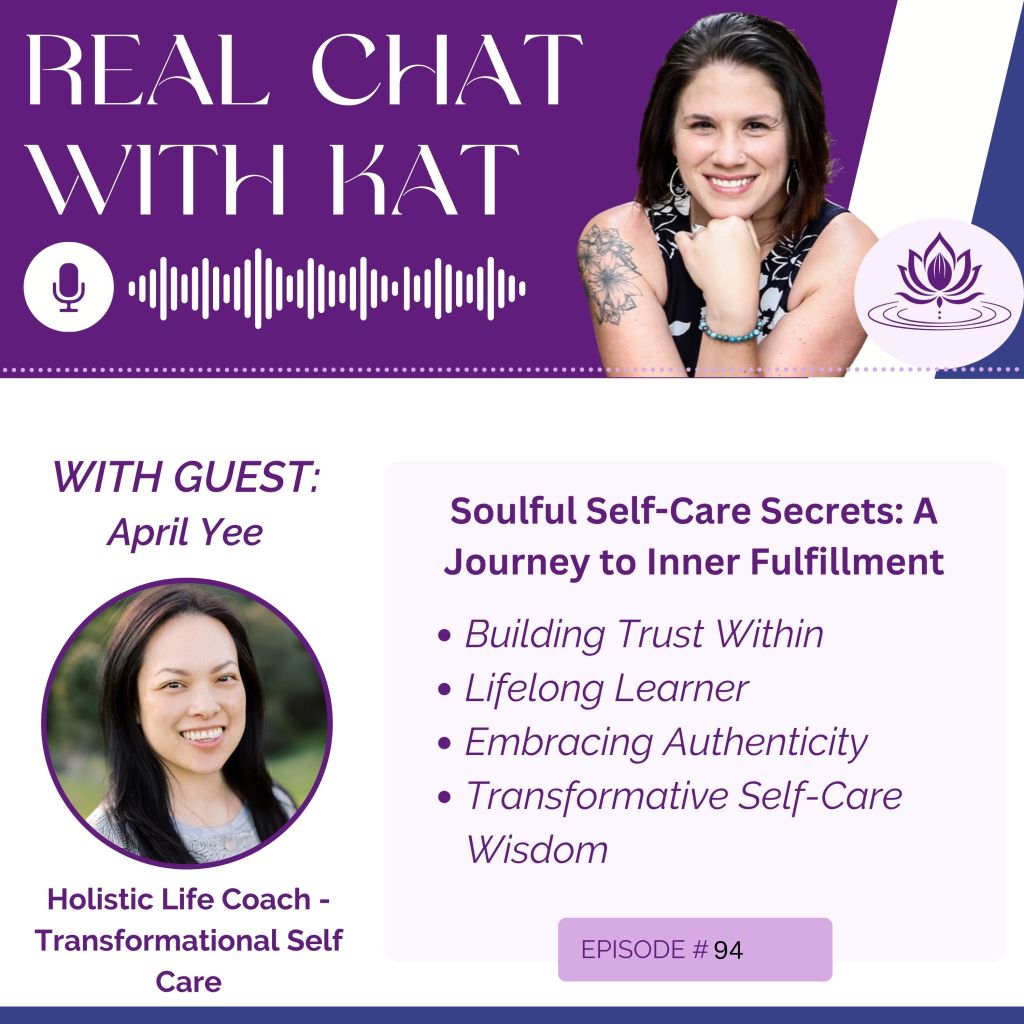
Before we dive into this week’s topic, I was recently a guest on a podcast and I’m sharing the episode here if you’d like to check it out!

Now, on to this week’s topic!

Self-care is holistic. The term self-care has gotten a lot of buzz in the past few years, and rightfully so. It’s important for us to know that it’s okay to care for ourselves, that it’s vital to care for ourselves.

But how much of that is marketing? We hear about getting a frothy, sugary drink as “self-care”; we know that a massage is some good self-care; we can think of hair appointments and nail appointments as self-care.

And these things can definitely be part of self-care. What else is part of self-care?

We can consider how we care for ourselves around:

  • – Creative expression
  • – Money and finances
  • – Time
  • – Career and work
  • – Nutrition and health
  • – Hydration
  • – Physical movement and flexibility
  • – Sexual expression
  • – Play and rest
  • – Mindful breathing
  • – Skincare and bodycare
  • – Mind and mental health care
  • – Sleep
  • – Relationships
  • – Connection with nature
  • – Self (e.g. worth, value, respect, esteem)

All of these aspects are part of who we are as whole people. Sometimes we can get more focused on a couple aspects over others – and at times, it’s necessary to do so. But when we stray away too long from any one of these aspects, we can feel misaligned with ourselves and our lives, which can affect how we show up for ourselves and for others. 

The good news is that we can get realigned by considering where we want to consciously focus more of our energy. 

Do we want to focus on drinking enough water each day? Do we want to focus on getting enough sleep each night? Do we want to focus on connecting with our relationships more? 

When we decide which 1-2 areas (at a time) we’d like to consciously put more of our energy towards, we can then ask ourselves, “How can I make sure I _______?” – drink enough water, get enough sleep, get in touch with what I’m thinking and feeling, be out in nature at least twice a week, connect with someone close to me today, eat healthy meals at least once a day, take deep breaths during the day.

And the brain, in its powerful way, will get to work on finding the answers and figuring it out so we can focus our energy on caring for ourselves in a holistic way.

(Note: It’s helpful to constrain at first to focus on 1-2 areas. If we try to focus on more than that at one time, we might end up feeling overwhelmed and not doing anything for ourselves in any of the areas. Once we get good with those 1-2 areas, we can move on to 1-2 others.)

Your turn: Are you feeling misaligned with how you want to show up and how you are showing up? Which 1-2 areas in your life can you holistically focus on right now to feel more aligned with how you want to show up in the world? What are you willing to do in order to allocate your energy where you want it to go?

Subscribe if you want to receive this content directly in your inbox.

Work with me: Want to see how self-care is transformative and can help you create the results you want in your life? I can show you how. I offer first-time seekers a complimentary 60-minute exploratory session. Sign up here.

What’s on your mind? It can be powerful to learn from each other and our common struggles when it comes to our practice of self-care–or just being a human being. If you have something you’re struggling with and would like some perspective, share it here. Your issue may be chosen and addressed in the next post–it’ll be totally anonymous.

When you think “I’m a bad person”

You’re 50/50.

The other day I felt guilty about doing something unhelpful for someone else. I could’ve helped out by making a task a little easier for someone I care about, but instead, I just sat there and let him do it all himself. I usually help out by moving the bedroom trash can closer to the door when he comes to gather the weekly trash to put outside. 

But this time, I was working on something and just sat at my desk and let him walk into the room, over my bags on the floor, to the trash can, and empty it. I just didn’t feel like getting up myself to help with it. And afterwards, I felt guilty because I thought, “I should’ve just done it and helped him. I’m such a bad person.” 

The truth is, just like our lives are 50/50, we are 50/50 people. We have various parts to us that make up our whole selves. We’re both good AND bad sometimes. We’re both helpful AND unhelpful sometimes. We’re both brave AND scared sometimes. We’re both strong AND weak sometimes. Maybe it’s more like 80/20 – and we get to acknowledge that the 20% is still part of us too. The 50/50 is a conglomeration of all those parts that act out in 50/50 ways.

I’ve been reading about our shadow sides in The Relationship Handbook. Our shadow sides are disowned parts of ourselves that we can actually learn and benefit from. “Our well-being depends on our being whole and having access to all of who we are.” 

I still cringe a little for not helping out when I think, “Why didn’t I just get up and do it?” I feel a need to make up for it. But the truth is, last week I took out and brought in the bins because he was traveling and wasn’t here to do it and I offered to. The truth is, every week if I’m in the bedroom, I get up and move my trash can closer to the door. This was ONE week when I didn’t do that and I’m beating myself up for it. Next week, I can choose differently. And this week, I can find another way to be helpful, if I want to, to make up for it if I still feel the need to.

We do this sometimes – or a lot – we let ONE thing dictate how we think about ourselves – usually in a bad way. 

It’s important to be aware of the times when we act out of alignment from who we want to be. We can use that information to make different choices in the future. And it’s also important to see how we might have been choosing to take care of ourselves by NOT doing something we might usually do.

We can beat ourselves up about it, if we want to. Or we can remember that we are 50/50 people and we can choose differently next time. Even though I didn’t move my trash can closer to the door this time, I’m still a good person, I’m still a helpful person. And maybe this time, I was choosing to take care of myself because I was working on something important and wanted to keep my momentum going. 

Your turn: Are you open to accepting yourself as a 50/50 person? In certain situations, can you see how you might be choosing to take care of YOU through your actions/inactions? What happens when you think, “I’m a bad person”? What happens when you think, “I’m choosing to take care of myself in this situation”?

Subscribe if you want to receive this content directly in your inbox.

Work with me: Want to see how self-care is transformative and can help you create the results you want in your life? I can show you how. I offer first-time seekers a complimentary 60-minute exploratory session. Sign up here.

What’s on your mind? It can be powerful to learn from each other and our common struggles when it comes to our practice of self-care–or just being a human being. If you have something you’re struggling with and would like some perspective, share it here. Your issue may be chosen and addressed in the next post–it’ll be totally anonymous.

When you invest in yourself

Let’s go!

“Leap and the net will appear.” – John Burroughs

I recently decided to make a couple big investments in myself and my business. This year I’m deciding to put myself out there in bigger ways so I can reach more people and support them in their growth, in seeing what’s possible for themselves, in believing in themselves, and in achieving what they want – all while consistently caring for themselves.

By doing this, I too am seeing what’s possible for myself, stretching myself past who I already am and becoming an expanded version of myself. I want to see who I can become through this process. I know that no matter what the outcome, I will grow from going through this process. 

And maybe that’s the whole point of having goals. Not only to achieve the goal, but to see who we can become by working towards the goal. In working towards the goal, we will be strengthening our belief in ourselves, we might be taking actions we’ve never taken before, and we might be feeling the discomfort of doing these new things, these hard things. 

Then it doesn’t matter so much if we actually achieve the goal or not. Because we still get to be the person we’ve become from the effort we’ve exerted. That part doesn’t go away. That growth becomes part of us. We can take this version of ourselves to the next thing, and the next.

So I’m investing in myself. I’m betting on myself. I’m putting myself out there and taking on new opportunities, saying yes to things, and most importantly, believing in myself to make it all work out. To have my back, to make aligned decisions, to trust in myself, and to expand my capacity. And so I’m also creating the net with the belief I have in myself.

I could have just stayed in my current situation and not taken the leap. My current situation is “safe” and familiar, but it doesn’t require more of me. Now, I get to rise up to a level I haven’t been at before. 

And that requires a lot of me – growth-wise and creativity-wise. And I’m up for the challenge. I’m willing to be a little scared and uncomfortable for a while, I’m willing to see what’s possible. I’m willing to go all-in on myself and to bet on ME. It might not always be easy and fun, and that’s OK. I trust myself to come through for me.

How do we make sure we take the actions needed to support ourselves? We create the feelings we need to fuel those actions. How do we create the feelings? We think the thoughts that create those feelings.

Right now, I’m thinking “I’m going all-in on myself. I believe in what I have to offer. I’ll do what I need to do – and even have fun while doing it! Let’s see what happens.” And all those thoughts create the feelings: determined, focused, excited, curious, confident, motivated, playful. And I’ll take actions based on those feelings. 

Investing in ourselves is caring for ourselves, and also caring for our future selves. Our future selves will be so grateful for the work we’re doing now.

Your turn: What do you want for yourself that you’re willing to go all-in on and bet on yourself to make happen? What would you need to think and believe? What would you need to feel? And what actions would you take (or not take) to get the result you want? Who will you become along the way?

Subscribe if you want to receive this content directly in your inbox.

Work with me: Want to see how self-care is transformative and can help you create the results you want in your life? I can show you how. I offer first-time seekers a complimentary 60-minute exploratory session. Sign up here.

What’s on your mind? It can be powerful to learn from each other and our common struggles when it comes to our practice of self-care–or just being a human being. If you have something you’re struggling with and would like some perspective, share it here. Your issue may be chosen and addressed in the next post–it’ll be totally anonymous.

“I don’t got this”

And that’s OK.

How many of us have said to others or have had it said to us, “You got this!”? Or how many times have we said to ourselves, “I got this!”? 

Sometimes that phrase can be an energizing, motivating way to support someone else or ourselves. Sometimes we need to hear it to get a nudge of confidence or determination to do something hard. 

And sometimes, the most supportive thing we can tell ourselves is the truth, “I DON’T got this.”

It might be a hard truth to hear for some of us who are used to figuring it out no matter what or pushing through it all the time. 

But try it out. Let it sink in. “I don’t got this.” 

How does it feel to say that? Maybe to admit that?

Maybe it doesn’t feel realistic. Maybe it doesn’t feel supportive. Maybe it feels icky. Why?

Or maybe it feels like relief. Maybe it feels like a revelation. Maybe it feels responsible. 

When we can allow ourselves to think or say, “I don’t got this,” we are allowing ourselves to tell the truth in some aspect of our lives that might feel daunting or overwhelming. Sometimes our lives can feel that way because we are human beings living in a world that we mostly can’t control.

If we can admit to ourselves, “I don’t got this,” a helpful next thing to ask is, “What do I need?”

Our brains like to find answers, so asking “What do I need?” gives our brain a job to do. The answer might be:

  • “Let it be for now” or
  • “I think I need to talk to someone” or
  • “I think I need to ask John for help” or 
  • “I think I need to ask Susie for help too” or
  • “I think I need to slow down” or
  • “I think I need to cry it out”

Or whatever the answer might be, listen and allow. 

It doesn’t mean we give up and we’ll never “got this” again. It means right now, we need some extra support – either from ourselves or from others who we trust to help or support us in a way that works for all involved.

Your turn: Where in your life do you “don’t got this”? Are you willing to admit that to yourself and have it be OK for now? Are you open to seeing what you need to move forward? How would you like to support yourself in this?

Subscribe if you want to receive this content directly in your inbox.

Work with me: Want to see how self-care is transformative and can help you create the results you want in your life? I can show you how. I offer first-time seekers a complimentary 60-minute exploratory session. Sign up here.

What’s on your mind? It can be powerful to learn from each other and our common struggles when it comes to our practice of self-care–or just being a human being. If you have something you’re struggling with and would like some perspective, share it here. Your issue may be chosen and addressed in the next post–it’ll be totally anonymous.

Does success give you permission?

Give it to yourself.

Last week we talked about redefining success. This week, let’s talk about why we want to “be successful” in the first place.

Most of us don’t realize this, but we want to be successful in order to give ourselves permission to believe certain things about ourselves and to feel a certain way. What? 

Sometimes, because we don’t have certain things or haven’t achieved certain goals, we think something is wrong with our lives. We think something is wrong with us.

We might think that achieving a goal will fill some hole we think we have in our lives. Why do we think there’s a hole there?

We might think that in order to believe we’re good enough or worthy, we need to accomplish goals first. We might think that in order to feel confident and happy, we need to accomplish goals first. We think the way to “fix” what’s “wrong” is to get something we don’t yet have, something outside of us. 

Does this sound familiar?

  • When I make $X amount of money, then I’ll feel secure.
  • When I have X job title, then I’ll feel proud.
  • Once I own a house, then I’ll believe I’ve made it.
  • Once I weigh X pounds, then I’ll feel comfortable in my body.
  • When I have a partner, then I’ll believe I’m lovable.
  • When I have my own business, then I’ll believe I’m legit.
  • Once I’ve done X, then I’ll feel worthy.
  • Once I have X, then I’ll believe I’m good enough.

Usually, even if we’ve done or obtained what we want, we wonder why we still don’t feel ____ or believe that we’re _____. 

This is because achieving goals doesn’t create our feelings or beliefs. Our thoughts create our feelings and our thoughts create our beliefs. Beliefs are just thoughts that we’ve kept thinking over and over until we think they’re true. After achieving a goal, we might feel something temporarily, but it’s not sustainable without doing the belief and thought work first.

If we’re waiting until we achieve a goal in order to believe something about ourselves or to feel something we want to feel, we might be waiting a long time. What if it’s the opposite? What if in order to achieve what we want, we need to believe and feel FIRST?

If we believe that we’re lovable, how will that impact the way we show up for dates? If we believe that we’re legit, how will that help us start a business? If we feel secure, how will we think about the money we’re currently making? If we feel comfortable in our body, how will we show up differently for ourselves?

We can believe and feel FIRST. Then, going after the goals we want is just to see what’s possible for ourselves, to stretch ourselves, and to have fun. Not to prove anything to ourselves or to fix anything about our lives.

Your turn: What would you allow yourself to believe and feel about yourself if you achieved a certain goal? What if you could start believing and feeling that way about yourself NOW with what you DO have and who you ALREADY are? 

Subscribe if you want to receive this content directly in your inbox.

Work with me: Want to see how self-care is transformative and can help you create the results you want in your life? I can show you how. I offer first-time seekers a complimentary 60-minute exploratory session. Sign up here.

What’s on your mind? It can be powerful to learn from each other and our common struggles when it comes to our practice of self-care–or just being a human being. If you have something you’re struggling with and would like some perspective, share it here. Your issue may be chosen and addressed in the next post–it’ll be totally anonymous.

When you redefine “success”

For you.

I was in therapy for the first time 8 years ago in January 2016. (I can’t believe it was that long ago now!) I realized I needed to talk to someone after going through emergency open heart surgery that saved my life – and also uprooted it. 

I’d been living in Manhattan for three years and happened to be back in San Francisco when I got admitted to the hospital in April 2015. I’d been experiencing symptoms for a month at that point, but because back then, I didn’t know how to listen to or understand my body, I wasn’t aware of what was happening or how serious the situation was. I was used to pushing through things. But all that changed after the surgery and I had to recalibrate what was physically possible for me in my body. 

I didn’t initially realize it, but I had attached a lot of my identity to work – I was someone who could work 12-14 hour days and get things done no matter what. I physically couldn’t do that anymore. So I felt lost, like I didn’t know how to live in my life any longer. I’d been so used to operating in a certain way for so long: go, go, go, do, do, do. 

Because I was “being successful” while doing that. 

One of the first revelatory things my therapist and I talked about was what my definition of success was. What did success mean and look like to me? Up until then, it had been unconsciously defined for me, by colleagues, society, media, peers. 

Success had looked like making a certain amount of money, having a certain job title, living a certain lifestyle, having that type of car, having these types of clothes, living in a certain neighborhood, eating at those types of restaurants, being “busy” as a sign of worth, stress as a “status” symbol, doing all the things while doing all the things. 

Honestly, when I think about it now, I see how exhausting it all was. I can’t imagine going back to that way of living “successfully.”

I had to redefine what success looked like to me post-surgery, in my new state of being in my body. Sometimes success looked like showing up for therapy sessions after being in pain the day before. Sometimes it looked like setting a boundary with a family member. Sometimes it looked like telling the truth to myself. Sometimes it looked like celebrating a new insight that I’d learned. 

My therapist empowered me to define what success looked like to me then, through a new perspective, through an internal lens of my own perception and how I felt in my body, not an external lens of other people’s perceptions while disregarding myself. 

Doing that took a lot of pressure off – pressure I didn’t even realize I was putting onto myself. Doing that also helped me feel more connected to myself and my life. It helped me show up the way I wanted to for myself, instead of the way I thought I needed to for others. And my definition of success continues to evolve.

How many of us are allowing other people or things to define what success means and looks like for us? Let’s start redefining it for ourselves based on who we want to be, how we feel in our bodies, and how we want to show up for our lives.

Your turn: How might redefining success for yourself be valuable to you? How might redefining success change the way you prioritize things? How do you want to redefine what success means and looks like for you? 

Here are three questions to consider in redefining success for yourself: 

  1. 1. Do I love who I’m being?
  2. 2. Do I love what I’m doing?
  3. 3. Do I love who I’m doing it with?

Take massive action in 2024

Create vs. Consume

Last week we talked about “deciding to” vs. “wanting to.” This week we’ll talk a little more about what we can DO when we decide to make changes in our lives.

We take two types of actions when it comes to our goals: passive action and massive action. 

Passive action is when we’re learning, gaining, and organizing knowledge about our goal. We’re consuming information about it. 

Massive action is when we actually DO something with what we’ve learned. We apply it in our lives in an active, creative way that moves us towards our goal.

Here are some examples:

Goal: Exercise 4 days/week

Passive action = Research gyms to join, learn about what exercises to do, make a plan for exercising by working different muscle groups each day, buy new workout clothes, watch social media videos of people showing you their workouts

Massive action = wake up an hour earlier 4 days a week, put on the workout clothes, drive to the gym, DO the exercises each of the 4 days as planned even when you think it’s too hard

Goal: Eat less sugar

Passive action = research low-sugar items, learn about how sugar affects your body, make a plan for how much sugar you want to eat each day, make a list of things that are OK for you to eat, watch social media videos about how to eat less sugar 

Massive action = remove extraneous sugary items from your home/office, stick to the plan that you made, decrease your desire for sugar, eat only the items on your OK list, eat only the amount of sugar on your plan, allow the urge to eat more sugar and don’t react to the urge (don’t eat more sugar) even when you think it’s too hard

Goal: Save more money

Passive action = decide how much to save every month, review your expenses and see where you can decrease spending, read a book about budgeting and reducing expenses, participate in a workshop about debt, make a plan for saving and decreasing expenses, watch social media videos about saving money

Massive action = set up automatic savings every month, allow the urge to spend money when you see something you “want” but don’t necessarily “need,” stick to your savings plan even when you think it’s too hard

Goal: Meditate 3 days/week for 20 minutes

Passive action = read about meditation methods, listen to talks by meditation teachers, choose a practice you want to explore, find a meditation group/class, purchase a meditation app/program, watch social media videos about people talking about meditation

Massive action = make a space in your home for meditation, show up to the group/class, sit and practice for 20 minutes even when your mind wanders and you think it’s too hard

Goal: Be kinder to yourself

Passive action = read books about self-love and self-compassion, make a list of ways to be kinder to yourself, heart and save social media posts about self-love and self-compassion, watch social media videos showing people talking about self-love

Massive action = look in the mirror and tell yourself “thank you” every morning for a month; when that feels comfortable, look in the mirror and tell yourself “I love you” every morning; when you feel overwhelmed, ask yourself, “What is the kindest thing I can do for myself right now?” and honor the answer; do some of those things on the list you made every week or every month

The point is to DO the actions that are part of our goal. While we do need to do some amount of passive action by consuming information, we can read, watch, and learn about our goal all we want, but if we’re not DOING the actions that will lead towards our goal, we’re just consuming and not creating. We’re staying where we are. Let’s not get stuck.

Even making a plan is passive – it’s not until we carry out the steps on the plan that we’re creating and taking massive action. Let’s create more than we consume. 

This is not to say that we don’t also take care of ourselves while moving towards our goals. A lot of us want to stop when it begins to feel hard because we think it should be easy. Let it be hard. And keep going. We can be kind and take care of ourselves when we need to, but there’s a difference between giving ourselves some grace and self-sabotaging or giving up.

Your turn: Are you able to tell the difference between the passive and massive actions you’ve been taking in your life? How can you become more aware of the amount you’re consuming vs. what you’re creating? What massive action(s) will you decide to commit to?

Subscribe if you want to receive this content directly in your inbox.

Work with me: Want to see how self-care is transformative and can help you create the results you want in your life? I can show you how. I offer first-time seekers a complimentary 60-minute exploratory session. Sign up here.

What’s on your mind? It can be powerful to learn from each other and our common struggles when it comes to our practice of self-care–or just being a human being. If you have something you’re struggling with and would like some perspective, share it here. Your issue may be chosen and addressed in the next post–it’ll be totally anonymous.